marketing interactive

AI chatbots are getting 'aggressively' data hungry

Popular AI chatbot apps – including Meta AI, Google Gemini, and ChatGPT – collect a wide range of user information such as contact details, search and browsing history, and other user content. Meanwhile, 70% of popular AI chatbots now collect user location data, up from 40% last year, according to an analysis by Surfshark. Surfshark identified the 10 most popular AI chatbots and analysed their privacy details on the Apple App Store. The comparison was based on how many types of data each app collects, whether any data is linked to users, and whether the app includes third-party advertisers. Surfshark also reviewed the privacy policies of DeepSeek and ChatGPT to better understand what data is retained on servers and for how long. According to the analysis, Meta AI continues to collect the most user data among the apps examined, gathering 33 out of 35 possible data types—nearly 95% of the total. It remains the only app that collects data in the financial information category. Meta AI, alongside Google Gemini, also collects sensitive information, which includes racial or ethnic data, sexual orientation, pregnancy or childbirth information, disability, religious or philosophical beliefs, trade union membership, political opinion, genetic information, and biometric data. Google Gemini collects 23 out of 35 possible data types. Gemini also collects a significant amount of data across various other categories, such as users’ names, email addresses, phone numbers, amongst others, user content, contacts, search history, browsing history, precise location, and several other types of data. This extensive data collection may be seen as excessive and intrusive by those concerned about data privacy and security. According to the Apple App Store, ChatGPT may now collect 17 out of 35 data types, according to the developers. This represents a 70% increase from the 10 data types identified in last year’s AI chatbots review, indicating a notable broadening in the extent of user data collection. The additional data types now collected include coarse location, health and fitness, search history, audio data, advertising data, and customer support. Most of the data types collected by ChatGPT (14) are intended for app functionality. However, the user information may also be used for other purposes, including analytics (7), product personalisation (4), developers’ advertising or marketing (3), and third-party advertising (2). Notably, health and fitness data, as well as advertising data, are not required for app functionality. Claude, the fourth most data-hungry chatbot, collects 13 out of 35 data types, each of which is crucial for app functionality. These data types support activities such as authenticating users, enabling features, preventing fraud, implementing security measures, maintaining server uptime, reducing app crashes, improving scalability and performance, and delivering customer support. However, many of the data types collected by Claude may also be used for other purposes, such as analytics and developers’ advertising or marketing, indicating a fairly extensive exploitation of user data. This includes data such as user coarse location or content such as photos or videos.  DeepSeek is the fifth-hungriest chatbot and collects 13 unique types of data, including user input, chat history, and claims to retain information for as long as necessary, storing it on servers located in China.  Unlike other AI chatbots which operate under US federal law and collaborate with regulatory bodies, DeepSeek is not subject to comparable legal frameworks such as General Data Protection Regulation (GDPR), according to Tomas Stamulis, chief security officer at Surfshark, adding that this lack of oversight further increases concerns about accountability and data protection. “Chatbots are becoming increasingly aggressive with user data. Our research shows that 70% of popular AI apps now collect location data, a sharp rise from just 40% last year. This surge in data hunger is also evident in platforms such as ChatGPT, which recently increased its collection by 70% to include everything from health and fitness metrics to search history and audio data,” explained Stamulis. “Unlike traditional search engines, these bots now handle highly sensitive uploads such as tax documents and medical records, which can be shared across massive third-party networks for targeted ads. To protect your privacy, you must treat every prompt as a public record: audit your settings, disable chat history, and never share what you wouldn’t want to be publicly known,” he added.  Mark your calendars for 24 June! #Content360 Hong Kong returns with a dynamic, one-day event dedicated to pivotal trends—from the silver economies to breakthrough IP collaborations, sports, and beyond. Let’s dive into the art of curating content with creativity, critical thinking and confidence! Related articles: The end of the blank page: What Google Gemini in HK means for marketersChatGPT’s parent company OpenAI to open SG office amidst regional expansion source

AI chatbots are getting 'aggressively' data hungry Read More »

WPP elevates Japan CEO to lead Creative APAC

WPP has appointed its Japan chief executive officer (CEO), Kyoko Matsushita (pictured), as the new CEO of WPP Creative APAC. Known for her eight-year stint at Essence as global and APAC CEO under WPP, Matsushita most recently served as CEO of the network’s Japan portfolio for nearly four years, a role she took on in 2022. In a statement to MARKETING-INTERACTIVE, WPP said it is “creating a lean regional leadership team to develop the WPP Creative operating model.” “This model will support our creative, design, and PR agencies, including VML, Ogilvy, Burson, AKQA, Landor, Design Bridge & Partners, and others. The goal of the model is to enhance collaboration, expand capabilities, and make it easier for our clients to access our extensive talent through our iconic agencies,” added WPP.  Don’t miss: Agency Agenda: Outgoing WPP Media SG and MY CEO Arshan Saha on navigating change and transformation Announcing her elevation on LinkedIn, Matsushita said the new role sits at the intersection of technology, creativity and culture. “It feels like a culmination of my career and I look forward to working with talented teams across these agencies to reimagine growth and become the most trusted partner for our clients,” she said. She added that her journey has been shaped by diverse experiences across brand, communications, technology, creative and media agencies. “Having lived and worked across Europe, the US, and now APAC, I’ve gained a deep appreciation for global markets and varied perspectives. These experiences have fueled my passion for pushing boundaries, championing data, technology, and most importantly, our incredible talent,” Matsushita said. According to her, innovation and fostering diverse, inclusive environments have been central to her leadership. “Now, I’m excited to take on this new challenge across the dynamic and vibrant Asia Pacific region,” she added. “APAC is a hotbed of creativity and potential, and my varied global and industry experiences only reinforce my belief in the immense possibilities here.” Prior to joining WPP, Matsushita led GREE International’s mobile game studio in London, and held roles at Electronic Arts (EA) as a senior APAC and EMEA marketing manager, as well as at Sony and Leo Burnett. Matsushita will continue to be based in Tokyo, Japan. MARKETING-INTERACTIVE has reached out to WPP for more information.  A month ago, WPP appointed Jon Cook, longtime global CEO of VML, as global CEO of WPP Creative. The appointments come as WPP rolls out a single umbrella structure for its agencies, including VML, Ogilvy, Burson, AKQA, Landor, Design Bridge and Partners and more. In announcing the structure, Cook said, “These agencies will remain distinct and powerful in their own right, and we’re finding new ways to bring them closer together, unlocking even greater collaboration and creativity to drive transformation and growth for our clients.” Earlier this year, WPP also launched WPP Production, a global content powerhouse aimed at helping clients reimagine growth through production, generative AI and cinematic storytelling. The move brings together WPP’s production capabilities, including Hogarth, into a single platform designed to deliver speed, scale and creativity. Richard Glasson, global CEO of Hogarth, has been appointed to lead the new division as global CEO. WPP describes the unit as the world’s largest and most advanced content production operation, with nearly 10,000 people across more than 40 cities. Be part of #Content360 Singapore, 22–23 April 2026, where creativity and culture collide. Explore how AI-driven storytelling is shaping the future of content, gain practical insights, discover new tactics, and learn how the best in Asia are creating campaigns that truly resonate.  Related articles: WPP Media names new China CEO as Rupert McPetrie steps down Kantar Media names former WPP CEO Mark Read as chairman Havas CEO Yannick Bolloré shuts down WPP deal rumours source

WPP elevates Japan CEO to lead Creative APAC Read More »

How Lau Pa Sat transformed a CNY zodiac carousel into a Raya showcase

Lau Pa Sat is marking the Hari Raya season with a refreshed festive installation, repurposing its earlier Chinese New Year display into a culturally themed experience aimed at education and engagement. Running from 3 March to 1 April, the installation transforms the venue’s zodiac reading carousel into a Hari Raya showcase, featuring 12 educational touchpoints that explore the significance of Ramadan and the traditions of the Muslim community. At the centre of the carousel are familiar festive symbols such as the ketupat (‘rice cake’) and wau (‘traditional kite’), alongside elements including a mosque, crescent moon and Ramadan lantern. The installation is decked in shades of green and batik-inspired motifs, reflecting both the festive palette and the heritage of the historic market. Don’t miss: 13 Raya packets that brought more than just duit this 2026 According to Pauline Png, director and head of customer innovation and marketing, food services at FairPrice Group, the initiative builds on the venue’s ongoing efforts to celebrate Singapore’s multicultural calendar. “This year, Lau Pa Sat has made the campaign more holistic with the dedicated Hari Raya-themed interactive installation and more promotions,” she said. “With Hari Raya being an important festive period for many Singaporeans, the team saw an opportunity to highlight its traditions and significance, while welcoming visitors of all backgrounds to learn more about the celebration.” The decision to repurpose an existing installation was also intentional. Png said the approach allowed the team to extend the lifespan of the earlier setup while adapting it for another major cultural occasion, reflecting a more sustainable way of creating seasonal experiences. Beyond aesthetics, the installation places emphasis on education. Its 12 touchpoints are designed to guide visitors through the spiritual meaning of Ramadan, festive preparations, and key traditions observed during Hari Raya. Png added that the team conducted research and sought feedback from those who celebrate the festival to ensure the display is both respectful and representative. As a National Monument and popular food destination, Lau Pa Sat also positions its seasonal activations as a way to connect visitors with Singapore’s cultural diversity. “Seasonal installations such as this create opportunities for visitors to learn about different cultural traditions, while also offering a photo-worthy experience for both locals and tourists,” Png said. To complement the installation, visitors who spend a minimum of SG$10 can redeem complimentary photo booth sessions featuring Hari Raya-themed frames inspired by the display. F&B promotions are also in place during the period, including festive drinks, Hari Raya cookies from local brands, and deals across selected stalls. The market is home to more than 20 halal-certified and Muslim-owned stalls, alongside its well-known satay (‘skewered grilled meat’) street offering. The activation comes as brands and organisations across Singapore roll out campaigns centred on togetherness and cultural reflection during the festive period. Ministry of Digital Development and Information’s gov.sg recently launched a Hari Raya film titled “Kisah musim Raya” (“A Raya tale”), created with DSTNCT, which follows a young girl distracted by her phone during festive preparations. Directed by Juffrie Juma’at and starring Nur Sabrina Nasir, the film underscores the importance of being present with loved ones, culminating in a reminder to treasure shared moments and traditions. Meanwhile, Mediacorp refreshed its Hari Raya anthem with “Ini baru Raya! 2.0” (‘Now, this is Raya! 2.0′), a lively campaign blending rap, choral elements and vibrant visuals. Featuring talents such as omarKENOBI and Izat Ibrahim, alongside a cast of local artistes and personalities, the music video centres on a couple whose disrupted homecoming plans give way to a celebration with family, reinforcing themes of resilience, joy and togetherness. Be part of #Content360 Singapore, 22–23 April 2026, where creativity and culture collide. Explore how AI-driven storytelling is shaping the future of content, gain practical insights, discover new tactics, and learn how the best in Asia are creating campaigns that truly resonate.  Related articles: 11 Raya campaigns that hit the right notes in 2026  How Yeo’s is bringing café-style pandan home this Raya  Can a Raya anthem sell flights? AirAsia taps Siti Nurhaliza for festive MV source

How Lau Pa Sat transformed a CNY zodiac carousel into a Raya showcase Read More »

Hashtags aren’t dead, they’re just ‘on life support’ as AI reshapes discovery

Once the backbone of content discovery, hashtags have been quietly pushed to the margins as platforms evolve into systems that understand content without needing to be told what it is.  What’s replacing them isn’t another tactic, it’s a move away from how content is interpreted, distributed and discovered. “Hashtags aren’t dead, but they’re on life support,” Marcus Willis, CEO of Kill Boring Dead, says. “Most marketers are still treating them like it’s 2018. The platforms have moved on. The algorithms have moved on. The audience has moved on.” SEE MORE: TikTok Shop is booming globally, just not in Australia Across TikTok and Instagram in particular, discovery is no longer driven by what a post is labelled as. It’s driven by what it is, how people engage with it and whether it holds attention. That’s a very different game. The end of manual labelling For years, hashtags were a crude but effective way of telling platforms what content was about. They were a form of manual categorisation – publisher-supplied metadata designed to help algorithms match content with audiences. That layer is no longer required. “Historically, they were the primary way a publisher told an algorithm how to categorise a piece of content,” Luke Gosha, head of search and AI strategy at Edge Marketing, says. “Today, the algorithms have advanced in their ability to understand content, its relevance to audiences and engagement.” The shift is from explicit signals to inferred understanding. Platforms now analyse everything: what’s said in a video, what appears on screen, how long people watch, whether they rewatch, whether they share, save or comment. Content is no longer indexed – it’s interpreted. “AI can now read your content the way a human does,” Willis said. “It understands what the video is about, what tone it’s taking, who’s likely to care.” That has effectively removed the need for hashtags to act as a discovery mechanism. “You don’t need to tag it, you need to make it good,” he added. Context, not content, is now king If the last decade of digital marketing was built on the idea that content is king, the current one is tilting toward something more nuanced. Context. “A piece of content that taps into something people actually care about right now will outperform a perfectly hashtagged post every single time,” Willis said. Bryce Coombe, managing director at Hypetap, goes further. “Context and even subcontext are king. For a brand to succeed today, it’s less about having the right campaign tag and more about delivering content the algorithm identifies as high engagement.” That shift is subtle but important. Content still matters, but it’s no longer enough on its own. Timing, cultural relevance, tone and audience fit now carry more weight than structured tagging ever could. “The real shift is from structured tagging to behavioural and contextual signals,” says Miki Sim, platforms and culture director at VaynerMedia APAC. “The algorithm no longer requires creators to manually label the content. It already knows what the content is about.” Performance isn’t tied to hashtags anymore One of the more telling aspects of the shift is how little impact hashtags now have on performance. “If hashtags disappeared tomorrow, would performance actually change? For most brands, barely,” Willis said. That’s a confronting reality for teams that still spend time debating which hashtags to include on every post. “The content that performs does so because of what it is, the hook, the context, the emotional signal, the watch time, not because someone appended a hashtag at the end,” he said. Coombe agrees the impact is minimal. In creator-led environments, he said, performance is now driven almost entirely by how the platform interprets the content itself. “Content is now assessed automatically via image recognition, speech to text, caption search and a range of other signals,” he said. Hashtags, in that context, have become a “low-level” signal – present, but not particularly influential. Habit over strategy Despite that, hashtags haven’t disappeared from marketing playbooks. They’ve lingered. Partly because they still serve a purpose in specific scenarios be that campaign aggregation, branded communities or live events, but largely because teams haven’t fully adjusted to how discovery now works. “Most businesses still use them out of habit,” Coombe said. “But it’s no longer the engine that’s going to get you onto the ‘For You’ page.” That distinction matters. Hashtags haven’t vanished, but their role has shifted from discovery tool to organisational layer. “They’re more like community anchors than growth drivers,” is how one agency framed it. It’s a subtle demotion, but a meaningful one. B2B matters, sort of… If hashtags have been sidelined on consumer platforms, LinkedIn remains a partial exception. “LinkedIn is probably the last bastion for the hashtag,” Coombe said, pointing to the platform’s reliance on professional terminology and industry-specific categorisation. Even there, though, the direction is changing. “Achieving organic reach on LinkedIn has become much harder,” Gosha says. “The signals that matter most are dwell time and the quality of the conversation in the comments.” In other words, even in B2B environments, performance is increasingly tied to substance rather than structure. “You can’t hack that with a string of B2B hashtags,” he said. From SEO to AI-led discovery The shift away from hashtags is part of a broader change in how discovery itself works. Search is no longer confined to search engines. Discovery is happening across feeds, platforms and increasingly through AI interfaces that don’t rely on keywords in the traditional sense. “We’re living in a world where AI can infer the meaning, tone and intent of a piece of content just by watching it,” Willis adds. That has implications beyond social. “The next frontier takes this even further – brand discovery is increasingly happening directly on conversational AI,” Sim (pictured below)

Hashtags aren’t dead, they’re just ‘on life support’ as AI reshapes discovery Read More »

Agency agenda: Burson APAC’s HS Chung on resetting culture for the future

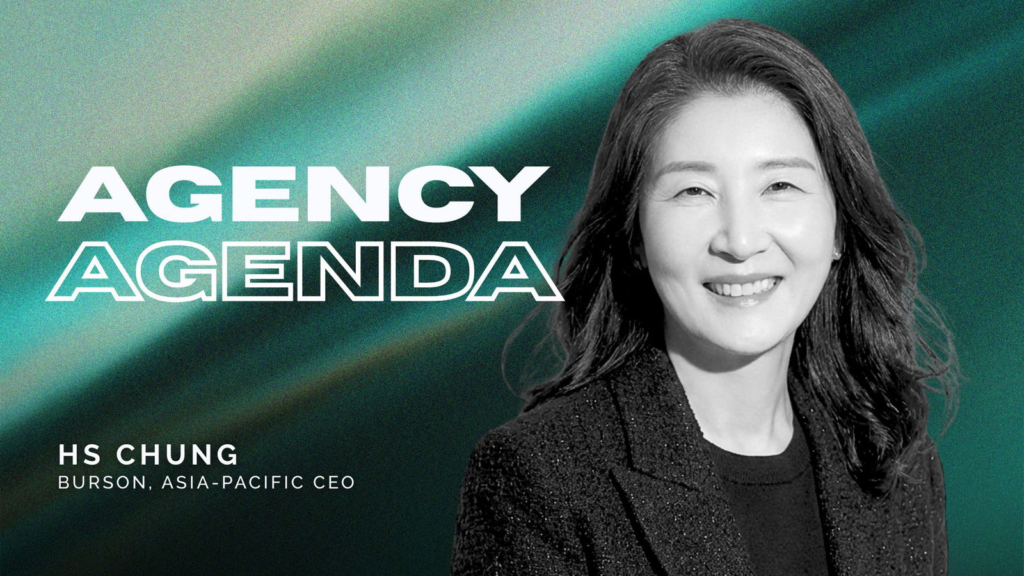
When HS Chung stepped into her role as APAC CEO of Burson, her first priority was clear, and it had little to do with structure or scale. Instead, it centred on culture. “Before anything else, our priority was really to think like one. Not as two, three, four,” she told Marketing Connected’s Agency Agenda. “It was very important for us to really get the philosophy of why we were coming together before we could even do anything.” Following the merger that formed Burson, Chung emphasised that integration was not about preserving legacy ways of working, but about creating something entirely new. “Many people tend to wish and believe what they are used to can remain. But the reality is, we’re doing all of this to create a new culture,” she explained. Don’t miss: Agency agenda: Barby Siegel on future-proofing Zeno’s agency model Catch the full conversation here:  That mindset shift was critical. Rather than seeing the agency as a continuation of its past, Chung positioned Burson as starting afresh. “We actually consider ourselves about one to two years old. We don’t see ourselves as being the legacy 70-year-old,” she said. We are now creating a new culture. And building that new culture is not something that’s going to done top down, but built together. This collaborative approach underpins her broader agenda for the agency across APAC. With momentum building despite macroeconomic challenges, Chung is focused on turning change into opportunity. “Some people might think that’s a challenge, but we see it as an opportunity,” she said. At the core of Burson’s strategy are three priorities. First is an almost obsessive focus on clients and the environments they operate in. “Be obsessed with the business environment our clients are in,” she added, noting that businesses today are undergoing “transformative change,” particularly driven by AI. The second priority is to lead in that very space. “We need to be able to really lead in that AI space for communication, so that when clients turn to us, we’re able to lead them and pioneer this area,” she explained. Finally, Chung stressed the importance of execution. “It’s really about not just setting these goals, but thinking about how we can operationalise it. And this goes back to the idea of building one collaborative culture.” That culture also plays a key role in navigating change internally. Transparency and communication, she said, are essential during periods of transformation. “It all comes down to having a clear vision and a strategy, and transparently communicating that to the people,” she explained, adding that organisations must continuously listen and respond to employee concerns. Looking ahead, Chung believes PR agencies must evolve into strategic business partners, as the future is pointing towards a reality where agencies play a bigger role at the C-suite and board level. According to her: We should, and will need to aim to be a business solver, a problem solver. For Burson, that future is already taking shape, grounded in a new, unified culture and a clear ambition to lead in an increasingly complex, AI-driven world. Also tune in to the full conversation on Spotify: Tune into the rest of this conversation on your favourite podcast platforms, by searching up Marketing Connected. For all the visual people out there, we’ve got your back as well, with our vodcasts on YouTube. Related articles: Women who lead: Mutant’s Lina Marican on embracing leadership despite self-doubt Agency Agenda: Arshan Saha on navigating change and transformation during his WPP Media days Agency agenda: Tony Harradine outlines Omnicom Media APAC’s post-deal plan  source

Agency agenda: Burson APAC’s HS Chung on resetting culture for the future Read More »

Can OldTown White Coffee bridge generations through its cold push?

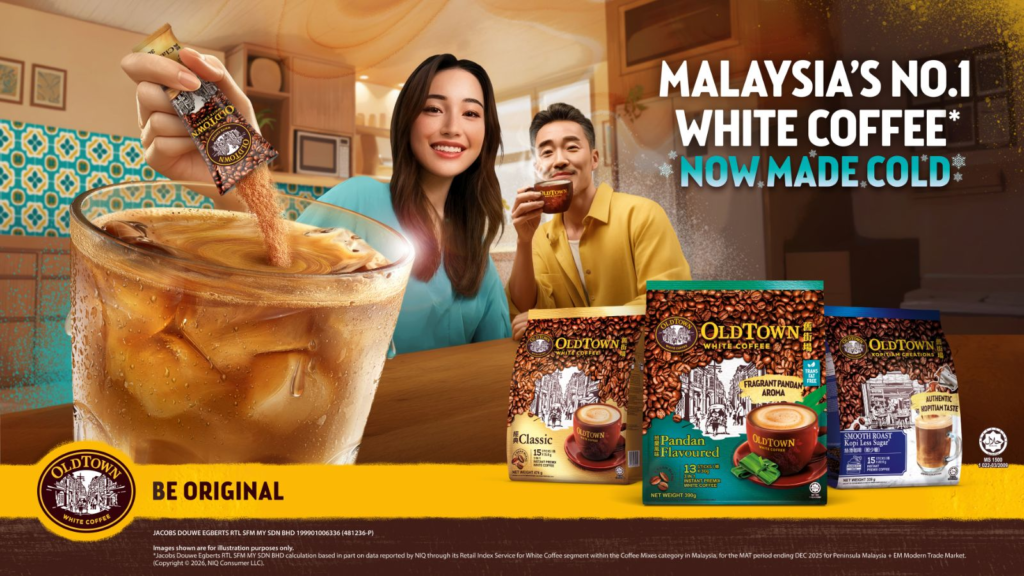
OldTown White Coffee has launched a new regional campaign, “Your favourites made cold”, as it expands its product offering with a ‘Hot & Cold’ range designed for both traditional and modern coffee consumption moments. Rolling out across Malaysia, Singapore, Hong Kong and China, the campaign introduces one of Asia’s first cold soluble white coffee mixes, allowing consumers to enjoy the brand’s signature brew whether prepared with hot or cold water. The move marks a new chapter for the brand as it looks to stay relevant amid evolving coffee habits across the region. Developed in partnership with Kingdom Digital, the integrated campaign brings the brand’s evolution to life through storytelling across video, digital and social platforms. The collaboration aims to bridge generations, reassuring long-time fans while inviting younger audiences to experience white coffee in new ways. Don’t miss: ZUS Coffee makes Thailand debut amid Southeast Asia expansion “This milestone marks a remarkable journey from 1999, when OldTown White Coffee first set out to bring Ipoh’s legendary white coffee beyond its traditional kopitiam boundaries, and into homes,” said Maurice Png, regional head of marketing, core brands, JDE Peet’s. He added that what began as a mission to make an iconic kopitiam brew accessible at home has since evolved into a global brand that continues to shape how the category is enjoyed today. This includes offering “better for you” recipes and introducing flavours that celebrate Asian tastes, including pandan, alongside classics such as hazelnut. At the heart of the campaign is the idea of connecting generations through innovation. While the brand reassures consumers that its familiar taste remains unchanged, it is also tapping into growing demand for cold beverages, particularly among Gen Z consumers. This is portrayed in the campaign’s key film, which shows a father enjoying his hot cup of morning coffee and inviting his daughter to join him. However, the young woman, who has just finished a workout, is not too keen on a hot drink and instead opts for a chilled cup of cold soluble OldTown White Coffee. The scene ends with both of them smiling, enjoying their coffees together in their own unique ways. “We’re confident that OldTown’s cold solubility creates new and exciting consumption opportunities beyond the hot morning cup, especially for Gen Z who have limitless imagination and are driving demand for cold beverages in Asia, and beyond,” Png added. Recently, other local Malaysian beverage chains that started out as brick-and-mortar stores have also been amping up their ready-to-drink offerings amid changing consumer habits. ZUS Coffee has launched its Ngupi 2-in-1 and 3-in-1 instant coffees, as well as canned drinks, while Tealive has also entered the FMCG market with its milk tea, coffee and chocolate instant drink variants. Not to mention, booming kopitiam chains such as Oriental Kopi have been aggressively pushing their instant coffee ranges into the market and onto grocery store shelves in both Malaysia and Singapore. Even the likes of Hock Kee Kopitiam have expanded their range of take-home instant drink mixes and food products over the past year. At this point, ready-to-drink offerings go hand in hand with almost any coffee chain. Be part of #Content360 Malaysia, 13 May 2026, where creativity and community collide. Explore how AI-powered imagination, culturally resonant storytelling, and platform-savvy strategies are shaping the future of content. Gain practical insights, discover new tactics, and learn how the region’s top creators and brands are crafting campaigns that truly resonate. Related articles: ZUS Coffee makes Thailand debut amid Southeast Asia expansion Luckin Coffee backer reportedly buys Blue Bottle Coffee OLDTOWN White Coffee toasts 25 years with menu revamp and merch drop source

Can OldTown White Coffee bridge generations through its cold push? Read More »

Why PUMA’s SG trademark war with Tiger Woods’ Sun Day Red was a leap too big

PUMA has failed to block the registration of Sun Day Red in Singapore, after the Intellectual Property Office of Singapore (IPOS) found no likelihood of consumer confusion between the two brands’ “big cat” logos. In a decision issued on 13 March, principal assistant registrar Tan Mei Lin dismissed PUMA’s opposition in full, ruling that the competing marks are more dissimilar than similar across visual and conceptual elements. At the heart of the dispute was whether Sun Day Red’s tiger logo, backed by Tiger Woods, was too close to PUMA’s signature leaping cat. PUMA argued that both marks shared a similar overall impression, pointing to a side-profile big cat in motion, minimalistic styling and a dynamic, arched posture that could confuse consumers across overlapping product categories such as apparel and accessories. However, the tribunal rejected this, finding that the differences in composition, shape, features and movement were significant enough to distinguish the two. Don’t miss: Typo or tactic: PUMA India rebrands as PVMA in latest collaboration with Olympic star Visually, PUMA’s mark was described as a smooth, solid silhouette of a leaping cat, while Sun Day Red’s logo features a tiger formed through bold, segmented lines with visible stripes. The registrar noted that these thick lines are prominent and would form part of a consumer’s “imperfect recollection” of the mark. The animals themselves were also deemed distinct. While PUMA’s logo represents a PUMA or generic big cat, Sun Day Red’s mark clearly depicts a tiger, with its stripes making it unlikely to be perceived or remembered as a generalised animal. Furthermore, differences in posture further separated the two. Puma’s cat appears to leap in a pronounced upward arc, whereas Sun Day Red’s tiger takes on a more horizontal, grounded motion. Conceptually, the tribunal found that the marks evoke different ideas. One is a streamlined puma in mid-leap while the other is a segmented tiger moving horizontally. This reinforces the lack of similarity, said the registrar.  Because similarity is a threshold requirement under Singapore trademark law, the failure to establish this meant PUMA’s case could not succeed. The registrar added that even if similarity had been established, there would still be no likelihood of confusion given the level of attention consumers typically exercise when purchasing such goods. In its submissions, PUMA had also argued that its strong global reputation heightened the risk of confusion. However, the tribunal rejected a “reputation-therefore-confusion” argument, noting that brand strength does not automatically widen the scope of protection. In fact, PUMA’s established association with its name may further reduce confusion. The ruling also cautioned against overextending trademark protection for animal logos, noting that doing so could unfairly grant exclusivity over common motifs widely used in the fashion and sportswear industry. With the opposition dismissed across all grounds, the Sun Day Red mark will proceed to registration in Singapore, marking an early legal win for the brand as it expands beyond North America. Who owns the leap?  From a branding perspective, some industry players see PUMA’s challenge as a stretch. Jude Foo, general manager, Nine: TwentyEight shared that this is a fight PUMA can’t win. “I believe PUMA could be picking a fight specifically in a smaller market to see the ruling versus just taking Tiger Woods and Sun Day Red on in the US where they are clearly more marketable,” he said.  He added that true branding conflicts go beyond surface-level resemblance. “A real branding issue would be that the logos and naming are too similar, which isn’t the case in this example with Sun Day Red and PUMA.”  Echoing this, Ambrish Chaudhry, head of strategy, Asia, MSQ & Elmwood noted that the case highlights a disconnect between how brands view themselves and how consumers actually perceive them. “PUMA thinks customers associate all big cats with their brand and thence it is an infringement. But from an outside perspective the brands seem sufficiently different for the courts to think that customers will not be confused,” he said. He added that clearer cases of infringement tend to involve deliberate imitation – something he does not see here. “There are of course some copycat brands who literally copy the same colour scheme, typography and logo as the leading brand in a category, but those are meant to consciously mislead customers to unfairly gain sales, which doesn’t seem to be the case here.” Andy Reynolds, founder and creative director at branding consultancy Imagination Riot, highlighted the differences in intent, context, and execution. PUMA’s abstract, stylised cat that faces left has been on football boots for nearly 56 years. Meanwhile, Sun Day Red’s tiger rendered in 15 deliberate lines to represent one of Tiger Woods’ major wins. From a brand identity standpoint, the two marks share a category of leaping felines but that’s where the similarity ends. “If PUMA wins this argument, you’d have to start pulling tiger imagery from half the world’s sports teams, university crests, and automotive badges,” said Reynolds, adding that: The trademark system isn’t designed to give one brand a monopoly on an entire species. Reynolds added that in brand identity, there are three key factors: visual similarity, market overlap, and consumer confusion. Sun Day Red and PUMA share a sport. but only loosely. Where PUMA plays across football, running and lifestyle, Sun Day Red is a golf brand that is built around a very specific cultural icon.  “The consumer picking up a Sun Day Red polo isn’t going to mistake it for a PUMA product. Sun Day Red is a new brand with serious backers. PUMA going after it looks less like protecting IP and more like a large cat hissing at something it’s threatened by. They may have claws, but in this case, they’ve got nothing to scratch with,” said Reynolds. Future-proofing the cat According to Edwin Tan, creative director at creative studio BRAVO Creative, PUMA’s logo battle isn’t just about how the logo looks today, but how it might evolve. Looking ahead, if the brand experiments with a golf range or more expressive treatments such

Why PUMA’s SG trademark war with Tiger Woods’ Sun Day Red was a leap too big Read More »

Trust turns inward in Singapore as insularity rises

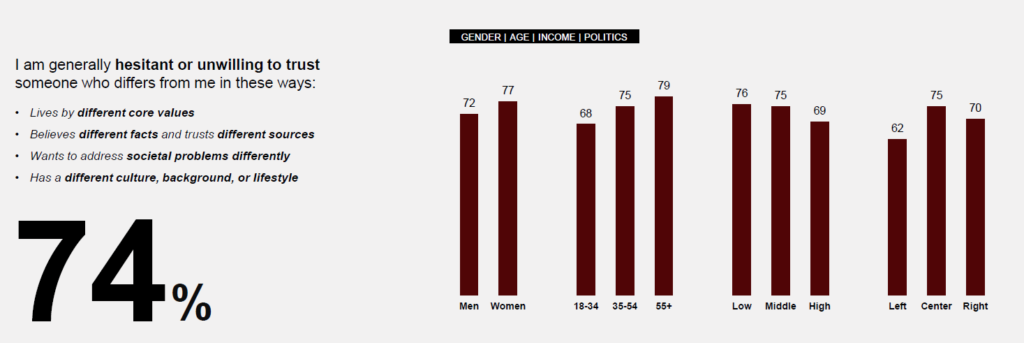
Nearly three in four Singaporeans are hesitant or unwilling to trust people who are different from them, according to the latest Edelman Trust Barometer 2026, signalling a deeper shift that could reshape how brands engage audiences. The study found that 74% of respondents in Singapore fall into an “insular” mindset, meaning they are reluctant to trust those with different values, beliefs, backgrounds or approaches to societal issues. Only a quarter of respondents said they were open to such differences. This suggests that the challenge is no longer just declining trust, but a shrinking willingness to trust at all. This shift cuts across demographics, with insularity spanning age, income and political lines. While it is slightly higher among older groups, the data shows a consistent majority across segments, suggesting the behaviour is structural rather than isolated to any one audience group. Don’t miss: Using AI in your content? You could be dampening brand trust  As such, mass messaging becomes harder to land, as audiences are less receptive to viewpoints or narratives that do not already align with their own. In turn, relevance, familiarity and shared values are becoming stronger drivers of engagement than reach alone. The impact is already being felt in the workplace and broader business environment. According to Edelman, nearly half of respondents said they would rather switch departments than report to a manager with different values, while 39% said they would put in less effort if their team leader held different political beliefs. Beyond the workplace, 37% said they would support reducing the number of foreign companies operating in Singapore, even if it resulted in higher prices. Taken together, the findings point to a growing tilt towards localism and values alignment, making it harder for global brands to compete without strong local relevance. Despite this, Singapore remains a relatively high-trust market at an institutional level. Government (76%), employers (70%), business (60%), media (60%) and NGOs (60%) are still trusted, even as slight year-on-year dips were recorded across most categories. Trust levels across institutions further reinforce this shift. While media in Singapore remains relatively stable, with 54% saying they trust it to do what is right, that figure sits just above neutral and reflects a fragile balance rather than strong confidence. At the same time, among those with an insular mindset, trust in business leaders is notably weak, with CEOs falling into distrust territory. Instead, trust is increasingly concentrated in familiar and local figures, including government leaders and personal networks. This suggests that authority alone is no longer enough to carry credibility, particularly for brands relying on top-down corporate messaging. The report also highlights a broader erosion of optimism, with only 32% of Singapore respondents believing the next generation will be better off. Combined with rising economic anxiety and concerns over misinformation, this creates a more cautious and inward-looking audience. With audiences becoming more selective, fragmented and less open to persuasion, broad-based campaigns may struggle while strategies rooted in local relevance, community voices and shared values are likely to carry greater weight in Singapore.  This growing scrutiny is also playing out online. According to Digital 2026 Singapore Meltwater We Are Social, 71.1% of Singaporeans are concerned about misinformation, pointing to rising demand for transparency and accountability in digital spaces. Despite Singapore’s high digital adoption, with nearly the entire population online and active on social media, users are becoming more intentional in how they engage. Concerns around data privacy and content credibility are shaping behaviour, with more consumers actively managing what they see, share and trust. This shift is reinforcing a broader pattern: whether offline or online, trust is no longer assumed but evaluated. Be part of #Content360 Singapore, 22–23 April 2026, where creativity and culture collide. Explore how AI-driven storytelling is shaping the future of content, gain practical insights, discover new tactics, and learn how the best in Asia are creating campaigns that truly resonate.   Related articles:  Singapore consumers trust peers over brands on Xiaohongshu   Cracks emerge in AI trust and media loyalty, Deloitte warns in 2025 outlook  Survey: Malaysians trust media more in 2024, but confidence in corporations drops  source

Trust turns inward in Singapore as insularity rises Read More »

British Airways finds the emergency exit for everyday pressures

British Airways has launched a new brand campaign, “An original British briefing”, aimed at inspiring travellers to step out of routine and rediscover adventure. The campaign centres on a one-minute film that features 14 employees and leans heavy into British humour. The film reflects on moments that inspires one to travel. This includes mishaps such as a car breaking down in the middle of construction with kids fighting in the backseat and the trash bag giving way while you’re on the way to throw it out. The airline also positions travelling as a way to escape one’s wit’s end, endless doomscrolling, emotional baggage from a micro-managing boss and group chats that frequently flood your messages with dog memes. It also flaunts possible romance with handsome strangers in Rome, unique nature experiences in Cape Town and Geneva, as well as wellness retreats on the sandy beaches of Mauritius.  Don’t miss: Durians and debate: Was SIA’s new safety video creatively too safe?  The campaign was done in collaboration with Uncommon Creative Studio.  The campaign is supported by a digital experience on the airline’s website, allowing users to explore flights, hotels, car rentals and curated itineraries. The narrative encourages travellers to swap their work suits for salopettes or trainers, mute notifications and fully immerse themselves in each destination. British Airways has been known for its humorous and tongue-in-cheek campaigns. In 2024, its safety video “May we haveth one’s attention” was inspired by Britain’s famous period literature. Rather than referencing specific book titles directly, it features scenes and characters reminiscent of works by authors such as Jane Austen. Some scenes include providing oxygen masks due to tight corsets and putting on seatbelts while horse riding.  Safety videos have since become a way for airlines to flex their creativity. Aside from British Airways, airlines such as Singapore Airlines and Cathay Pacific have also run safety videos that tap into local flavours. Singapore Airlines, for example, uses safety videos to showcase the country’s unique spots and cultural experiences. This includes lion dance troupes, quirky coloured HDB flats, and the pungent-yet-sweet durian fruit that has become a must-try while in Singapore. Meanwhile, Cathay Pacific showcases the vibrancy of Hong Kong by featuring charming local restaurants, classy nightlife and Chinese opera in its safety video.  Be part of #Content360 Singapore, 22–23 April 2026, where creativity and culture collide. Explore how AI-driven storytelling is shaping the future of content, gain practical insights, discover new tactics, and learn how the best in Asia are creating campaigns that truly resonate.   Related articles:    Singapore Airlines turns Miffy into its cutest co-pilot Malaysia Airlines takes flight with new culture-inspired safety video  Philippine Airlines launches ‘Fly with her’ campaign to uplift Filipina pilots   source

British Airways finds the emergency exit for everyday pressures Read More »

Which SG CEOs are getting the headlines, and why?

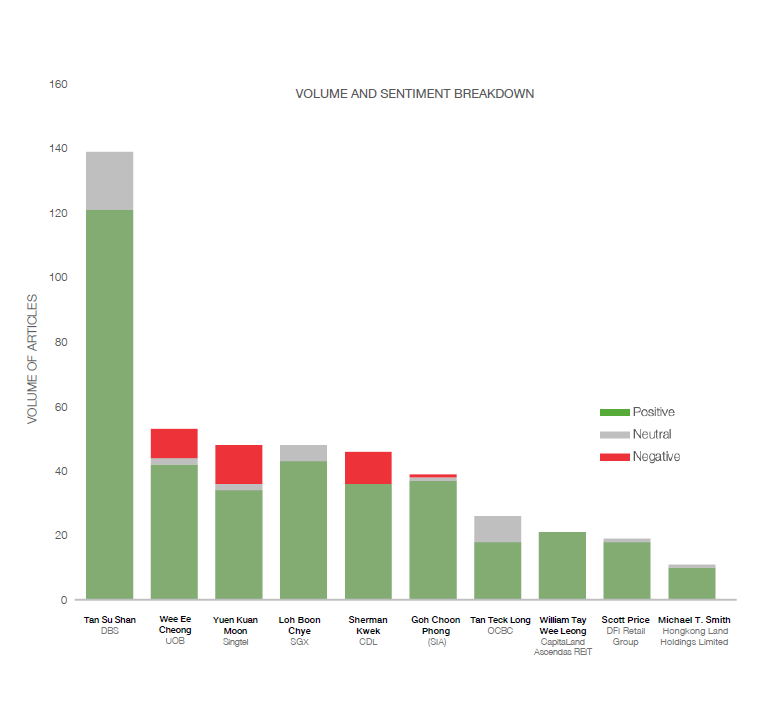
Singapore’s corporate landscape is seeing a shift in how CEOs are perceived by the media, with storytelling, purpose-driven messaging, and crisis communication emerging as key drivers of reputation. A recent analysis of CEO media coverage by media intelligence firm CARMA examined 10 Singaporean CEOs, including Tan Su Shan (DBS), Wee Ee Cheong (UOB), Yuen Kuan Moon (Singtel), Loh Boon Chye (SGX), Sherman Kwek (CDL), Goh Choon Phong (SIA), Tan Teck Long (OCBC), William Tay Wee Leong (CapitaLand Ascendas REIT), Scott Price (DFI Retail Group), and Michael T. Smith (Hongkong Land). The study monitored online coverage across 48 mainstream Singaporean outlets from October 2025 to January 2026, analysing nearly 500 articles in total. Out of all the 10 CEOs, DBS’ Tan Su Shan emerged as the most visible CEO during the monitored period, topping metrics for media visibility, favourability, and headline mentions. Tan also garnered zero negative coverage. The media framed her as a thought leader in digitalisation and AI, spotlighting DBS’ pioneering work in generative AI and her personal accolades, including recognition in Forbes’ 2025 list of the world’s most powerful women, said CARMA.  Don’t miss: Was the McDonald’s CEO’s Big Arch burger bite just a big act?  Coverage focused on her current achievements rather than her succession from Piyush Gupta, signalling that Tan had quickly established a distinct and authoritative personal brand within months of assuming the CEO role. In January 2026, banking CEOs showed distinct visibility patterns. Tan maintained her lead with 15 articles, while recently appointed OCBC CEO Tan Teck Long, who assumed the role on 1 January, was mentioned in 12 articles in his first month. Similarly, media attention on him have also been largely positive following news of OCBC’s share price outperforming expectations.  What drives coverage? Not all CEO visibility correlated with business results. UOB’s Wee Ee Cheong maintained positive coverage despite a 72% decline in net profit in Q3, with media attention highlighting his long-term leadership and community initiatives. In contrast, CDL’s Sherman Kwek faced sustained scrutiny over a high-profile governance dispute, even as CDL ranked among the top 10 performing stocks on the STI. This illustrates that financial results alone do not guarantee positive media coverage. Governance, communication, and context matter just as much, if not more. Meanwhile, operational issues also shaped CEO coverage. Singtel’s Yuen Kuan Moon faced pressure after the Optus outage disrupted emergency services, while Singapore Airlines’ Goh Choon Phong was in the spotlight over a problematic website launch. Their responses underscored the importance of effective crisis communication in maintaining stakeholder confidence.  Furthermore, CEOs who spoke on sustainability and social impact received positive media attention. Wee highlighted UOB’s community engagement and workforce development programs, Scott Price (DFI Retail Group) emphasised diversity and inclusion, and Michael T. Smith (Hongkong Land) launched pioneering environmental initiatives. As such, this suggests that purpose-driven narratives enhance visibility and reputation, helping to position companies as responsible and forward-thinking in the public eye. Language gaps point to untapped audiences Interestingly, CARMA found that coverage skewed heavily toward English-language media, with minimal mentions in Chinese, Malay, or Tamil-language outlets. Lianhe Zaobao, Berita Harian, and Tamil Saithi rarely featured CEO commentary, even on major corporate developments. Across the four-month monitoring period, only one CEO received a mention in Chinese-language media Lianhe Zaobao. The coverage featured Price quoted on the company’s plan to raise its dividend payout to 70%, which lifted its share price nearly 5%. This suggests that Singaporean CEOs and brands may be under-serving non-English-speaking stakeholders, representing a clear opportunity for inclusive communication strategies. Media coverage of CEOs doesn’t just reflect on the individual. In a previous conversation with MARKETING-INTERACTIVE industry professionals shared that coverage on CEOs can also shape perceptions of the entire company. How a leader is portrayed in the news can influence investor confidence, employee morale, and customer trust, whether coverage highlights strategic foresight, crisis management, or social impact. Even high-performing CEOs can face scrutiny if their actions or messaging miss the mark, while purposeful communication and visible leadership initiatives can boost both the executive’s and the company’s reputation. In Singapore, for instance, firms have seen firsthand how executive visibility and narrative framing affect stakeholder sentiment, underscoring that CEOs are often as much a brand asset as they are a decision-maker. Be part of #Content360 Singapore, 22–23 April 2026, where creativity and culture collide. Explore how AI-driven storytelling is shaping the future of content, gain practical insights, discover new tactics, and learn how the best in Asia are creating campaigns that truly resonate.   Related articles:   Why silence isn’t key to managing PropertyLimBrothers’ alleged scandal From boardroom to courtroom: Does comms have a say in the CDL family feud?  Outlasting the gossip: Why Astronomer doesn’t need to kiss its reputation goodbye  source

Which SG CEOs are getting the headlines, and why? Read More »