Digital Entertainment Leadership Forum 2024

Digital Entertainment Leadership Forum 2024

The digital entertainment ecosystem is constantly evolving, driven by the emergence of Web 3.0 and artificial intelligence (AI). This integration of technology and creativity aims to provide more enriched, personalised, and immersive experiences, redefining interactions and applications across various sectors, including gaming, TV & movies, animation & comics, music, sports, arts & culture, education, and lifestyle. DELF 2024 will not only showcase cutting-edge technologies and facilitate discussions but also transform into a dynamic carnival, offering an unparalleled entertainment experience that seamlessly blends virtuality and reality to enhance your enjoyment. For more details, please click here.

Digital Entertainment Leadership Forum 2024 Read More »

Transform Your Career: How UX UI Skills Can Propel You Forward

Transform Your Career: How UX UI Skills Can Propel You Forward

What you will learn in this FREE Webinar: Secret 1: How to get a career in tech without spending all your money on a university degree? 👉 Learn how to break into the tech industry and land a UX design job without the need for an expensive university degree. Secret 2: How to become an exceptional UX designer in less time even if I’m not creative? 👉 Discover proven strategies to develop your UX design skills quickly, even if you don’t consider yourself a naturally creative person. Secret 3: How to get a competitive UX Design salary without prior experience 👉 Explore techniques to negotiate a competitive salary in the UX design field, even if you’re just starting out. Don’t miss this opportunity to learn from industry experts and take the first step towards your dream career in UX design. Sign up now as spots are limited! Event Details: 📅 Date: Thursday, 15 August 2024 🕒 Time: 19:30 HKT 📍 Location: Online 🌐 Language: English For more details, please click here.

Transform Your Career: How UX UI Skills Can Propel You Forward Read More »

The Winning Mindset in Sports and Business| The DO Innovation Series

The Winning Mindset in Sports and Business| The DO Innovation Series

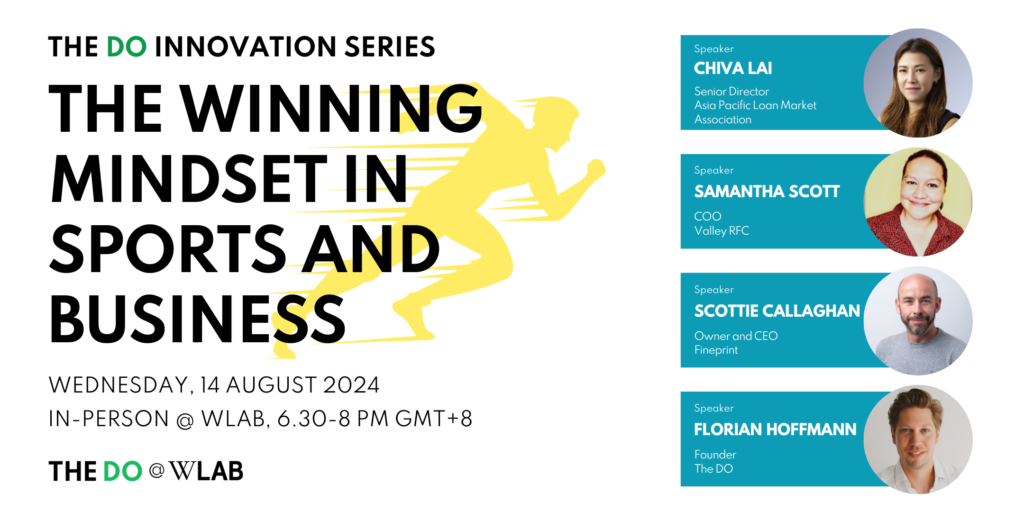
This engaging panel discussion will explore how the skills and mindset developed through athletic pursuits can unlock leadership potential in the business world. Featuring successful business leaders and accomplished athletes, the panel will share insights on topics such as goal-setting, perseverance, teamwork, and mental toughness – all crucial elements of both sports and effective leadership. Attendees will gain practical strategies for cultivating a “winning mindset” that can be applied in the boardroom and beyond. Whether you’re an athlete looking to transition your skills, or a business leader seeking to strengthen your leadership capabilities, this event promises to inspire and inform. Speakers: Chiva Lai, Senior Director at Asia Pacific Loan Market Association Samantha Scott, COO at Valley RFC Scottie Callaghan, Owner and CEO at Fineprint Florian Hoffmann, Founder at The DO *Please note that signing up for this event doesn’t confirm your attendance. For more details, please click here.

The Winning Mindset in Sports and Business| The DO Innovation Series Read More »

「BUD專項基金」- 電商易 簡介會

「BUD專項基金」- 電商易 簡介會

為資助企業發展電子商貿(電商)業務,拓展內地市場,政府在「發展品牌、升級轉型及拓展內銷市場的專項基金」(BUD專項基金)下推出「電商易」,讓企業可於「BUD專項基金」每家企業累計資助上限的港幣$700萬元中,靈活運用港幣$100萬元推行以發展內地市場業務的電商項目。 「BUD專項基金」電商易涵蓋5大措施,包括設計/製作網上銷售平台、投放廣告、製作/優化流動應用程式、建立/優化公司網頁,以及執行其他電商相關措施。是次簡介會將詳細介紹「電商易」的內容、申請須知、申請程序及評審標準等,屆時更提供現場一對一企業申請諮詢服務, 讓您掌握成功申請要訣 ! 欲知更多信息,請點擊這裏。

「BUD專項基金」- 電商易 簡介會 Read More »

[Free Webinar] Maximising the Value of Intellectual Property

[Free Webinar] Maximising the Value of Intellectual Property

Intellectual property (IP) is an intangible asset that can have tremendous value for any business. Understanding the importance of IP could help safeguard and maximise your business. For Inventors and Startups, patent application and protection are vital to safeguarding their inventions. This not only involves protecting innovative products or technologies but also securing a competitive advantage and a leading position in the market. For more details, please click here.

[Free Webinar] Maximising the Value of Intellectual Property Read More »

EDM Horizontal scaled

0+ 時裝展

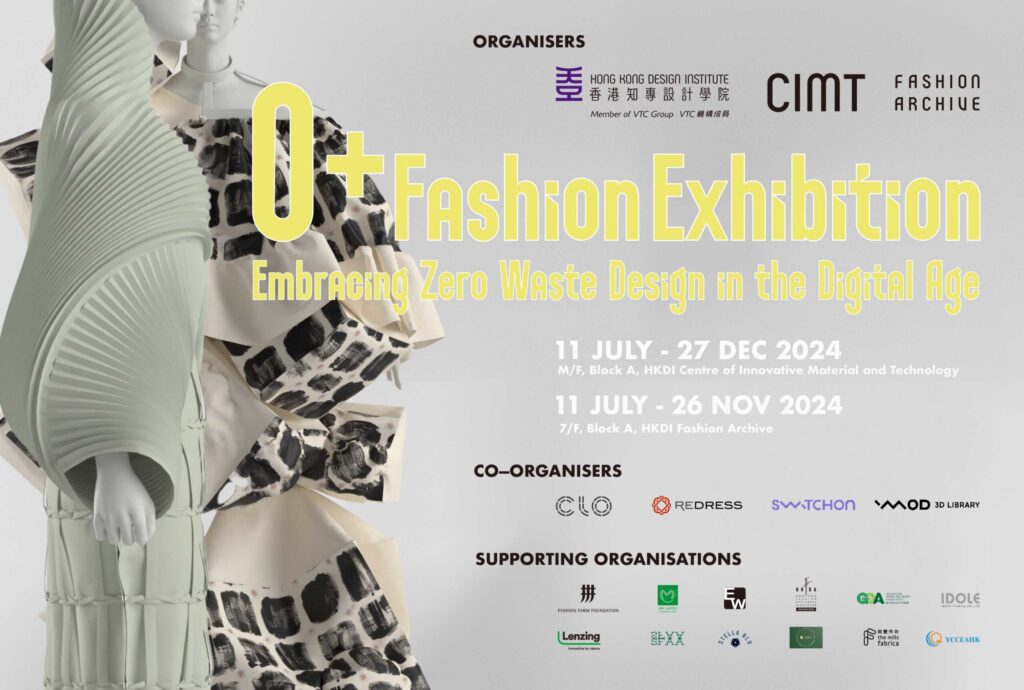
作為區內領先的設計學院,香港知專設計學院(HKDI)向來關注業內發展動向,並為學生提供前沿的理念及技術實踐。有鑒於時尚行業中服裝用料常被廢棄的現象,HKDI 及其旗下的知識資源中心 – 知專設創源、時裝資料館,由即日起至 2024 年 11 月 26 日,攜手舉辦以可持續發展和科技為主題的「0+時裝展」,展出由 HKDI年輕時裝設計師製作的 12 件零浪費時裝,希望透過展示零廢棄布料及零廢棄紙樣製作的理念和技術,喚起公眾對可持續布料及時裝設計的認知。 欲知更多信息,請點擊這裏。

0+ 時裝展 Read More »

family office co invest?

Co-Investment between Australia-HK Family Offices? Is it a way to go in this geo-political era?

Australian family offices often manage substantial wealth accumulated over many generations (since the Australian gold rushes, starting in 1851), providing them with a strong capital base to engage in diverse investment opportunities including land acquisition, farming, mining and real estate. Unlike institutional investors, family offices are not bound by short-term performance metrics. This allows them to pursue long-term investment strategies, often leading to more stable and sustainable returns. Does it make some business sense to cooperate between family offices in other places (such as in Australia and Hong Kong) for bilateral co-investment opportunities? Here are potential rationale into these partnerships or investment model: 1. Market Access Diversification: By investing in each other’s markets, family offices can diversify their portfolios geographically and sectoral, spreading risk and increasing potential returns, e.g. many Australian family offices have significant expertise in the real estate sector, which remains a cornerstone of their investment portfolios. Their ability to identify and invest in high-potential real estate projects is a major strength. HK family offices could be very interest in Australian real estate sector. Economic Synergies: Combining the financial strength and investment expertise of Hong Kong family offices with Australia’s robust economic sectors creates powerful investment opportunities, e.g. many Australian family offices may be interested a more populated market such as in the Greater Bay Area whereas there is an 85 million population with great consumption capabilities for Australian products/services. Australia family offices could be interest to find a right “blind stick” to invest there. 2. Expertise Sharing: Knowledge Transfer: Collaborative investments allow family offices to share market insights, regulatory understanding, and sector-specific expertise, enhancing overall investment quality or success, e.g. many Australian family offices have robust governance structures in place, ensuring that investment decisions align with the family’s values and long-term goals. This will be attractive to Hong Kong Family offices. 3. Tax Efficiency: HK government has offered a profits tax exemption on foreign-sourced income for family-owned investment holding vehicles (FIHVs) and their underlying special purpose entities (SPEs). This is part of Hong Kong’s strategy to maintain its competitive edge as a low-tax jurisdiction. A local HK family office partner will be helpful for Australian family offices. I can see the opportunities and threats in the above co-investment model and concept. If you are interested to learn more about family office co-investment opportunities in Australia-Hong Kong, please write email to [email protected]

Co-Investment between Australia-HK Family Offices? Is it a way to go in this geo-political era? Read More »

How to smoothly replace AI Chatbot by Digital Human?

How to smoothly replace AI Chatbot by Digital Human?

Replacing an AI chatbot with a digital human involves several key considerations: Realism and Interactivity: The digital human should be highly realistic, with natural-looking facial expressions, body movements, and speech patterns that create an engaging and immersive interaction for the user. This may require advanced technologies such as 3D modeling, motion capture, and natural language processing. Conversational Abilities: The digital human should have the ability to understand and r… To read the content, please register or login Username Password Remember Me     Forgot Password

How to smoothly replace AI Chatbot by Digital Human? Read More »

Digital Humans

Digital Humans: Complementing or Completely Replacing Chatbots?

Digital humans have the potential to replace traditional chatbots in certain scenarios: Compared to text-based chatbots, digital humans can leverage advanced computer graphics, animation, and speech synthesis to provide more realistic and engaging interactions. This can lead to more natural and immersive conversations, potentially enhancing the user experience. Digital humans can be designed with the ability to sense and respond to human emotions, providing more empathetic and personaliz… To read the content, please register or login

Digital Humans: Complementing or Completely Replacing Chatbots? Read More »

This article will tell you why it is difficult for startups to raise funds locally. Why should you consider listing on Nasdaq? When is the best time to list?

Why it is difficult for startups to raise funds locally? Up to the year 2023, Hong Kong’s start-up ecosystem is thriving. In 2023, the number of start-ups in Hong Kong grew to more than 4,200 with some 16,453 people employed in such businesses.  Biotechnology, artificial intelligence (AI), smart city and financial technologies (fintech) have been identified as the four key areas for Hong Kong’s innovation and technology (I&T) industry. The city’s expenditure on research and development has almost doubled in absolute terms from a decade ago.  However, the stagnant initial public offerings and geopolitical tensions have created a challenging venture capital environment in Hong Kong, resulting in a domino effect, forcing companies and investors to look elsewhere for opportunities. So there never have shortage of tech inventors and innovators in the city, but it is hard to commercialize their products.  And even successful commercialized tech companies are doing very little to do more to help struggling start-ups and create much-needed ecosystems.  There are no shortage of tech entrepreneurs with brilliant ideas, but investors are slow to put money into projects. There are a few key reasons why it can be difficult for startups to raise funds to commercialize: * Limited access to venture capital and angel investors: Many of the largest and most active venture capital firms and angel investor networks tend to be concentrated in major global tech hubs in U.S. like Silicon Valley, New York, and Boston. Startups located outside of these hubs, Hong Kong, have less direct access to these funding sources. * Smaller and shrinking local investor pools: The pool of active local investors, whether angel investors or venture capitalists, is often smaller in regions outside of the major tech centers. This reduces the number of potential funding sources for startups. Although the number of startups are climbing up from a decade ago, Hong Kong still has a limited venture capitalist ecosystem, which results in limited access to venture capital, which also is originated from lack of a strong market momentum in encouraging more potential investors. Due to these reasons, Hong Kong startups have to face funding problems, eventually leading to business losses or even closure. Indeed, many of the startups try their own ways to overcome this problem by adopting bootstrapping, which rely on the funds generated through the operations of the startup business and the money saved by limited continuous R&D activities. These startups are trying their best all the times to find other alternative funding sources like angel investors, private investors, and even more relying on government grants to get them alive.  However, the success rate of obtaining government fundings is far from expected. * Lack of startup ecosystem maturity: Thriving startup ecosystems take time to develop. Regions without a well-established history of successful startups, lack of promising exits for investors, and slump of active investors may struggle to attract the same level of funding and support for new ventures. * Geographic bias: Due to internal economy downturn and various external risks and challenges, the Investors, especially larger VC firms, may be hesitant to invest in startups located far from their own offices, as a large portion of these overseas investors may have exited or only maintain a minimum office space in Hong Kong.  It will be more challenging to provide hands-on support and oversight from a distance. * Perceived risk: Investors may view the Hong Kong as less established startup regions as riskier investments, due to factors like access to talent, industry expertise, and exit opportunities. Other unfavorable factors: – Talent Acquisition and Retention – High Cost of Living and Operating Expenses – Market Competition – Stringent Regulations and Compliance ~ ~ ~ ~ ~ ~ ~ ~ ~ ~ Why should you consider listing on Nasdaq? The main considerations are the key differences between a Hong Kong IPO and a Nasdaq IPO: * Listing Requirements: The Hong Kong Stock Exchange (HKEX) has specific listing requirements such as a minimum market capitalization, track record, and financial criteria that companies must meet to list in Hong Kong. NASDAQ: The NASDAQ exchange has its own set of listing requirements differ from the HKEX requirements. NASDAQ listing rules focus on factors like minimum share price, minimum number of shareholders, and financial metrics. * Regulatory Environment: The IPO process and listing requirements in Hong Kong are governed by the Securities and Futures Ordinance and regulated by the Securities and Futures Commission (SFC). The IPO process and listing requirements in the United States, including NASDAQ, are regulated by the Securities and Exchange Commission (SEC). * Investor Base: The investor base in Hong Kong is primarily composed of local and regional Asian investors, with a significant presence of institutional investors from mainland China. The investor focus is less variety but more on traditional equity and fixed income investment, less willing to pour into higher risky and higher return venture. The NASDAQ exchange attracts a more diverse global investor base, including a large number of institutional and retail investors from the United States and internationally. * Industry Focus: The HKEX has a strong focus on industries such as financials, real estate, traditional industry sectors, and companies with China-related business operations. The NASDAQ exchange is known for its concentration of emerging technology, biotechnology, and other high-growth companies. ~ ~ ~ ~ ~ ~ ~ ~ ~ When is the best time to list (in Nasdaq Capital Market)? For most of the startup with their dream to launch the successive fundraising, here is some hints of the best conditions for a startup to list on the Nasdaq Capital Market: * Company Size and Maturity: The Nasdaq Capital Market is generally suitable for smaller, less-established companies compared to the Nasdaq Global Select or Nasdaq Global Market. Typically, startups with a market capitalization between $50 million to $300 million are well-suited for the Nasdaq Capital Market. * Financial Requirements: Minimum share price: $4 per share Minimum market value of publicly held shares: $15 million Minimum stockholders’ equity: $5 million Minimum number of


This article will tell you why it is difficult for startups to raise funds locally. Why should you consider listing on Nasdaq? When is the best time to list? Read More »