what is odi

Why knowing more about China’s ODI framework could be your interest?

For many Australians (even those working in Financial Services sector with an Australian Financial Services Licence) may or may not fully understand the China’s ODI framework and its approval process. For example, if Australian entrepreneurs or SME wants to invest overseas or set up their factories or subsidiaries in other countries, they don’t need to get approval from State or Federal government for their overseas direct investment. On the other hand, China’s Overseas Direct Investment (ODI) approval process is a regulatory framework designed to ensure that Chinese companies’ overseas investments (and/or M&A) align with the country’s broader economic, diplomatic, and strategic goals. This process is particularly important as China continues to grow its global investment footprint. The approval system also serves as a safeguard to manage risks and prevent reckless capital outflows that could negatively impact China’s financial stability. In a simple context, within Chinese government’s ODI framework, there is a Simplified vs. Full Approval Process: – Small-scale investments (typically less than USD 10 million) or non-sensitive investments often go through a simplified process, which may only require filing with local NDRC (Development and Reform Commissions) and MOFCOM (Ministry of Commerce) instead of full approval. – Large-scale investments (over USD 300 million) or investments in sensitive sectors (such as national security, finance, and technology) undergo a more rigorous review, requiring full approval from both national NDRC and MOFCOM and potentially additional regulatory scrutiny. How does the China’s ODI relates to Australian entrepreneurs or project owners? Chinese companies seeking to expand their global presence may invest in or partner with Australian project owners in various sectors such as infrastructure, real estate, energy, mining, agriculture, technology, and education. These investments typically fall under China’s ODI strategy. For instance, if a Chinese company invests in an Australian project (such as a vineyard, a property project, a mine, a Joint-Venture with a Startup/Financial Services Institution, a new port, etc. ), the Australian project owner is the direct recipient of the funds, technical collaboration, or management expertise from the Chinese investor(s). 😆 😆 If you are interested to learn more about ODI, its approval process, its costs and how long an ODI case approved, please write email to: Joseph Tse Vice President (Venture Incubator & Business Growth) 副总裁 (风险投资孵化器与业务增长) Email: [email protected]

Why knowing more about China’s ODI framework could be your interest? Read More »

Starthub.Asia could be your partner and a “Go Global” platform ???

As a CEO of an Australian Startup/Scale-ups, have you thought about how to enhance your company’s market share, revenue, and profitability OR getting new funding sources and business partners in alien countries such as Middle East, ASEAN countries, Latin American countries or Greater Bay Area of China? Here are some key strategies that businesses can be employed for sustainable growth for “Going Global”: 1. Market Development – Goal: Enter new markets with existing products or technology knowhow – Tactics: Geographical expansion, targeting new customer segments, or leveraging digital channels to reach global customers. – Example: Starbucks expanded from North America into Asian and European markets, adapting its products to local tastes to attract new customers. 2. Diversification – Goal: Enter new markets with new products, diversifying the business. – Tactics: Companies may acquire businesses in other industries or develop entirely new product lines. – Example: Amazon diversified beyond e-commerce into cloud computing (AWS), content streaming, and hardware like smart home devices 3. Strategic Partnerships and Alliances – Goal: Collaborate with other businesses to expand market reach or capabilities. – Tactics: Form joint ventures, partnerships, or strategic alliances to leverage the strengths of each partner. – Example: Spotify and Hulu formed a partnership to bundle services and increase subscriptions for both platforms. Startups Community Asia Ltd (with its Starthub.Asia platform) is a Hong Kong-based independent organization dedicated to assisting, supporting, and nurturing technology startups, scale-ups and entrepreneurs through our tailored made matching, networking and corporate advisory process. We help our clients to screen and select from our Asian-centric databases for an appropriate 5-10 investors, business partners, mentors/advisors and/or business partners to make a difference in their strategic business growth. In our platform, we have: 6,000+ Investors 4,000+ Startup/Scale-ups 1,300+ Corporate Advisors 3,000+ Enterprise C-Level Executives Our mission is to enhance our client’s competitiveness and accelerate their growth sustainably. If you are interested to discuss how Australia Startup/Scale-up to go out for new funding sources and market opportunities especially in the GBA, refer to my previous posts please write email to Joseph Tse Vice President (Venture Incubator & Business Growth) 副总裁 (风险投资孵化器与业务增长) Email: [email protected]

Starthub.Asia could be your partner and a “Go Global” platform ??? Read More »

NetSuite Inside the Suite Hong Kong

Event Details with Limited Spots Available !! We’re thrilled to announce that NetSuite Inside the Suite Hong Kong is happening soon!  This is a workshop organized by Oracle NetSuite,  fully supported by StartHub Asia. Feeling restricted by your current business management tools? Ever wish you could get hands-on experience in an ERP software before making the investment? Inside the Suite allows you to: Experience first-hand how easy managing your business in NetSuite is—from Receivables to Payables, KPIs, and Analytics. Connect with NetSuite product, educational, and support experts to have your questions answered. Take a look Inside the Suite through a free NetSuite demo account and see how easy it is to streamline complex processes, generate timely reports, and track progress toward crucial metrics with the click of a mouse. Best of all, this session comes at no cost to you! Date: 26th September 2024, Thursday Time: 9am-2pm (Coffee & Lite Bite will be served) Place: 8/F, Lee Garden Three, Causeway Bay   Pre-registration is now open exclusively to StartHub Asia Members like yourself. To register for this event please register via the link below and we will reserve a spot for you. Register Now

NetSuite Inside the Suite Hong Kong Read More »

Any Differences between Australia and Hong Kong Startup Ecosystem?

Any Differences between Australia and Hong Kong Startup Ecosystem??

Australia and Hong Kong have dynamic startup ecosystems, but they differ in terms of size, industry focus, salary level, and government support. Let me share a few points of Australia and Hong Kong Startup ecosystems based on personal observations in Melbourne/Sydney and Hong Kong. Market Size & Access Australia has a relatively smaller domestic market (27 Million population) but is positioned as a gateway to the Asia-Pacific region. However, I have been living in Australia for nearly 7 years and did not really see many Australian Startups are expanding their business focus and market coverage for countries in ASEAN, Japan, Korea and/or China. Whereas, based on visits to Hong Kong Incubation and Acceleration hubs in the past two years, many Startups based in Hong Kong (local or International) had claimed that they were focusing on new markets and ready for going out (I) Northbound to Greater Bay Area (a market of 85 Million population) (ii) Southbound to ASEAN countries (a market of 600 Million). Key Sectors The Australian startup ecosystem focuses on Fintech, MedTech, Agritech, and Renewable energy. On the other hand, Hong Kong’s ecosystem is known for its strengths in Fintech, Blockchain, Logistics, and AI. There’s a rising focus on deep tech and e-commerce. Talent Pool & Salary Australia has a highly educated workforce and is home to top universities. However, IT or tech talent in Australia is generally very expensive. Entry-level: AUD 65,000 – AUD 85,000 per year Mid-level: AUD 90,000 – AUD 110,000 per year Senior Engineer: AUD 120,000 – AUD 150,000+ per year IT specialists in cybersecurity, cloud engineering and data scientist can command higher salaries, often exceeding AUD 160,000-200,000+ per year On the other hand, Hong Kong benefits from a multilingual workforce with strong financial and tech expertise, drawing talent from China and other parts of Asia. In summary, both Australia and Hong Kong have thriving startup ecosystems and could be complemented to each other’s. If you are interested to learn more about Australia and Hong Kong Startup ecosystems and opportunities, please refer to my previous posts and/or write email to [email protected] . 🤗

Any Differences between Australia and Hong Kong Startup Ecosystem?? Read More »

Australian Startup CEO faces new troubles for fund raising?

Australian Startup CEO faces new troubles for fund raising?

As of September 2024, Australia is not officially in a recession, but it is facing significant economic challenges. The country has entered a per capita recession, where GDP per capita has declined for two consecutive quarters. While overall GDP is still growing slightly due to influx of new migrants (528,000 in 2022–23 to 395,000 in 2023–24), the forecasted 2024 GDP growth could be 1.3%! Rising interest rates (current official cash rate is 4.35% and RBA may keep the rate in this level during 2024), inflation rate (raising from 3.6% to 3.8%), and economic uncertainties (iron ores pricing fell from US$140 to 90+) have made Australian investors more cautious and sometimes worrying. The uncertain economic outlook would further discourage capital allocation towards high-risk ventures like startups, i.e. analysts expect these conditions to persist into 2024, heightening concerns of a broader downturn. So, are there anywhere that the Australian Startup CEO could seek new support and fund sources? My Starthub.Asia CEO friend has recently updated me about how Hong Kong has been actively supporting startups through its major incubation hubs: Cyberport and the Hong Kong Science and Technology Parks (HKSTP). Below are what he has shared with me and hopefully it could be informative to Australian Startup CEOs and CFOs. 1. Cyberport: The Cyberport Incubation Programme provides startups with up to HK$500,000 in financial assistance, including an initial working capital grant and performance-based funding. It also offers rent-free office space, access to shared facilities, and opportunities for networking with investors and industry leaders. This programme focuses on digital technology startups that align with smart living solutions, such as e-commerce, education, and healthcare. 2. HKSTP: Through its HKSTP Venture Fund, HKSTP has supported over 1,700 companies (local and international), provided direct investments and facilitating co-investments with private investors. The fund has an AUM of HK$1 billion, with over 4,500 investment matchings made since 2018. In total, HKSTP companies have raised around HK$93.7 billion in funding. Both organizations play a crucial role in Hong Kong’s strategy to build a vibrant tech startup ecosystem by providing funding, resources, and international exposure for startups. If you are interested to discuss how Australia Startup/Scale-up to go out for new funding sources and market opportunities especially in the GBA, refer to my previous posts please write email to [email protected]

Australian Startup CEO faces new troubles for fund raising? Read More »

read sea, blue sea

A lesson to be learned by CEO/Founders: Red Sea Vs Blue Sea !?

There is a Chinese saying, “It’s hard to start a business, but it’s even harder to keep it going and successful.” Once the business is on track, most founders are no longer willing to take risks and innovation. In addition, they tend to rely on past successful experiences, which makes their thinking become more conservative. A recent business case is about HKTVMall in Hong Kong, where the CEO/founder has created a very successful e-commerce business during the past couple years. He established his own warehouse fleet, streamlined logistics, and introduced a “fulfillment” system to deliver goods as fast as the same day. He successfully changed Hong Kong’s online shopping market ecosystem. The total gross merchandise volume (GMV) in 2020 reached 5.95 billion HKD, more than double the 2.78 billion HKD in 2019 before the epidemic, and it turned from a loss to a profit for the first time, with a net profit of 180 million HKD. Unfortunately, when the online shopping business stabilized (after the pandemic), the e-Commerce business was no longer growing at a high rate as Hong Kong is a small market space of 7.5 M population and is an open market for entry of new competitors. The past successful experience has caused the CEO/founder to think within the box and only focused on developing his business in a “red” sea, i.e. the known market space, where industry boundaries are defined, and companies try to outperform their rivals to grab a greater share of the existing market. Another major mistake could be the spending 215 million HKD to repurchase shares to support the share price, which only made the company had less resources to develop new markets and/or new technological innovation in the e-commerce sector. On the contrary, some locally established Hong Kong start-up companies failed to settle in Hong Kong, but successfully “exported” and even became unicorn companies in Southeast Asia. If you are interested to discuss how Australia companies to go out especially in the GBA or Latin American market, refer to my previous posts please write email to [email protected]

A lesson to be learned by CEO/Founders: Red Sea Vs Blue Sea !? Read More »

high ROI less risks?

Too much money to invest could be a challenge to Australian Superannuation Fund CIO !?

As of 2023, the Australian superannuation system had grown significantly, with the total assets under management (AUM) across all superannuation funds exceeding AUD 3.5 trillion. However, the total market capitalization of the Australian Securities Exchange (ASX) was approximately AUD 2.5 trillion. This implies that Australian Pension Fund CIO has to invest internationally and in different asset classes (which could be risky). Here’s a list of the top 5 largest superannuation funds in Australia: Australian Super Aware Super QSuper UniSuper Australian Retirement Trust While managing a large pool of assets offers opportunities for diversification and access to unique investments, it also brings about many challenges as below: As funds grow, finding sufficient investment opportunities that can absorb large amounts of capital without significantly impacting the market becomes difficult. The CIO may find it challenging to identify enough high-quality investment opportunities that align with the fund’s risk-return profile. As the fund grows, so does the complexity of its operations. Larger funds often require more layers of governance and oversight. Large pension funds are often subject to increased regulatory scrutiny. Large pension funds are under constant public scrutiny. Australian Super, one of Australia’s largest superannuation funds, has faced scrutiny and criticism over the years for several investment decisions that were perceived as mistakes. e.g. Australian Super has significant exposure to the UK property market. This market faced considerable headwinds due to Brexit and the COVID-19 pandemic, leading to lower-than-expected returns. e.g. Australian Super reportedly experienced a significant loss of around AUD 200 million in its investment in Pluralsight. This loss occurred when Pluralsight, a U.S. based online education company, was acquired by the private equity firm Vista Equity Partners in 2021. The buyout price was lower than what many investors had anticipated, leading to a substantial loss for those who had invested in the company at higher valuations, including Australian Super. The investment in Pluralsight was part of Australian Super’s strategy to diversify into technology and growth-stage companies, but the outcome highlighted the risks associated with such investments. Luckily, it’s important to remember that the top 10-20 Australian superannuation funds are huge and manage a large and diversified portfolio, which helps to mitigate the impact of losses from individual investments. This is the good news to Australian pensioners! If you are interested to discuss Australian Superannuation market as well as Australian opportunities, please write email to [email protected]

Too much money to invest could be a challenge to Australian Superannuation Fund CIO !? Read More »

social icon

The current risk is investing too little in AI, rather than too much ???

In the blink of an eye, there is only one week left in August. With Wall Street and Japanese stock markets rebounding sharply (more than 10%), investors should no longer be frightened by the “Black Monday” crash (whereas over $1 trillion US has been shaved off the market caps of the magnificent seven) at the beginning of August. This post will talk a little more about the Nvidia and AI investment by the tech giants rather than the probability of a US recession. Let’s start looking at Nvidia. Nvidia will release its earnings on August 28 after the close of trading.  Its share was up 170% in the past year. Nvidia’s stock was up 3,000% in the past five years. Its PE Ratio (TTM) for today is US$ 74.95 (as at 2024.8.23). Next, how much the tech giants are investing in AI? CEO Mark Zuckerberg has said that Meta would spend US $30 billion on AI related tech infrastructure in 2024, and the company would spend even more in 2025. Alphabet splashed $145 million US per day on AI infrastructure during the second quarter. The spending also seems to be accelerating. Overall, in 2024 and 2025, tech giants are heavily investing in artificial intelligence (AI) infrastructure. These companies are expected to spend over $1 trillion on AI in the coming years. Here comes a question: are these tech giants making good business decisions and growth strategy in its AI investment? Nobody can ignore that the financial strength of these companies allows them to absorb the costs, and the risks associated with these investments are considered manageable due to their near monopoly market position, vast resources and huge company size. Despite their market positioning, concerns remained as below: 1.   The payoff from these AI investments may not materialized as quickly as anticipated. 2.   The PE of these tech giants are already in a high-water mark. Ÿ Apple: 29.0 Ÿ Microsoft: 34.4 Ÿ Alphabet: 28.1 Ÿ Amazon: 74.5 Ÿ Meta Platforms: 34.6 Ÿ Tesla: 66.2 3.   In the case of Meta and Alphabet: neither of them charges for their AI basic services. Will their AI investment help them to sell more advertising and attracting more clients for more revenue and profits? Nobody has a crystal ball for knowing Nvidia share price trend in 2025 and exactly how AI will impact the tech giants as well as impacting our world. I think (i) we can confidently say AI will have a large impact on our world (ii) we can learn from history. Between 1998 and March 2000, Cisco’s stock price soared by over 1,000%.  At its peak, Cisco was the most valuable company in the world, with a market capitalization exceeding $500 billion. However, when the bubble burst, Cisco’s stock price plummeted dramatically. By 2001, its share price had dropped by nearly 80% from its peak. If you are interested to discuss the growth strategy via AI, please write email to [email protected]

The current risk is investing too little in AI, rather than too much ??? Read More »

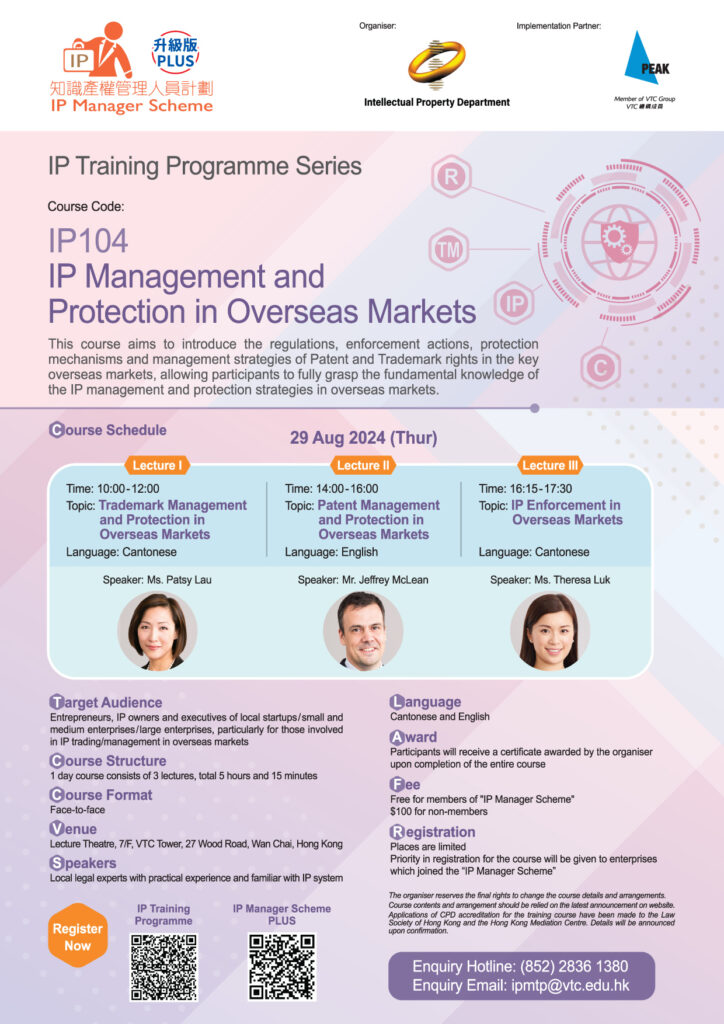
IP104 IP Management and Protection in Overseas Markets

IP104 IP Management and Protection in Overseas Markets

This course aims to introduce the regulations, enforcement actions, protection mechanisms and management strategies of Patent and Trademark rights in the key overseas markets, allowing participants to fully grasp the fundamental knowledge of the IP management and protection strategies in overseas markets. The medium of instruction will be Cantonese and English. Participants will receive a certificate upon completion of the respective training course. To register, please visit here. For more details, please click here.

IP104 IP Management and Protection in Overseas Markets Read More »

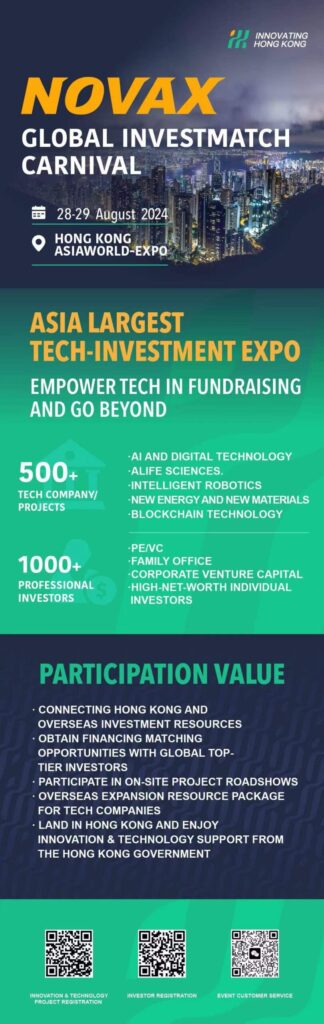
NovaX Global Investmatch Carnival 2024

NovaX Global Investmatch Carnival 2024

NovaX Global Investmatch Carnival 2024 is set to commence, marking an unmissable event in the realms of technology and venture capital. As one of Asia’s most influential innovation and investment events, it brings together top-tier innovative companies, investment institutions, industry experts, and leaders from around the world to explore technological frontiers and investment opportunities.The carnival will take place on August 28-29, 2024, at AsiaWorld-Expo Hall 3. It is expected to attract over 10,000 participants from various regions, including 500 international professional investors, 300 innovative companies, and extensive coverage by 200 media outlets. This is a global platform gathering the power of technological innovation and a bridge connecting investment and creativity. During this exhilarating event, participants will have the opportunity to listen to insightful speeches from industry leaders and innovation pioneers, engage in numerous themed roundtable discussions, have one-on-one speed meetings with investors, and showcase their innovative projects to receive immediate feedback. It will be a festival of brainstorming and inspiration, helping innovative companies seek funding support and collaboration opportunities while enhancing their visibility and influence in the international market. To register, please visit here. For more details, please click here.

NovaX Global Investmatch Carnival 2024 Read More »