Inside MAD’s stunning spiral-cloud science museum

Recently completed in Haikou, China, the Hainan Science Museum is an impressive 46,528-sq-m (500,823-sq-ft) cultural hub for science and technology education. Designed by lead architect Ma Yansong, from MAD architects, the museum is positioned at the edge of the Wuyuan River National Wetland Park. From the exterior, the building resembles a soft cloud-like volume. The facade is assembled from 843 fiber‑reinforced plastic panels, each shaped and detailed to withstand Hainan’s tropical climate. The result is a reflective silver envelope that shifts with cloud cover and time of day. This isn’t just a museum, it’s an invitation to exploreArch Exist Three concrete cores bear the primary loads of the museum, freeing the gallery floors from interior columns and enabling long, uninterrupted exhibition spaces inside the museum. This structural decision allows the museum’s mass to be cantilevered over reflecting pools and a covered plaza, creating a series of public spaces beneath the overhang, where locals can gather and enjoy the location without the need to enter the facility. Shaded from the sun and open to breezes from the wetland, the plaza functions as a meeting ground for the neighborhood: parents waiting at pickup time, students gathering before workshops, and residents simply cutting through on their way elsewhere. Inside, the museum boasts a planetarium, giant-screen theater, exhibition zones, and landscaped outdoor teaching plots organized around regional species and observable plant phenomena. Visitors are typically brought by elevator to the uppermost exhibition level and then follow a broad, gently descending ramp that coils around a central void. Every curve designed to spark imaginationArch Exist A large opening in the roof brings daylight deep into this atrium, so the path is continuously lit from above. On one side, tall windows frame views of the surrounding greenery; on the other, the route passes a sequence of galleries and activity spaces. “I wanted the project to be built on the idea of flow and chaos – space, function, and knowledge to flow into one another, freely,” says Ma Yansong. “If artificial intelligence can already answer almost any question, a science museum’s job is no longer to deliver facts. It is to teach children how to ask them.” A museum designed for wandering minds and future innovatorsArch Exist This ambition shapes both the open exhibition sequence and the way topics slide into one another, encouraging wandering and cross‑connection, rather than linear lesson plans. The museum also sits within a wider scientific landscape. Hainan Island hosts China’s coastal space launch center on its eastern shore, with dozens of missions to orbit, the Moon, and Mars since 2016. The new institution positions those achievements not as distant spectacles but as part of a local story, set within walking distance of more than 30 schools and kindergartens. Source: MAD source

Inside MAD’s stunning spiral-cloud science museum Read More »

Wild sleeping bag goes atomic with adaptive insulation tech

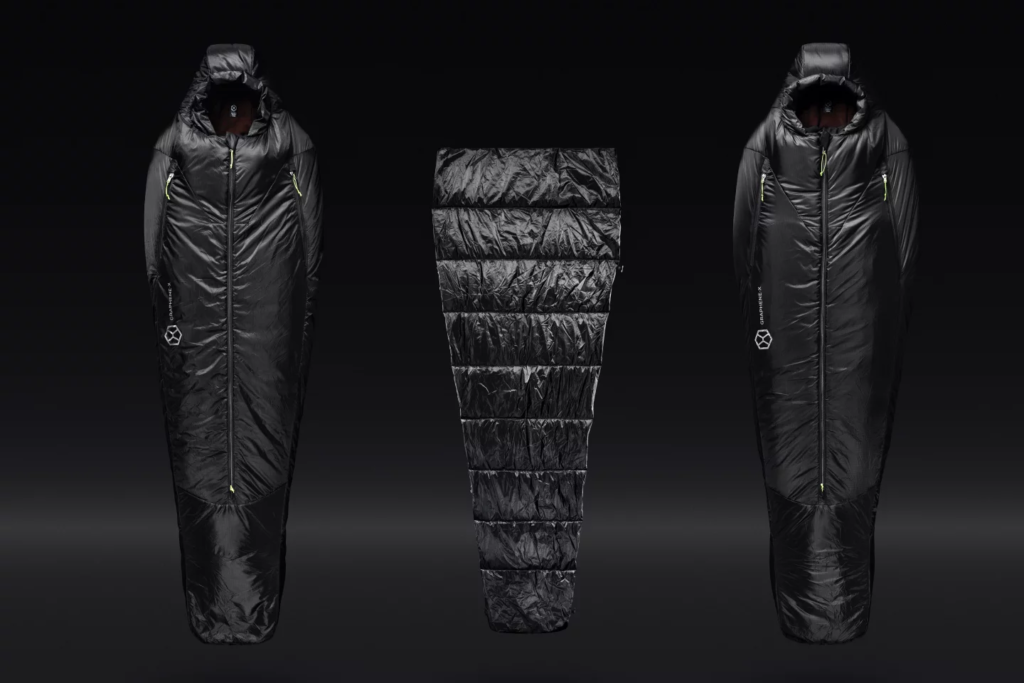
Graphene-X is a Hong Kong-based company that produces outdoor clothing and gear. This time around it’s entering the camping market with a product called the Tardigrade Sleeping System, currently available for backing on Kickstarter. The product is named after the tardigrade – a tiny organism famous for being one of the toughest life forms on Earth, capable of surviving temperatures between -272 °C and 150 °C (-458 °F and 302 °F). The new sleeping system from Graphene-X might not match that extreme range, but it’s promised to offer a good solution for both summer and winter camping. The complete Tardigrade Sleeping SystemGraphene-X With so many sleeping bags already available, it may seem like there’s little room for innovation. The team at Graphene-X sees this market differently though. The company argues that choosing the right sleeping bag still comes with a lot of compromises. And this is a fair point: a high-quality bag can be quite expensive, and we understandably expect a lot from it. Ideally, every camper wants a single solution that works across all seasons instead of buying several separate bags. And this is the main inspiration behind the Tardigrade Sleeping System. It’s not a single product, but rather a modular system that combines three components: Tardigrade Extreme – a winter-oriented sleeping bag rated down to -30 °C (-22 °F) and weighing 1.9 kg (67 oz) Tardigrade Lite – a lighter three-season sleeping bag rated down to -10 °C (14 °F) and weighing 1.4 kg (49 oz) Modular Cover – a thin layer with 150 g/m2 Graphinsulate fill that can be attached inside either sleeping bag using buckles for extra warmth. It weighs 334 g (12 oz) The biggest challenge was to make the whole system adaptive to different conditions, and that was achieved through a smart combination of materials. It involves two key technologies: Graphinsulate insulation and WAI (Weather Adaptive Insulation). Graphene is a one-atom-thick layer of carbon atoms arranged in a hexagonal structure. This material is incredibly strong and conducts heat very efficiently. It has a better warmth-to-weight ratio than down insulation and maintains its quality after multiple washes. The second important component is aerogel, an ultra-light material made by removing the liquid from a gel and replacing it with air. Because of its low density and strong insulating properties, it has been used in space missions by NASA. The aerogel fibers used in the sleeping bagGraphene-X The creators of Tardigrade integrated aerogel into polyester fibers by filling special internal fabric tubes with it. Those tubes can inflate or deflate depending on the temperature outside. This is part of the WAI system, which allows the sleeping bag to adapt to different weather conditions without becoming heavy or bulky. There are several additional features worth mentioning. One of the priorities for the team was to create a product that feels more like sleeping in a bed rather than in a sleeping bag, so a lot of effort went into reducing typical inconveniences. Sleeping in a traditional bag often feels like being in a cocoon where you can’t move freely, and need to unzip the whole thing to reach your phone or water bottle. To address this, Tardigrade features zippers just for the arm areas, so cold air doesn’t enter the bag as quickly. The sleeping bags stuff down into an included compression packGraphene-X Another common issue is sliding off the sleeping pad, and this was solved by adding stretchy hoops to the bags to hold the inflatable mattress underneath. Both versions (Extreme and Lite) are compatible with mattresses measuring 220 x 56-65 x 8 cm (86.6 x 22.0-25.6 x 3.1 in). Both sleeping bags come in the same size, measuring 210 x 80 x 50 cm (82.7 x 31.5 x 19.7 in). Tardigrade sleeping bags also feature an additional graphene layer at the foot end for added warmth, and an internal pocket. Early Kickstarter backers can get all three components for US$629, with a planned retail price of $979, or purchase them separately: Lite for $249, Extreme for $359, and the modular cover for $109. A compression packing bag is included in each system. Assuming the campaign is successful, shipping will begin in November. Tardigrade Sleeping System Source: Kickstarter Note: New Atlas may earn commission from purchases made via links. source

Wild sleeping bag goes atomic with adaptive insulation tech Read More »

Nike and BTS team up for global merchandise blitz

Nike is partnering with global pop music icons BTS to debut a first-of-its-kind “Nike by you” customisation experience alongside an exclusive merchandise collection for the group’s upcoming BTS WORLD TOUR “ARIRANG.” The initiative blends experiential retail with tour merchandise to create a cohesive collection celebrating BTS’ creative journey. The partnership aims to provide global fans with unique, interactive touchpoints for self-expression and fandom. At the core of the collaboration is the “Nike by you” experiential retail activation, which features 10 custom graphics designed specifically for the band. The initiative allows consumers to co-create and personalise select Nike apparel and tote bags. According to the brand, each graphic incorporates expressive shapes and fluid movement meant to mirror the evolution of BTS’ musical artistry. The accompanying tour merchandise includes exclusive T-shirts, hoodies, and a South Korea-exclusive cap. The collection’s visual identity relies heavily on typography, featuring custom wordmarks and bold, energetic forms unique to the band. Furthermore, select customisation designs place emphasis on the number seven—symbolising the seven members of the group—while other graphics reference musical bars and measures to underscore the band’s cross-generational appeal. The customisation experience will launch 1 June at select Nike stores globally, and will be available at select retail locations in Hong Kong on 27 February 2027. Nike x BTS tour merch will be available in select cities on the BTS WORLD TOUR “ARIRANG”, arriving in Hong Kong at select retail locations on 10 July and 26 February 2027. The creative direction of the collection focuses on balancing the band’s shared cultural heritage with a future-forward mindset, tapping into the lucrative market of concert-going fashion and fan merchandise. MARKETING-INTERACTIVE has reached out to Nike for more information. Beyond sports brands, snacking giant OREO is also capitalising on K-pop fandom culture with its own major global collaboration with BTS, unveiling a limited-edition cookie inspired by Korean street food and fan engagement traditions. The campaign, which will roll out across more than 80 markets, introduces the “Limited edition OREO & BTS cookies”, a brown sugar pancake-flavoured OREO inspired by hotteok, a popular Korean street snack. Mark your calendars for 24 June! #Content360 Hong Kong returns with a dynamic, one-day event dedicated to pivotal trends—from the silver economies to breakthrough IP collaborations, sports, and beyond. Let’s dive into the art of curating content with creativity, critical thinking and confidence! Related articles: STB bets big on K-pop with SG showcase in BTS Jin’s next music videoNike unveils horror-themed brand identity to reshape football’s future source

Nike and BTS team up for global merchandise blitz Read More »

Trigger-fired camp stove is one of market's lightest and toughest

Finding the modern backpacking stove market unfit for its hard-charging, bushwhacking, peak-scrambling hunts, Colorado’s Roughridge Stove Co. determined to make a tougher, more inextinguishable breed of all-in-one backcountry cook system. It reached for the lightest, toughest materials available and reconfigured a few critical specs to create a system that travels lightly, holds up to use after abuse, and works in all weather. It’s the Highcountry stove, and it’s built to work when and where you need it, every time. Diehard hunters since childhood, brothers Chris and Josh Neville grew up hunting in Iowa and eventually migrated westward for bigger wilderness and bigger prey. When they began pursuing more ambitious hunts into deeper wilds, they ran into reoccurring problems with stoves. Having left powerful, robust car camping stoves behind in favor of lighter, more packable backpacking units, they struggled to find any single kit that could perform reliably in the extreme conditions they faced while traveling light and fast. “Every cook system we owned was either heavy, bulky, broken, or failed when it mattered most.,” the Nevilles frame in introducing the Highcountry. “And if we wanted to go ultralight, we had to piece together a setup from five different brands and hope it survived a backcountry hunt.” Those piecemeal setups often didn’t survive, and after years of charred food, blown-out burners, broken plastic and other critical failures, the brothers reached their breaking point. They set out in 2022 to build a cook system from the ground up for demanding backcountry hunters like themselves – not car campers, not weekend backpackers, not overlanders and definitely not glampers, but determined hunters who are out in rain, snow, wind, frigid cold, near-impassable terrain, and, sometimes, all of the above. With its four-season pressure regulator, internal igniter and wind-protected design, the Highcountry system is designed to work in cold, windy, wet weatherRoughridge As it turns out, that’s very good news for other hunters and hardcore backcountry adventurers. Because the Neville brothers had a pretty damn long list of gripes, and they addressed all of them, one by one. After their experience piecing together the best components from different brands, Roughridge wanted a single set of rock-solid components built to work and function as a cohesive unit. They eschewed the usual cylindrical pot in favor of a unique octagonal design that better fits all the components inside. All the components, including a gas canister, fit neatly inside the Highcountry potRoughridge The 9,500-BTU folding stove, round windscreen, spork for meal prep and eating, and a single isobutane fuel canister all fit neatly inside the pot, keeping everything together for fast, convenient access when it’s dinnertime – no rummaging through every corner of your pack or realizing your utensils dropped out miles ago. Even the included microfiber towel stuffs inside the pot and then works to prevent any annoying rattling. At camp, the components quickly build into a secure stove system. The pot bottom locks into the wind guard, and the stove secures to the gas canister. The stove’s pot supports fit securely in corresponding notches on the windscreen, made easier to find with arrows. The pot’s octagonal shape also adds a little extra structure so it doesn’t bend or dent as easily while being used on rocky terrain or carried through dense forest in a backpack. It also helps to form a natural spout at the front for easier pouring through the integrated lid slots. Roughridge includes open slots on the lid so you can see the steam when it’s boiling and pour without removing the lidRoughridge Speaking of dents and dings, another big (understandable) pet peeve of Roughridge’s fraternal founders was broken cooking gear and accessories – cracked plastic, bent aluminum, ripped neoprene, etc. So while they had a tightrope to walk between rugged, backcountry-grade construction and minimal weight, they started off by getting rid of plastic parts. Roughridge leans heavily into titanium construction for its high strength-to-weight ratio. The 30-fl oz (900-ml) pot, windscreen and spork body are all crafted from titanium, while the stove includes titanium components, an aluminum alloy body, and a stainless-steel burn head and pot supports. The spork’s wiry handle is steel, as well. If you’re wondering how those bright-yellow bits play into the no-plastic strategy, they’re high-temperature silicone, serving as non-structural burn protection on touch points like the pot handles. The silicone surround on the lid, meanwhile, is there to secure inside the pot so the lid doesn’t constantly fall off during use or travel. The lid features a silicone outer layer to nest securely in the pot and a silicone pull Roughridge Roughridge’s titanium-focused construction creates a robust system that weighs in at just 10.2 oz (289 g) for the pot, windscreen, stove and spork. If you’re really looking to slash weight, you can save another ounce by taking your chances without the detachable windscreen. The spork also comes in just under an ounce, so if you leave that at home next to the windscreen, you’re down to just 8.3 oz (235 g). Packed size is similarly convenient at an easily manageable 4.3 x 5-in (11 x 12.7-cm). Jetboil is the all-in-one backcountry cook system specialist, so it’s the brand that immediately comes to mind for a weight comparison. Jetboil’s 7.1-oz Stash system is the lightest it makes and is commonly cited as one of the lightest all-in-one gas stove systems on the market, period. It undercuts the Highcountry’s weight by 30%, but it doesn’t include a windscreen or a spork, and it’s built around a slightly smaller 27-fl oz (800-ml) pot. It does package in gas canister stabilizer legs, but Jetboil does not calculate those into the 7.1-oz (201-g) weight figure. Leave out the 2 ounces (57 g) of spork and wind guard, and the Highcountry is 1.2 oz (28 g) heavier than the Stash. Factor in the larger pot, and the Highcountry comes in about as comparable to the lightest all-in-one stove system out there as Roughridge could have ever hoped for. Other Jetboils have integrated

Trigger-fired camp stove is one of market's lightest and toughest Read More »

Review: Pocket phone thermal camera a big step up from its solid predecessor

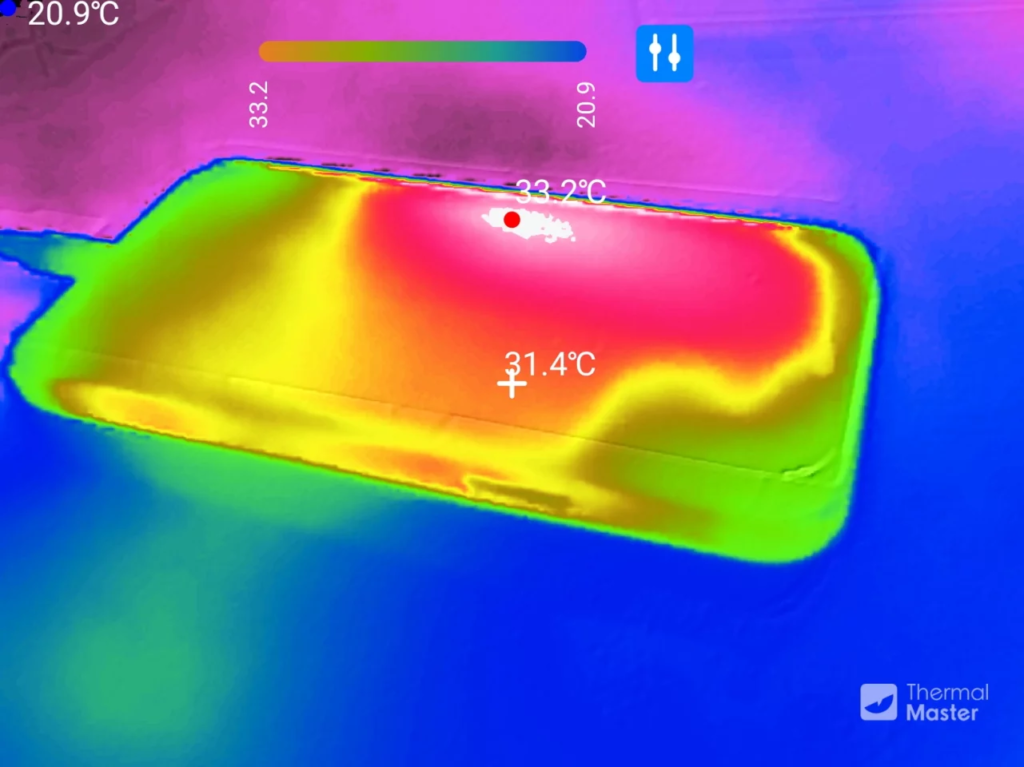
The latest compact smartphone camera from Thermal Master may look a fair bit like its earlier pocket-sized model we covered, but looks are deceiving – and the new P4 makes some pretty big advances that you’ll see as soon as you plug it in. I’m no stranger to imaging devices from Thermal Master, a company that aims to make this technology accessible for everyday users at a fraction of the price of top-line gear. The P4 is essentially a pocket-sized thermal imaging camera that turns a smartphone into a surprisingly capable heat-detection tool. Plug it into an Android phone or laptop via USB-C and it can “see” temperature differences invisible to the human eye (as you’d hope thermal tech would). While we’re not comparing its abilities to high-end thermal equipment, the P4 does a lot for less than US$300 (at its current sale price). Essentially, with the camera plugged into the phone and the app open, the screen will display hot electrical components, cold air leaks and overheating machinery, through both the colors displayed and the temperature readings over those different areas in frame. The lens update offers more adaptability for the job at handNew Atlas At the core of the P4 is a 256 x 192-pixel infrared sensor that detects heat radiation. Thermal Master’s app – free to download and easy to use – then processes the data fed to it from the hardware to display a 512 x 384-pixel image on your phone’s screen. It detects temperatures from -20 °C to 600 °C (-4 °F to 1,112 °F), so it can pick up everything from cold drafts sneaking in through window cracks to electronics becoming dangerously overheated. One of the biggest improvements on the P3, however, is the P4’s dual-camera system. Instead of just displaying a bunch of colors indicating temperature range, the P4 also comes with a visible-light camera alongside the infrared sensor. Essentially, you can use the app to overlay thermal data on a regular image – and it makes using this technology less abstract and more “real world.” This is particularly handy if you’re working on intricate electronics where it can be hard to see the problem area just through thermal imaging alone. For me, it takes away that step in brain processing required to turn that image of colors into what you see with your own eyes. It may not be a feature for everyone, particularly expert thermal imaging users, but for novices, it makes the P4 more user-friendly than earlier models. The camera allows you to view heat readings through a real-world view rather than abstract thermal patternsNew Atlas The P4 has also had a makeover when it comes to its design. The P3’s manual-focus macro lens has been dropped, in favor of a fixed-focus system with a wider field of view. It’s not just less fiddly for the user – wrangling hardware adjustments while trying to capture macro images via a phone-screen button was pretty annoying at times with the P3 – but broadens the scope of use. Now you can scan walls, ceilings, whole engines and more in clear detail, rather than be restricted to close-range inspections or blurry images when trying to capture a larger view in frame. The software has also been improved, with features like time-lapse recording to track heat changes, and temperature displays being much clearer. Admittedly, I haven’t tested the time-lapse recording, as besides a boiling kettle and my cooling feet without socks, neither seem a worthy use of the feature or of my night. For a change, my hand is hotter than my old iPhone New Atlas It’s worth noting that while the P4 is a big step up from the P3, it still suffers from the same issues most smartphone thermal cameras do. Being able to plug the tiny camera into the USB port and use on-the-go is one of its appeals, but it’s also a downside. It plugs into your phone’s charging port, and draws power from your phone – so something to keep in mind for extensive use. And unlike the P3, the P4 is a solely Android device, with no iOS compatibility in the pipeline. Incidentally. this review is months overdue because my Android phone was 4,500 miles (7,200 km) away from my P4. But pleasingly, once my phone had some charge, the app downloaded quickly and instantly detected the camera when it was plugged in. Consumer technology with next to no setup time is one of modern life’s true joys, I have come to realize. The kit again comes with the necessities in a protective pouch New Atlas I won’t pretend I have used a compact thermal camera for anything as useful as the things Thermal Master lists as key areas of functionality; but as an animal scientist, thermoregulation is critical data for understanding wildlife, from environmental adaptions to locomotion across species. Thermal imaging can also help you see what your indoor and outdoor plants need before they show visible signs of stress. And, the P4 will also take nightmare-worthy selfies. Nonetheless, this model of course simplifies the technology, but does it well – shrinking a lot of the key functions of high-end gear into a device small enough to fit into the tiniest of pockets. Plus its uses are both practical for troubleshooting cooling and heating issues, and easy to use for curious minds, like seeing how cold your tongue gets after eating ice-cream and how long it takes for it to return to its normal range. Now that’s what I call versatile application of technology. The P4 is currently available at a discounted rate of $299 (regular price $349) from the Thermal Master site. Use the code THERMALBF10 for 10% off at checkout, on both Amazon and the company’s official store. Source: Thermal Master New Atlas may receive commission if you purchase through our links. This does not affect our reviews and our opinions are our own. source

Review: Pocket phone thermal camera a big step up from its solid predecessor Read More »

Record-breaking apartment building gets 3D-printed in just 34 days

Europe’s largest 3D-printed apartment building has been completed in France. Containing 12 social housing apartments spread across three floors, the project’s printing process was carried out in just 34 days. ViliaSprint² was created by developer Plurial Novilia, with designer HOBO Architecture, and printed by PERI 3D Construction using a COBOD BOD2 3D printer, which is the same type used in the previously covered 3D-printed data center and earthquake-resistant house. It’s positioned next to another very similar building by the same developer, which was constructed using traditional techniques and took three months longer to complete. ViliaSprint² was completed three months faster than a neighboring conventionally constructed buildingPlurial Novilia According to COBOD, ViliaSprint² is the first building in France in which both the load-bearing structure and all walls were printed directly on-site. The COBOD BOD2 printer extruded a cement-like mixture supplied by Holcim in layers to build up the basic shell. This printing was originally planned to last 50 days but took just 34 days in all, with three human operators overseeing the work. The rest of the build process, including traditional construction work by human builders like adding the roof, windows, and wiring, began in March 2025 and was completed in early 2026. “The curved facade and rounded floorplan are only economical because of 3D printing, complex geometries that would add significant cost with conventional formwork come at no premium,” says COBOD. “On-site concrete production further reduces transport emissions. The optimized form also saved approximately 10% of concrete volume. The building integrates perlite insulation, timber balcony structures, 500 sq m (5,400 sq ft) of photovoltaic panels, and a hybrid gas/heat pump system by Atlantic Systèmes, achieving around 60% energy self-sufficiency in compliance with France’s RE2020 2025 [green building] targets.” The interior consists of 800 sq m (8,611 sq ft) of living space, spread over the three floors. Each of the dozen social housing apartments also comes with its own balcony. Each of the apartments in ViliaSprint² opens onto its own balcony areaPlurial Novilia As far as we can tell, the ViliaSprint² could actually be the world’s largest 3D-printed apartment building, but with this construction space being so decentralized and fast-moving, perhaps we’ve missed one. Let us know in the comments if you know of something larger. Looking to the future, Plurial Novilia and its partners are planning another larger project containing approximately 40 apartments using two 3D printers simultaneously. The aim is to reduce print time by a factor of four and lower costs to that of conventional construction. Sources: Plurial Novilia [in French], COBOD source

Record-breaking apartment building gets 3D-printed in just 34 days Read More »

New British single-cylinder nakeds wear their retro roots proudly

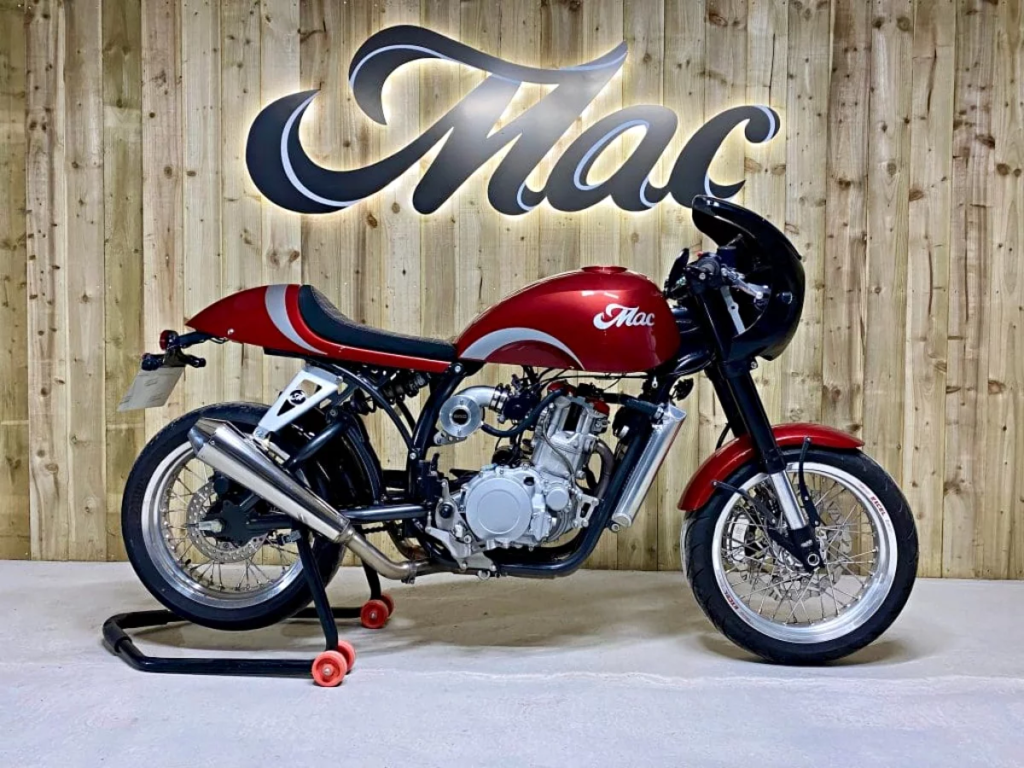
How often do we see snazzy new motorcycles pop up from relatively unknown brands, and how often do most of them seem to be missing a “soul”? Call me crazy, but I sincerely believe some motorcycles have souls. Even electrics. I feel qualified to make such a call, having ridden plenty of soulless motorcycles. They might be modern, sharp, sexy, and powerful, but they often lack character, a genuine sense of connection from the saddle, and, perhaps most importantly, a story behind them. That brings me to Mac Motorcycles – a new, family-run British motorcycle company that has only just begun selling its first pair of bikes. The South Yorkshire-based firm actually started out as a passion project more than a decade ago, meaning it has spent a considerable amount of time developing the motorcycles we see here today. The bikes in question are two retro-styled single-cylinders. The first is the Ruby, a sporty café racer. The second is the Rex, a roadster-styled retro. The Ruby is a cafe-racer-style motorcycleMac Motorcycles A 600cc liquid-cooled single-cylinder engine powers both models. Originally manufactured by SWM in Italy, it’s a revised version of the well-proven Husqvarna TE610 engine. The likes of the AJP PR7 Adventure and the now-discontinued CCM Spitfire also used the same powerplant. The folks at Mac have made a number of upgrades, including fitting a Mikuni throttle body, a new ECU, and their own engine tuning. The result is a claimed 57 hp and a top speed of around 100 mph (161 km/h). It’s not just the engine that the pair shares. They also use the same tubular steel backbone frame and many of the same underpinnings. Mac has made a point of sourcing British-made components wherever possible, starting with the chassis, which is manufactured in England by Caged Laser Engineering. “We’re supporting British brands, British infrastructure, and we quite like the made-in-Britain philosophy,” Product Development Engineer William Oliver explains. “We care about what we do, and we want them to be a part of our story.” Mac Motorcycles is proudly BritishMac Motorcycles Suspension duties are handled by Fastace, with 47-mm upside-down forks and an adjustable rear monoshock from Oxfordshire-based firm Nitron. Braking is similarly premium, with a HEL radially mounted caliper gripping a 320-mm floating disc and operated via a Brembo master cylinder. If you prefer, you can even spec the bike with a Brembo caliper as well. Above all that sits a 4.2-gallon (16-liter) Acerbis fuel tank that partially conceals the unusual chassis and swingarm arrangement. The bikes roll on 17-inch polished rims with stainless-steel spokes, and buyers can choose their preferred tires. Dry weight is a claimed 331 lb (150 kg). Twin reverse-cone silencers and a polished stainless-steel exhaust system are manufactured in-house. The setup includes interchangeable inserts for track use and has been tuned to accentuate the distinctive soundtrack of a big single-cylinder engine. Both models share a wheelbase of 56 inches (1,430 mm) and a seat height of 30 inches (760 mm). However, there are several key differences aimed at different types of riders. The Rex is a retro roadster with larger, taller handlebars for an upright riding stanceMac Motorcycles For starters, the Rex’s tail section takes inspiration from flat-track motorcycles. It also features taller handlebars for a more upright riding position. In contrast, the Ruby adopts a more aggressive café racer stance thanks to its traditional clip-on bars. But here’s the clever bit: the handlebars and bodywork panels can be swapped between the two models, allowing owners to transform a roadster into a café racer – or vice versa – in about an hour. Both bikes start at £15,500 (including VAT), which works out to roughly €17,900 or US$20,800 at current exchange rates. That firmly places Mac Motorcycles at the premium end of the category. And that’s not without reason. The company says the pricing reflects the realities of small-batch manufacturing in Britain, where increasing production, logistics, and raw-material costs have pushed manufacturing expenses significantly higher. The bikes come powered by a 600cc single-cylinder liquid-cooled motorMac Motorcycles Mac Motorcycles began life as a passion project. Early prototypes were based around the Buell Blast’s 492cc single-cylinder engine mounted in a straightforward tubular frame. Over time, the much more modern 600cc SWM engine replaced the original Buell unit. That change required the company to redesign almost everything from scratch, including the frame, geometry, supply chain, and production processes. Ian Oliver describes the inspiration behind the project as an attempt to recreate the feeling of being outdoors, along with the sounds and smells associated with riding motorcycles in his youth. Remember that idea about bikes having a “soul”? That’s exactly what these motorcycles are built around. The Rex and Ruby start at £15,500 (VAT included)Mac Motorcycles And that’s what feels so refreshing about the Rex and Ruby. They’re original, fully realized machines that embody what motorcycling is all about. Could they look a little sharper? Probably. Could they be loaded with the endless bells and whistles that characterize so many modern motorcycles? Absolutely. But then much of the charm that makes old-school retros so appealing would be lost in the process. Source: Mac Motorcycles source

New British single-cylinder nakeds wear their retro roots proudly Read More »

Apartment-like tiny house delivers single-floor simplicity

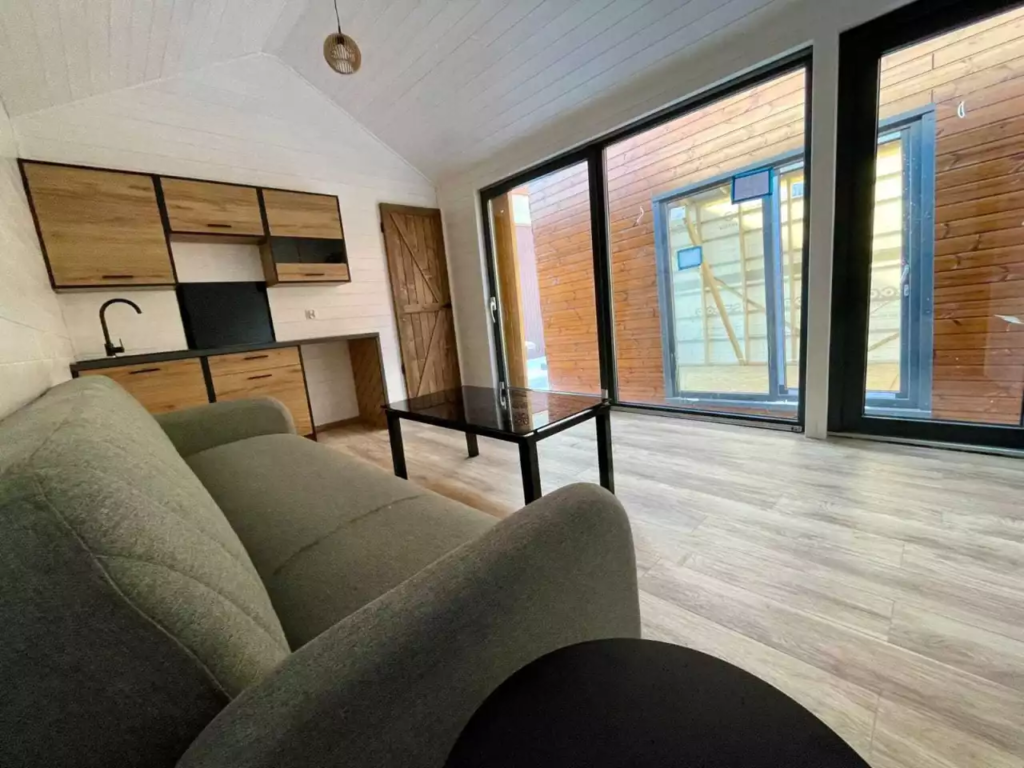
Many tiny houses try to pack as much as possible into their compact frame, but this extra-wide model instead leans into simplicity and provides a spacious single-floor interior centered around an open living area. Designed by Poland’s Mini Domy, the Mini Domek 350 x 1000’s name is a nod to its size measured in centimeters, but for the metric-averse it works out as 32.8 x 11.5 ft. It’s based on a double-axle trailer and features an attractive exterior made up of what looks like engineered wood, with timber detailing and large sliding wooden shutters that lend it an almost rail-car-like appearance. The Mini Domek 350 x 1000 measures 35 sq m (376 sq ft), which is arranged on one floorMini Domy With its glass door entrance positioned adjacent to two sliding glass doors, the home really opens up to the outside and has ample natural light inside. It’s finished in painted tongue-and-groove timber paneling, with vinyl flooring. It has a floorspace of 35 sq m (376 sq ft) and is arranged around the large central living area. This is really the star of the show here, and it’s very generous by tiny house standards. The room is shown furnished with a sofa and a coffee table. A small kitchen unit with a built-in sink occupies one corner and there’s ample space for more seating and perhaps a dining table too. Over on one side of the living room is the bedroom entrance, which is a barn-style sliding door. The room itself, shown unfurnished, has space for a double bed and storage, as well as enough headroom to stand upright comfortably, which is always a nice bonus in a tiny house. Opposite the main bedroom are two more sliding doors. One leads to the bathroom, which includes a glass-enclosed shower, plus a flushing toilet and sink. The other door leads to a second, smaller bedroom that looks like it could also serve as an office or a storage space. The Mini Domek 350 x 1000’s main bedroom is spacious and has ample headroom to stand uprightMini Domy The Mini Domek 350 x 1000 comes in multiple sizes, ranging from the standard 350 x 1000 model shown here to a compact 300 x 600 cm (9.84 x 20 ft) version. It also has multiple options available, including its reconfiguring its layout, with a maximum of three bedrooms. We’ve no word on pricing or delivery, so those interested will need to contact the firm directly. Source: Mini Domy source

Apartment-like tiny house delivers single-floor simplicity Read More »

Transformational cubist teardrop camper disappears bed to free space

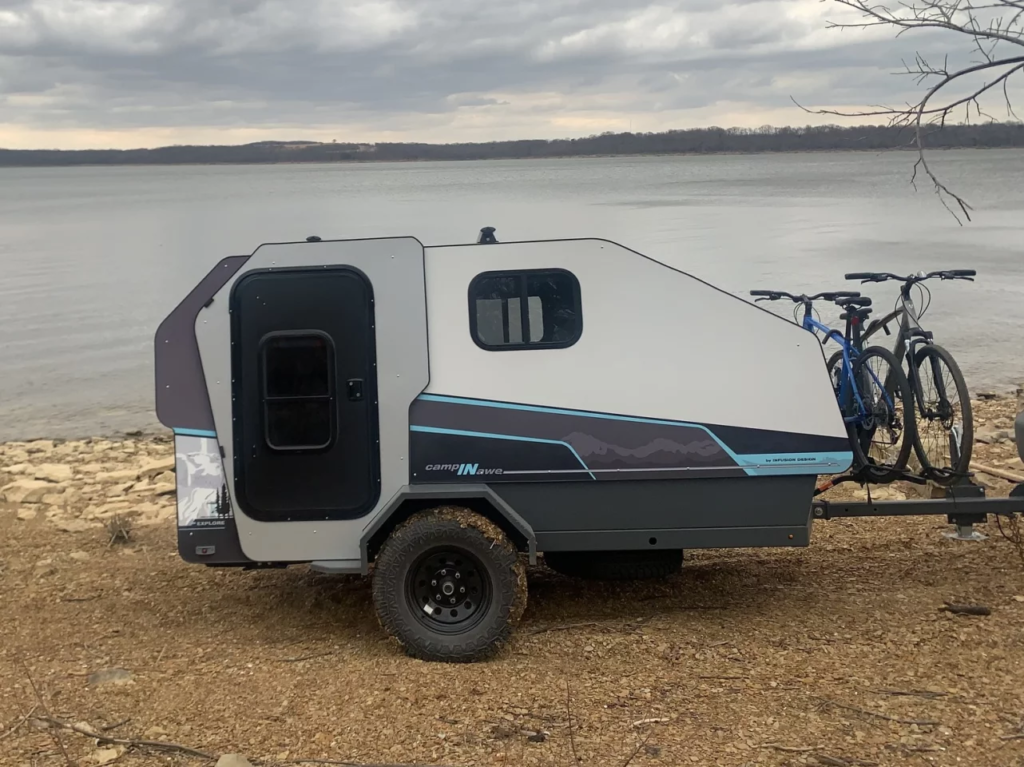
Since debuting in 2021, the Campinawe Trailer has established itself as one of the oddest-looking small camping trailers roaming the earth. But besides looking weird, its strangely juxtaposed alu-skinned foam-core panels conceal one of the roomiest, most functional floor plans we’ve seen on a teardrop-style 15-footer. And that’s truer than ever as the company adds an even more spacious, flexible floor plan alternative. The Crossover Solo layout features a pack-away bed that clears room inside for a larger dining or office space. Heck, you could probably use it for yoga when it’s too cold or rainy outdoors. Perhaps it’s because I was recovering from a snowboarding-incurred concussion at the time, but I didn’t quite see the sheer Picasso-ness of the Campinawe design the first time we covered it. I knew it was avant garde, artsy … abstract, even, but I glossed right past the sheer cubist nature of it. The Campinawe trailer shows its “unique” profileCampinawe Looking at it now, though, I see clearly a teardrop-inspired form outlined and obscured by irregular shapes, angles and forms. It’s not quite as over-the-top as a true cubist painting, but the elements are there, from the strangely shaped door surround to the busily cubbied galley. Much of that styling seems a very deliberate choice, likely meant to grab attention in a market in which the timelessly curvaceous form of the teardrop has become all too commonplace. But part stems from the need to build atop a multi-gauge steel tub chassis rather than the usual flat steel frame you find under other trailers. That becomes clear in front of the rear axle where the multi-paneled upper wall meets raw tub steel, creating one of the trailer’s numerous visual juxtapositions. Each Campinawe Trailer is built atop a rugged steel tub chassis from Croft Trailers Campinawe Whatever the reason, the alarming mishmash of shapes and lines that coalesce into the Campinawe body gives way to one of the more intriguing interiors we’ve seen on a trailer this small. While many builders of 15- to 17-foot (4.6- to 5.2-m) tailgate-galley trailers are happy just to squeeze a double bed inside their camper pod, with a few overhead cabinets spread above it, Campinawe manages to clear out a proper step-in foyer and wardrobe behind the foot of its 60 x 80-in (152 x 203-cm) residential-size queen bed. It even fits a seat-top Yeti cooler or Dometic fridge into that entryway space and adds a storage cubby for a portable toilet at the base of the wardrobe shelving. Since debuting its first trailer, Campinawe has stuck with the original body and basic interior bed/foyer split, developing out a lineup of trim levels around it. There’s the basic, essentials-only Pioneer, the mid-tier Frontier and the fully loaded Adventure. Each of those essentially equates to a package of standard features and comes in the buyer’s choice of bed style. This month, Campinawe announced the new Crossover Solo as the third among the available bed setups, joining the original fixed queen and the now-available convertible queen/dinette. The all-new Crossover Solo adds some serious floor space by cutting the bed size down to twin XL and creating a fold-away frame systemCampinawe As its name suggests, the Crossover Solo is aimed at solo camping, a form of pure escape and reset that seems to be a rising trend in RV and tent design this year. The floor plan still includes the walk-in foyer and wardrobe directly inside the rear side door, but instead of running a queen bed from sidewall to sidewall up front, the Crossover Solo splits its floor into a 38 x 80-in (97 x 203-cm) twin XL bed and an open floor next to it. It also has a multi-tier nightstand with stacked drawers next to the head of the bed. On the sidewall across from the bed, a swing-up worktop serves as a dining table and a desk. Campers can use the edge of the bed as a seat. Pack the bed away and bring in a chair or two or use the bed as your seatCampinawe Where the Crossover Solo really proves itself a whole different animal is in its stow-away bed design. The mattress and lower bed platform fold in half and store on the upper part of the platform, next to the nightstand. The bed’s outer foundational support rail then slides out and stows away against the far sidewall, more than doubling the amount of open floor space. Campers can now pull in a proper folding chair to use for laptop work or dining on the foldaway table, use the increased floor area for exercise, or otherwise make better use of the roomy interior during daylight hours. The new Crossover Solo with bed packed and stacked – that’s a whole lot of floor space for a teardrop trailer Campinawe That twin XL width of 38 inches would really be pushing it for more than one person – perhaps two particularly slim sleepers who don’t roll much could find comfort lying together, but it really seems best as a solo option. Given the Crossover Solo’s workstation-focused configuration, the floor plan seems like the perfect solution for someone who likes to travel and camp alone while doing some remote work along the way. What isn’t so perfect for that type of solo drifter is the price. The Crossover Solo isn’t available on the US$28,995 base-level Campinawe Pioneer model, so buyers who want the layout will have to step up to the $39,995 Frontier or the $54,995 Adventure. Those prices seem pretty steep for a small two-person trailer, but they really feel expensive for a solo model that lacks an option for sleeping anyone else inside. The Crossover Solo costs the same as the queen and queen/dinette bed layout options, so buyers looking for more berths can always go with one of those. Also, the Frontier comes with two rooftop crossbars, the Adventure three, so Crossover Solo buyers could mount up a rooftop tent when bringing along family and

Transformational cubist teardrop camper disappears bed to free space Read More »

This sticky substance could be a rare example of Neanderthal medicine

Neanderthals used tar extracted from birch tree bark as a glue to haft their tools, according to previous research. It now appears this dark, sticky substance may have had multiple applications. A new study published in the journal PLOS One suggests that birch tar may also have been used as an antibiotic substance to treat wounds and skin infections among our ancient cousins. Lead author Tjaark Siemssen, an archaeologist at the University of Cologne in Germany, told Refractor that indigenous communities such as the Mi’kmaq tribe in Eastern Canada use birch tar extract as a medicinal substance. This extract is known to inhibit various microbial activities. To test whether the tar produced by Neanderthals also possessed antibacterial properties, Siemssen and his team used bark from silver birch (Betula pendula) and downy birch (Betula pubescens), which were widespread in the European Late Pleistocene. The team used three different methods to produce this tar: distillation in a tin, distillation in a raised clay structure, and the condensation method. The tars produced by using the above methods were then tested against two common infectious bacteria, a gram-positive species (Staphylococcus aureus) and the gram-negative Escherichia coli. Irrespective of the method of production, the tar showed no effect against E.coli. On the other hand, tar produced from silver birch in the raised clay structure showed the strongest response against S. aureus. The only tar extracted from downy birch, obtained via the condensation method, did not affect either species of microbe. This difference in the tar’s antibacterial effects on the different bacteria might be due to their distinct cell structures. An outer membrane present in the E.coli bacteria acts as a defence against the antimicrobial properties of tar, Siemssen says. Siemssen told us that in another experiment, they made tar by using paper birch (Betula papyrifera) in the absence of oxygen. This tar worked as a broad-spectrum antibiotic against both gram-positive and gram-negative bacteria. “So we do think at this point that the oxygen impact has something to do with how effective it is as an antibiotic,” he concluded. Researchers note organic materials are affected by a preservation bias, which could affect how we interpret its use. For instance, plant extracts, resins, or bark may decay quickly over time or may be affected by soil chemistry and temperature. Though birch bark has antimicrobial properties and Neanderthals used it to produce tar, this “does not indicate that they used it in a medicinal context,” says Ella Been, an anthropologist at Ono Academic College in Israel, who was not involved in this research. Yet other researchers suspect the Neanderthals were onto something. “I’m confident most archaeologists would or already do believe that Neanderthals used birch tar as medicine,” says Andrew Sorensen, an archaeologist at Leiden University in the Netherlands, who was also not involved in the study. “You don’t have a relationship with such a material for this long without eventually figuring out all the ways it could be useful!” This study has been published in the journal PLOS One. Fact-checked by Mike McRae. source

This sticky substance could be a rare example of Neanderthal medicine Read More »