Who is behind the cute birthday dance party on Orchard Road?

A birthday dance party broke out along Orchard Road last week as TikTok Shop took its “6.6 birthday mega sale” campaign from users’ feeds to the streets of Singapore. Ahead of the sale period running from 30 May to 6 June, the platform rolled out a series of offline activations designed to drive curiosity, user participation and social sharing beyond the TikTok app itself. On 23 May, local creator Orchard Road Fashion (@orchardroadfashion) led a surprise street performance along Orchard Road centred around an original TikTok Shop birthday jingle and choreography. Sunny D, one half of dance duo @seriouslycannot, also appeared during the activation. Don’t miss: Retail is out, experiences are in: Orchard Road’s next phase targets brand engagement  Midway through the performance, Sunny D unveiled a pink box carrying the voucher code “TTSBDAYSURPRISE”, which users could redeem via the TikTok Shop tab for rewards including 30% off for all users and SG$12 off with no minimum spend for new buyers. The activation formed part of TikTok Shop’s wider push to blend online shopping mechanics with real-world experiences, while encouraging user-generated content tied to the campaign. Meanwhile, on 30 May, TikTok Shop’s “free treat boys” will take over Orchard Road with a physical version of its in-app Cake smash game. Consumers will be able to participate in real life for a chance to win cash prizes and giveaways, turning one of the platform’s gamified shopping features into an on-ground activation on the first day of the sale. Both activations feed into a broader social campaign encouraging users to post videos using the birthday jingle, tag @tiktokshop_sg and use the hashtag “#TTSBDAYSURPRISE” for a chance to win an iPhone 17. The 6.6 birthday mega sale will also feature free shipping platform-wide, excluding same-day delivery and seller-own delivery services. In addition, TikTok Shop is rolling out LIVE “Party crazy prices” sessions featuring creators including Fredy Jay (@fredyjays), Jianhao Tan (@thejianhaotan), Debbie Soon (@realdebbwie), Sasa (@shopwithsasax) and Emily (@emobsessed). Users can also unlock daily vouchers and giveaways through the Cake smash game housed within the TikTok Shop tab. MARKETING-INTERACTIVE has reached out for more information.  Orchard Road has increasingly evolved into a go-to canvas for brands looking to blur the lines between retail, entertainment and cultural spectacle, with marketers leveraging its high footfall and iconic status to create shareable, real-world moments. From StarHub’s ice-cream giveaway outside Paragon to Warner Bros. Discovery’s immersive takeover for the premiere of IT: Welcome to Derry, the stretch has become a prime location for experiential activations that transform everyday commutes into branded storytelling moments, particularly during key retail and cultural moments such as seasonal peaks and product launches. Related articles:  TikTok unveils new family guide to support safer digital habits  TikTok SG head of brand partnerships departs  X, TikTok under watch as SG joins global push to protect young social media users  source

Who is behind the cute birthday dance party on Orchard Road? Read More »

Light-stealing animal the first found to 'import' its bioluminescent power

The rules of biology have been torn up by a small fish in the Pacific that steals light-producing molecules from its food in the only known example of kleptoproteinism. Researchers from Tohoku University in Japan have uncovered how the golden sweeper fish (Parapriacanthus ransonneti) glows despite missing a gene for luciferase, the enzyme critical for bioluminescence. Using advanced whole-genome sequencing, the researchers uncovered how these crafty 7-cm (2.8-in) fish “steal” light-producing molecules from their prey – a tiny ostracod, a crustacean known as a “sea firefly” – in an incredibly rare example of molecular thievery. Fish “Steals” Glowing Protein: Genome Sequencing Proves Unique Survival Strategyキンメモドキの発光 c美ら海水族館 In previous research, the scientists found that sea fireflies (Cypridina noctiluca) appeared to be critical to the glow-up seen in P. ransonneti fish. But it wasn’t clear whether the bioluminescence was triggered within the fish or if it was an external acquisition. Not only was the luciferase gene absent, but the team found no evidence that the fish had acquired it through horizontal gene transfer – the process by which DNA can occasionally jump between unrelated species. “These results provide compelling and conclusive evidence that this fish does not possess the genetic blueprint for bioluminescence,” says Manabu Bessho-Uehara, an associate professor at Tohoku University. “Instead, it relies entirely on proteins obtained from its prey, representing a truly unique form of biological adaptation.” Essentially, the fish has no way of making the enzyme it needs to glow, and it hasn’t borrowed the instructions to make it. “Taken together, we conclude that the ostracod luciferase gene is absent in the genome of P. ransonneti, supporting the hypothesis that P. ransonneti cannot produce luciferase by itself but instead sequesters and uses the luciferase from ostracod prey for its bioluminescence,” the researchers note. Instead, it targets a luminous prey species, extracting its fully formed luciferase protein, and then transports it to its own light organs. This method means it’s not an infinite glow, but the light is topped up with each feed. Ventral side of the P. ransonneti glowing blue. The enzymes and chemical molecules used for this bioluminescence cannot be synthesized (biosynthesized) by the fish; instead, they are ingested from their prayGovernment Park (Ocean Expo Park)/Okinawa Churaumi Aquarium While it may not seem like a big deal, this sort of phenomenon shows how resourceful nature can be. Conserving a gene that can produce bioluminescence can be energy-intensive – so the fish have basically outsourced the job. But then there’s more to this story. The bioluminescence isn’t used for attracting a mate or luring prey, but camouflage – which sounds counterintuitive. In dim, moonlit waters, predators beneath a school of P. ransonnetis can identify the silhouettes of the fish and pick them off. But when these thieving fish harness the power of their stolen light to glow from their organs, it cancels out their silhouettes. The strategy, known as counterillumination, is one of nature’s most sophisticated forms of concealment. It’s a fascinating – and extremely rare – example of how evolution has aided a species in developing the survival strategies it needs but can’t do on its own. So, rather than holding onto the genes needed to produce its own bioluminescent machinery, the golden sweeper has harnessed a way to “steal” the materials it needs for its “invisibility cloak”, saving the species energy and protecting them in the process. That is, as long as the fish can access a supply of sea fireflies. “The sequestration and use of prey protein, known as kleptoprotein, is reported only from Parapriacanthus ransonneti,” the researchers note. “Our findings revealed that the acquisition of the function of the prey organism can be achieved without horizontal gene transfer. The molecular mechanisms underlying protein sequestration are not elucidated yet. The genome sequence of P. ransonneti provides a fundamental source to understand the evolution of kleptoprotein bioluminescence.” The research was published in Scientific Reports. Source: Tohoku University Fact-checked by Mike McRae source

Light-stealing animal the first found to 'import' its bioluminescent power Read More »

TikTok unveils new family guide to support safer digital habits

TikTok has partnered TOUCH Cyber Wellness to launch a family digital check-in guide, a practical toolkit aimed at helping parents and teens build safer and more open digital habits at home. The initiative supports Singapore’s “Digital for life” movement and builds on the 2025 “Our digital journey” programme. It was officially unveiled by guest of honour Madam Rahayu Mahzam, Minister of State for Digital Development and Information. Designed as a practical resource for families, the guide encourages parents and teens to reflect on their digital behaviours together, rather than relying on one-way conversations around online safety. Don’t miss: Meta and YouTube lose key battle in social media addiction trial The family digital check-in guide includes a printable toolkit that helps families assess their digital habits, understand different online behaviour styles through self-discovery profiles, and use conversation prompts to agree on shared boundaries for safer online experiences. It also provides an overview of TikTok’s in-app safety features. “For many families today, digital life is no longer separate from everyday life — it’s where young people learn, socialise, create, and discover who they are,” said KahnJi Siriprapa Weerachaising, outreach and partnerships manager at TikTok Trust & Safety. “That’s why building healthier digital habits requires more than rules alone. It requires open conversations, mutual understanding, and practical tools that families can explore together,” she added, noting that the initiative was developed in collaboration with TOUCH Cyber Wellness and in support of IMDA’s Digital for Life movement. Alongside the guide, TikTok has also introduced an interactive digital hub, which offers a mobile-friendly version of the toolkit and serves as an entry point to its safety resources. The hub also features a video by creator Denise Teo (@supercatkei), which offers a personal look at how Singaporean families navigate digital safety in everyday life. The video will be made available following the launch event. The launch also featured a panel discussion titled “Navigating our digital world together”, moderated by Weerachaising. The session brought together Shem Yao, head of TOUCH Cyber Wellness, content creator Denise Teo, and Dr Natalie Pang, head of the department of communications and new media at the National University of Singapore. Panellists highlighted the need for a shared approach to digital wellbeing across families, educators, industry and government, with three key themes emerging: resilience over restrictions, curiosity over judgement, and ongoing dialogue rather than one-off conversations. Dr Pang said young people should be equipped with digital resilience to help them navigate online spaces independently, while Teo emphasised the importance of curiosity-led conversations between parents and teens to better understand online trends. Shem added that digital wellness should be treated as a continuous journey rather than a single conversation. Following the launch, a series of “Our digital journey: The community edition” workshops will be rolled out from July in Bukit Batok East, training more than 100 parents and teens. The initiative reflects TikTok’s ongoing efforts to work with government agencies and community partners to support safer digital experiences in Singapore. Taking things further, TikTok also highlighted that teen accounts on its platform include more than 50 preset safety features and privacy controls, including private accounts, content restrictions and default daily screen time limits of 60 minutes. The family digital check-in guide complements existing resources such as TikTok’s Safety Center, the guardian’s guide and teen safety center, and is available via the TikTok Singapore Digital Hub as well as in-app when users search for digital safety-related terms. The launch comes months after TikTok and X were placed under enhanced supervision by the Infocomm Media Development Authority (IMDA) in April 2026, following what the regulator described as “serious weaknesses” in their systems for detecting and removing harmful content, including child sexual exploitation material (CSEM) and terrorism-related content. According to IMDA’s findings, there was a 120% increase in CSEM cases on X targeting Singapore users, rising from 33 in 2024 to 73 in 2025. On TikTok, 17 cases of terrorism-related content were detected from Singapore-based accounts for the first time in 2025. The regulator noted that both platforms only removed flagged content after intervention, highlighting gaps in proactive detection systems. Photo courtesy of 123RF.  Related articles:   IMDA in talks with X as Grok misuse sparks safety concernsInstagram’s ‘teen accounts’: How can brands adapt to engage teens amid parental concerns? IMDA: Social media platforms should do more to protect children from harmful content  source

TikTok unveils new family guide to support safer digital habits Read More »

Deluxe adaptable vise spins and locks on two axes

Hobbyists may have wished for a third hand at times, when having to pause work in order to reset a vise clamp, but AxiGlide – a dual-axis vise currently on Kickstarter – offers a new angle on how such devices work. Made by Hong Kong-based brand VogueMech, AxiGlide features a turntable mount that can rotate 360 degrees, allowing for freedom and easy access in positioning a workpiece. The turnable is attached to a 90° tilt base that facilitates fluid maneuvering from horizontal to vertical alignment, enabling precise access from any rotation. “Our focus isn’t just clamping the workpiece, but also flexible repositioning as well as stable support to eliminate interruptions in your workflow,” says Luke Von, designer of AxiGlide. “By engineering a system where rotation and tilt operate independently, we are providing artisans with greater confidence in their workpiece positioning.” Pledges start at $239VogueMech AxiGlide’s main body weighs 4.9 lb (2.2 kg) with a desktop footprint of 5.91 x 3.94 inches (150 x 100 mm) and an overall height of 5.24 inches (133 mm). It’s constructed of aluminum alloy with the axis bearings, threaded elements and brake system made of stainless steel for durability. It comes with a standard pin jaw in 10-mm, 15-mm and 20-mm lengths suited for flexible gripping of irregular shapes, with an expandable modular system (with possible future expandability) that allows for quick-swap add-ons that adapt for different materials. AxiGlide can be used in three different modesVogueMech Two other jaws include the Parallel jaws for flat surfaces with a maximum opening of 3.1 inches (85 mm) and the Fractal jaws with a maximum opening of 2.5 inches (65 mm). The Fractals are intended for irregular-shaped objects, with the option of aluminum material for hard metal parts and PEEK (polyetheretherketone) panels for delicate parts. With three spring-loaded switch modes, the makers claim a gentle push is all it takes to flip over to the next mode, making usage simple and intuitive. Backers can choose between color choices of gray, blue, red, green or natural metal (pictured)VogueMech Free-spin Mode A precision-machined spindle inside the tilt base for the turnable enables the vise to rotate or adjust the tilt angle steadily without restrictions, so a workpiece is set in the most comfortable clear line of sight for the user without the need for hunching or uncomfortable wrist contortions. Indexed Precision Mode Secures the workpiece in place and locks the angle by way of the 60-position indexed disc that divides the full rotation into precise 6° increments controlled by a spring-loaded column for angled drilling, an off-axis assembly or fine carving with stable strength. Full-lock Mode For exacting tasks that require a solid fixed and stable locked position hold. The AxiGlide Vise Standard with Pin Jaw set is available for a US$239 pledge in choice of five colors, and is set to ship in September if all funding and production goals are met. The planned retail price is $398. AxiGlide: Next-gen Pivoting Vise for Smooth, Precise Control Source: Kickstarter Note: New Atlas may earn commission from purchases made via links. source

Deluxe adaptable vise spins and locks on two axes Read More »

Road-ready tiny house sleeps six people under one compact roof

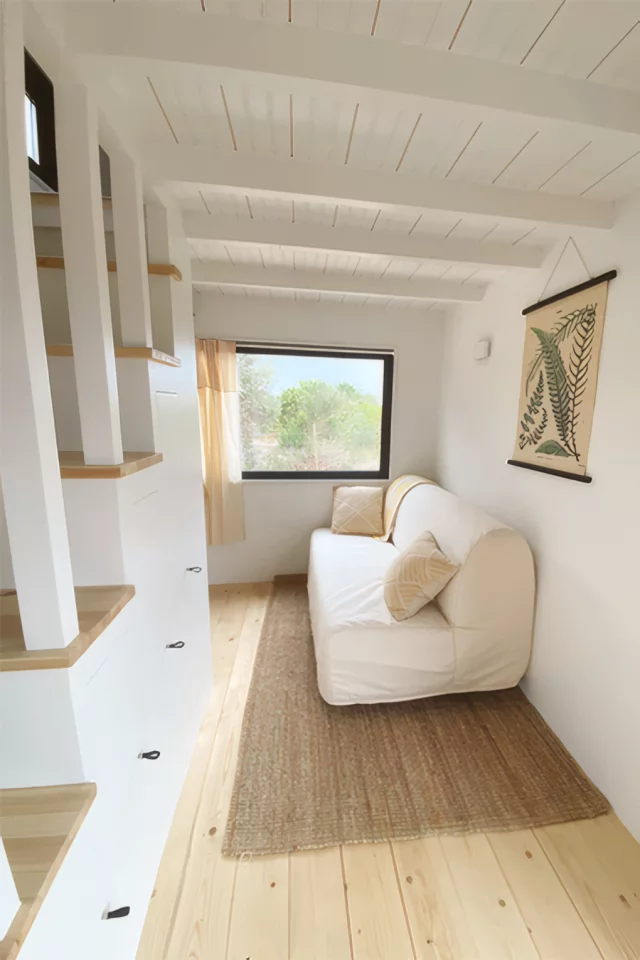
Though it only has a modest length of 7.8 m (25.7 ft), the Gerês tiny house manages to squeeze in sleeping space for up to six people. The tiny house also has several optional upgrades available, including running fully off-grid. Designed by Portugal’s Casagaea, the Gerês is based on a double-axle trailer and is clad in engineered wood, with a small storage box located near the tow hitch. The interior of the home measures 30 sq m (322 sq ft) and is arranged around a central open living area. The kitchen is equipped with an oven, an induction cooktop, a sink, a fridge/freezer, and a breakfast bar seating area. Like the firm’s Algarve model, there are some nice little touches in here, such as indirect lighting and a pop-up power outlet integrated into the cabinetry. The Gerês tiny house’s living room includes a sofa bed that sleeps up to two adultsCasagaea Situated next to the kitchen is the living room, which has a sofa bed that sleeps two, plus space for an entertainment center. Additionally, a wood-burning stove can be installed. The bathroom is reached from the kitchen, via an unusual sliding door that has integrated shelving. It looks pretty snug in there but includes a vanity sink, a glass-enclosed shower, and a flushing toilet. There are two bedrooms in the Gerês. The main bedroom is positioned above the kitchen/bathroom and reached by a storage-integrated staircase. It has a low ceiling and contains a double bed, plus a little storage. The secondary bedroom, meanwhile, is accessed by a removable ladder and also has a low ceiling and enough space for a double bed. While six adults under one roof (and sharing one bathroom) would make for a very cozy living arrangement, it should be doable for vacations and short stays. For full-time living, it would likely be better suited to a smaller family or a couple. The Gerês tiny house’s kitchen includes a breakfast bar seating area for twoCasagaea Alongside the off-grid setup mentioned, the Gerês has several other optional upgrades available, including customized materials, furniture, and layout. We’ve no word on the price or delivery options, so those interested are best getting in touch with the firm directly. Source: Casagaea source

Road-ready tiny house sleeps six people under one compact roof Read More »

Sea creature's amputated limbs refused to die, even after three years

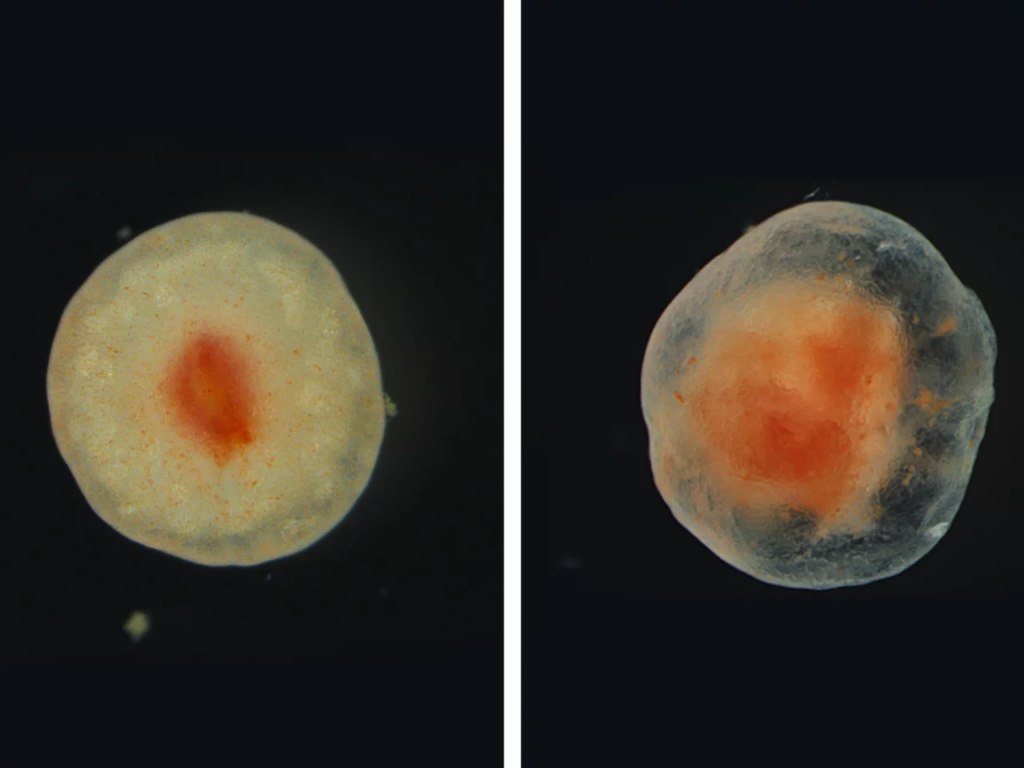
It came from a creature of the depths. A severed foot that refused to die, regenerating in an act of survival unlike anything we’ve ever seen. It could be a great opening to a horror novel (agents, call me), but to researchers from Memorial University and the Society for Exploration and Valuing of the Environment in Canada, this discovery of a “real-life zombie” is no work of fiction. “Here is this species that has this groundbreaking ability, and we had no idea,” says Memorial University marine biogeochemist Rachel Sipler, who is also a senior researcher at the Bigelow Laboratory for Ocean Sciences. “It’s a reminder how much is yet to be discovered in the marine environment and how important it is to protect these resources that may hold really valuable knowledge for us.” Found in the cold-water regions of the Atlantic and Arctic oceans, the dendrochirotid sea cucumber Psolus fabricii already resembles a living nightmare. Branches of blood-red tentacles blossom from one end of a fleshy, scale-covered body, beneath which numerous tube feet carry it around the ocean floor, no doubt just to terrify baby fish into staying in bed at night. Being relatively soft creatures in a world of sharp rocks and sharp teeth, these delicate footsies are prone to damage, forcing the sea cucumbers – like most echinoderms – to evolve remarkable means of healing and regeneration. To understand what happens to the lost feet themselves, researchers collected a bunch of samples and kept a close watch over them in the ensuing days, analyzing their tissues and anatomical structures, and even using specially labeled amino acids and ammonia in the seawater to monitor the nutrients they absorbed. Over the following week, the lopped-off locomotive tubes changed. Far from rotting away, a churning over of new and old cells helped the amputated limb heal, while immune cells exploded in numbers. What was once a foot slowly transformed into a spherical blob of living muscle and connective tissue. Within a month, the site of the wound was indistinguishable from the rest of the sample. Pigmented cells migrated deeper inside, leaving a translucent “skin.” Two months later, the shrunken balls had returned to their original size. After three months, they had grown bigger than before. A progression of tube foot tissue one year (left) versus several years (right) after excision showing increasing wound closure and healing at the wound site over time.Sara Jobson/Bigelow Laboratory for Ocean Sciences A year rolled by. Then two. And still they lived, continuing their blind, lonely existence under a thick layer of sediment in the tanks. While none showed signs of becoming a whole new creature, the “feet” seemed quite content to soak up nutrients in the muck and live a life of their own. “Natural seawater is just about the most microbially diverse, least clean approach we could take experimentally,” says Sipler. “Yet, that rich environment full of bacteria and all this organic matter was actually feeding them and allowing this tissue to heal and grow.” Nature is full of examples of astonishing healing. Salamanders regrow limbs. Some jellyfish can return to immature states, making them virtually immortal. There are even planarians that can generate two new individuals from bodies that have been dissected in half. Among our own species, cancerous cells have astonishing abilities to persist, carrying on for generations under suitable conditions. Finding examples of lost body parts that naturally defy death and decay in an environment as hostile as the ocean floor could change how we delineate the edges of biology. “It’s like a lizard that loses its tail,” says Sipler. “We know some lizards can grow new tails; we’re talking about whether the tail can grow a new lizard.” This research was published in Science Advances. Source: Bigelow Laboratory for Ocean Sciences Fact-checked by Darren Quick. source

Sea creature's amputated limbs refused to die, even after three years Read More »

FairPrice Group CMO Alvin Neo departs after nearly 7 years

After a significant period of transformation and capability-building at FairPrice Group, Alvin Neo is transitioning from his role as chief customer and marketing officer, leaving behind an organisation he believes is “strongly positioned for its next chapter”. For Neo, the move marks the natural close of a leadership season rather than a hard stop. During his time at FairPrice Group, the organisation modernised its customer ecosystem, strengthened customer experience and loyalty capabilities, elevated the brand, deepened its focus on the “lived experience” of customers, evolved its social impact efforts, and moved early on AI augmentation as a real operating capability. “I’ve always believed transformation leadership has seasons. The responsibility is to leave the institution stronger than you found it and position it for what comes next,” Neo told MARKETING-INTERACTIVE. Neo has been with NTUC Enterprise since 2019, serving as chief customer and marketing officer for both NTUC Enterprise and FairPrice Group, while also leading NTUC Link as managing director. Prior to that, he held senior marketing and commercial leadership roles at Parkway Pantai, where he served as group chief marketing officer, and Johnson & Johnson Medical, where he led regional and global marketing portfolios across Asia Pacific and emerging markets. Don’t miss: Howie Lau bids farewell to NCS Group after five years  Building a customer and transformation engine  Looking back, one of Neo’s proudest achievements was reshaping marketing from a campaign and communications function into a growth, customer and transformation engine. When he joined FairPrice Group, the brand already enjoyed strong goodwill in Singapore. The challenge, as such, was to modernise its relevance. This was especially so among younger families and digitally native consumers, while staying true to the organisation’s unique position as part retailer, part co-operative and part social enterprise. A key part of that work was shaping “Every day, made a little better” into more than a tagline. Today, “Every day, made a little better” became an organising philosophy across brand, customer experience, loyalty and culture, pushing the organisation to look more closely at the real pressures families face around time, nutrition and affordability. Behind the scenes, marketing was repositioned to operate akin to the organisation’s “customer control tower”, strengthening data and insights, modernising loyalty, and upgrading CX operations. FairPrice Group also grew its digitally connected customers to more than two-thirds of its shopper base, creating a stronger foundation for omnichannel engagement and data-enabled personalisation. At the same time, the organisation moved early on AI augmentation, not as a buzzword exercise, but as an operating capability built around people, platforms and processes. The results, according to Neo, have been tangible. FairPrice moved from #4 to #2 in Singapore’s Brand Finance brand strength rankings in 2026, topped the Corporate Equity Index, and steadily improved NPS as it worked towards becoming world-class in the “lived experience” delivered across stores, digital and service touchpoints. “Most importantly, we are proving that purpose and performance are not opposing forces. Trust is economic,” said Neo. That belief has shaped how he views marketing within FairPrice Group where in an organisation that sits at the intersection of retail, co-operative values and social enterprise, marketing cannot simply be about transactions or campaigns. “At FairPrice Group, marketing is not just about transactions. It shapes affordability perception, food accessibility and everyday quality of life,” he explained.  That makes marketing closer to stewardship. Decisions around pricing, promotions and loyalty influence how people feel about value, trust and the cost of living. The FairPrice Foundation reinforces that broader purpose, with programmes such as “Start strong, stay strong” addressing practical issues such as nutrition access and healthier living. It also changes how growth is understood. Discount-led engagement, Neo cautioned, is not the same as loyalty: If customers only engage when discounts appear, you have not built loyalty. You have trained dependency. The same principle applies to AI and personalisation. Used well, they can make customer experiences more relevant and useful. Used poorly, they risk adding more noise. “AI and personalisation are powerful when used responsibly. The goal is not to flood customers with content, but to reduce friction and make experiences genuinely useful,” said Neo.  Transformation, trust and the next wave of retail Neo’s approach to leadership has also been shaped by the harder lessons of transformation. One of the most important was learning that speed alone does not create progress. Earlier in his career, Neo believed the right strategy would naturally drive movement. Over time, that view changed. Transformation, he learnt, is rarely constrained by intelligence alone. More often, it is constrained by alignment, trust and energy. That lesson has influenced how he thinks about customer-centricity. For it to become real, frontline operations, customer service, digital and marketing teams need to move beyond silos and solve problems together. “I learned that customer-centricity only becomes real when frontline operations, customer service, digital and marketing teams stop defending turf and start solving problems together,” said Neo. Leadership today, in his view, is less about having every answer and more about integrating people and perspectives across the organisation. That same belief shapes his view of the next wave of transformation in retail, loyalty and customer engagement in Singapore. Neo sees three defining forces ahead: intelligence, trust and integration. AI will make retail more predictive and adaptive across pricing, loyalty and customer service. However, as hyper-personalisation scales, consumers will become more sensitive to manipulation, AI-generated noise and brands that are efficient but emotionally forgettable. Furthermore, integration will be just as critical. Physical retail, digital commerce, payments, loyalty and media are increasingly converging into one connected customer ecosystem. Yet many large organisations remain structured around internal silos, where marketing owns campaigns, digital owns apps, and service owns complaints. “One capability most organisations still underinvest in is enterprise-wide customer orchestration. Many companies still operate in silos. Marketing owns campaigns, digital owns apps, service owns complaints, but customers experience one continuous relationship,” said Neo.  As such, the advantage will go to organisations that can understand and engage customers holistically, in near real time, across the full journey.

FairPrice Group CMO Alvin Neo departs after nearly 7 years Read More »

Latest Hypershell exoskeletons put an AI-powered spring in your step

Hypershell’s new X Series exoskeletons use AI-driven motion control to give you a little extra spring in your step, offering walking and hiking assistance across different terrain, ranges, and support levels. Consumer exoskeletons have steadily moved beyond the realm of sci-fi demos and medical devices, with companies increasingly positioning them as outdoor mobility tools for hikers, active older users, and professionals who spend long days on their feet. We saw this shift first hand when we reviewed the Hypershell Pro X last October, finding a wearable that isn’t just a gimmick, but a genuinely practical walking assistant. The new X Series builds on this idea with three distinct models: the X Ultra S, X Max S, and X Pro S. The entire range is powered by HyperIntuition, Hypershell’s predictive movement-syncing software, and features varied power outputs and terrain-focused modes for demanding environments. Hypershell is positioning its new exoskeletons as outdoor mobility tools for hikers, older users, and people who spend long hours on footHypershell Rather than just adding raw power, Hypershell is focusing on seamless synchronization with the X Series – reducing your metabolic effort by aligning the machine’s output to human intent. HyperIntuition is the main software upgrade driving the new X Series. Hypershell describes it as an AI-driven motion control system that combines perception, movement recognition, prediction, and planning into one continuous loop. In practice, the goal is to move beyond rule-based assistance, and instead, offer a type of support that adapts more naturally based on both the individual and the terrain. According to Hypershell’s TÜV Rheinland-verified materials, the system achieves 97.5% gait synchronization and responds within just 0.31 seconds, making the algorithm 64.5% faster than the previous generation. The key claim isn’t just that the exoskeleton adds support, but that it does it at the precise moment you most need it. Hypershell’s HyperIntuition system is designed to synchronize assistance with the wearer’s movement in real timeHypershell On the hardware side, the Ultra S and the Max S use Hypershell’s M-One Ultra motor system, rated at up to 1,000 W, 22 Nm (16.2 lb.ft) of torque, and a 25-km/h (15.5-mph) max assisted pace. The Ultra S offers up to 30 km (18.6 miles) of range per battery charge. The Pro S steps things down to 800 W, 18 Nm of torque, a 20 km/h assisted pace, and 17.5 km of range. With IP54 protection, foldable designs, and 1.8-2-kg (3.96-4.4-lb) weights, the series is built for long outdoor sessions in varied settings – not just flat urban walking. The new lineup also comes with a few comfort and durability upgrades. These include a three-zone waist pad, honeycomb silicone anti-slip structure, and ergonomic back pad to keep the device stable during longer uses. On the flagship X Ultra S, Hypershell adds titanium alloy and carbon fiber components tested through one million high-torque swing cycles. The X Series is built for hiking and uneven outdoor routes, with terrain-focused modes depending on the modelHypershell The models are split by use case and intensity. The Ultra S gets Dune and Snow modes, Boost Mode, and extra fitness-focused features. The Max S targets mixed terrain. And the Pro S is aimed at lighter outdoor movement. Hypershell is also launching HyperLIFT: a search-and-rescue field test program planned for more than 50 SAR organizations, suggesting the company wants the technology tested beyond recreational hiking and into more demanding field work. Pricing starts at US$999 for the X Pro S, going up to $1,499 for the X Max S and $1,999 for the X Ultra S. The series is available now in several regions, including the US, Canada, China, and Australia, and is expected to roll out in more countries in the near future. Hypershell’s exoskeletons are undoubtedly cool gadgets, but for now, they still occupy a fairly small niche. If the company can deliver on its promises of seamless synchronization, the X Series could transition consumer exoskeletons from a pricey novelty item into an essential piece of utility gear for the global outdoor market. New Hypershell X Series | Global Launch Event Source: Hypershell source

Latest Hypershell exoskeletons put an AI-powered spring in your step Read More »

Nissan pushes beyond camper vans with factory 4WD overnight wagon

With help from its Autech/NMC tuning and customization arm, Nissan has developed out quite a camper van line in Japan, ranging from adorable tiny campers to large wellness-retreat ramblers. Traditionally, those models have all been based on some form of van, but one of the latest Nissan campers to arrive as a factory option comes based instead on Nissan’s top-selling SUV platform. The new X-Trail Rock Creek Multi-Bed is a rugged, versatile all-terrain camper wagon, and while it’s a pure Japanese-market vehicle for now, it could have micro-camping implications for markets around the world, even the USA. We happened upon the X-Trail Rock Creek Multi-Bed when looking last week at Nissan’s all-new pegboard-powered Clipper Multi-Rack micro-camper and found it quite interesting for a number of reasons. For one, it’s not a van-based vehicle like all the other Nissan camper products and concepts we’ve looked at throughout the 2020s and beyond. A bed kit for the X-Trail puts Nissan squarely in the camper wagon market, at the cross section of everyday driving, rugged all-terrain adventuring and overnight sheltering. Two, the new Multi-Bed camper is built on the rugged, outdoorsy Rock Creek trim, making it a particularly sporty, all-terrain-ready camper option for those who want to explore and camp off the beaten path, not just in paved, amenity-loaded campgrounds right off the highway. Nissan makes its most popular SUV platform an all-terrain micro-camperNissan And three – potentially the biggest of all, the X-Trail ranks as one of Nissan’s most popular global vehicles, offered in over 90 countries around the world. Nissan sold more than 8 million X-Trail vehicles globally between the model’s debut in late 2000 and its 25th birthday last year. The X-Trail nameplate may sound unfamiliar to some Americans, but for over a decade, the model has shared a platform with the Rogue, Nissan’s perennial US bestseller that has contributed heavily to those 8 million global sales. None of that even so much as hints that Nissan will offer the X-Trail Multi-Bed anywhere outside Japan, but it certainly presents more hope than Nissan campers built atop kei vans and other JDM (Japanese Domestic Market) vehicles. The Multi-Bed folds away behind the second row during travel, allowing the X-Trail Rock Creek to pick up duty as a five-seat crossoverNissan Nissan keeps the X-Trail package highly purpose-focused and streamlined, simpler than some of the multifunctional Multi-Bed products it’s released previously. The upgrade kit comprises a three-panel platform mattress sized to collapse behind the second-row seats. At camp, the mattress sets up over top the folded second row seats, running from the back of the front seats straight back to the rear of the tailgate load floor. The two-person bed offers a sleeping area measuring 180 x 115 cm (71 x 45 in). Because it stands atop legs and support rails and doesn’t merely rest on the vehicle floor, the extended mattress leaves space below for storing gear and cargo. The hard floor panel comes as part of the kit and serves to create a neat, flat under-bed load floor. Setting up camp with gear stored belowNissan In developing the mattress, Nissan aimed for a mix of camping comfort and haul-anywhere ruggedness. Compatibility with the relatively low roof 25.6 in (65 cm) overhead had to be top of mind as well, The mattress measures 2.4 in (6 cm) thick and features a rugged water-resistant Cordura fabric cover. “Lava Red” stitching gives the dark mattress a little pop and matches the stitching and accents of the X-Trail Rock Creek’s interior. As for the Rock Creek itself, whether talking about the US-spec Rogue or the global X-Trail, it serves as a rugged, off-road-focused trim. In Japan, it’s primarily an aesthetics package with 19-in aluminum wheels, a distinctive triple-silver-slot grille, black roof rails, fold-in side-view mirrors with FOB control, a hands-free power tailgate, and loads of Lava Red accents and Rock Creek badges inside and out. Buyers can further upgrade with exclusive options and packages that include a roof basket, rock rails and Rock Creek floor mats. The X-Trail Rock Creek all dressed up in additional options, including the roof basket, Outdoor Package with rock rails, mud flaps and more, and the rugged fender flares of the Sotoasobi packageNissan The five-seat X-Trail Rock Creek comes powered by Nissan’s e-Power self-charging hybrid system featuring e-4orce all-wheel drive with 201-hp front and 134-hp rear electric motors. The 1.5-liter variable compression turbo inline-three works as a power generator for the lithium battery-equipped electric drive. The X-Trail Rock Creek Multi-Bed made its world premiere at the Tokyo Auto Salon earlier this year and is available to order now for a base price of ¥5,327,300 (approx. US$33,550), including consumption tax. That’s ¥570,900 (approx. $3,575) more than the base two-row X-Trail Rock Creek without Multi-Bed or any other options (in free, non-upgrade “dark metal gray” paint) – not exactly cheap for a basic in-SUV bed kit, but still a nice drive-away factory option to have. The Multi-Bed is designed to sleep two people inside the X-Trail Rock CreekNissan Nissan explained in its Tokyo Auto Salon announcement it added the X-Trail Rock Creek Multi-Bed to its ever-expanding light camper and sleeper van lineup in direct response to growing domestic demand for SUVs suitable for overnight stays. It sure seems to us that type of demand exists in the RV-crazed US, too, and Nissan could easily ship this kit over for use in the Rogue. On the other hand, the bed measures just under 6 feet (1.8 m) long, a bit short for the US market. And if that $3,500-ballpark price tag were to carry over, you’d be better shopping the aftermarket for something like the 6-foot-long Pacific Adventure Works Hideaway Double 40 platform, which fits the Rogue. That one starts at $800 but does not include a mattress. The inflatable Exped Megamat Duo Pacific Adventure Works offers checks in at $400, and you could certainly find cheaper options. Source: Nissan Japan source

Nissan pushes beyond camper vans with factory 4WD overnight wagon Read More »