Nissan pushes beyond camper vans with factory 4WD overnight wagon

With help from its Autech/NMC tuning and customization arm, Nissan has developed out quite a camper van line in Japan, ranging from adorable tiny campers to large wellness-retreat ramblers. Traditionally, those models have all been based on some form of van, but one of the latest Nissan campers to arrive as a factory option comes based instead on Nissan’s top-selling SUV platform. The new X-Trail Rock Creek Multi-Bed is a rugged, versatile all-terrain camper wagon, and while it’s a pure Japanese-market vehicle for now, it could have micro-camping implications for markets around the world, even the USA. We happened upon the X-Trail Rock Creek Multi-Bed when looking last week at Nissan’s all-new pegboard-powered Clipper Multi-Rack micro-camper and found it quite interesting for a number of reasons. For one, it’s not a van-based vehicle like all the other Nissan camper products and concepts we’ve looked at throughout the 2020s and beyond. A bed kit for the X-Trail puts Nissan squarely in the camper wagon market, at the cross section of everyday driving, rugged all-terrain adventuring and overnight sheltering. Two, the new Multi-Bed camper is built on the rugged, outdoorsy Rock Creek trim, making it a particularly sporty, all-terrain-ready camper option for those who want to explore and camp off the beaten path, not just in paved, amenity-loaded campgrounds right off the highway. Nissan makes its most popular SUV platform an all-terrain micro-camperNissan And three – potentially the biggest of all, the X-Trail ranks as one of Nissan’s most popular global vehicles, offered in over 90 countries around the world. Nissan sold more than 8 million X-Trail vehicles globally between the model’s debut in late 2000 and its 25th birthday last year. The X-Trail nameplate may sound unfamiliar to some Americans, but for over a decade, the model has shared a platform with the Rogue, Nissan’s perennial US bestseller that has contributed heavily to those 8 million global sales. None of that even so much as hints that Nissan will offer the X-Trail Multi-Bed anywhere outside Japan, but it certainly presents more hope than Nissan campers built atop kei vans and other JDM (Japanese Domestic Market) vehicles. The Multi-Bed folds away behind the second row during travel, allowing the X-Trail Rock Creek to pick up duty as a five-seat crossoverNissan Nissan keeps the X-Trail package highly purpose-focused and streamlined, simpler than some of the multifunctional Multi-Bed products it’s released previously. The upgrade kit comprises a three-panel platform mattress sized to collapse behind the second-row seats. At camp, the mattress sets up over top the folded second row seats, running from the back of the front seats straight back to the rear of the tailgate load floor. The two-person bed offers a sleeping area measuring 180 x 115 cm (71 x 45 in). Because it stands atop legs and support rails and doesn’t merely rest on the vehicle floor, the extended mattress leaves space below for storing gear and cargo. The hard floor panel comes as part of the kit and serves to create a neat, flat under-bed load floor. Setting up camp with gear stored belowNissan In developing the mattress, Nissan aimed for a mix of camping comfort and haul-anywhere ruggedness. Compatibility with the relatively low roof 25.6 in (65 cm) overhead had to be top of mind as well, The mattress measures 2.4 in (6 cm) thick and features a rugged water-resistant Cordura fabric cover. “Lava Red” stitching gives the dark mattress a little pop and matches the stitching and accents of the X-Trail Rock Creek’s interior. As for the Rock Creek itself, whether talking about the US-spec Rogue or the global X-Trail, it serves as a rugged, off-road-focused trim. In Japan, it’s primarily an aesthetics package with 19-in aluminum wheels, a distinctive triple-silver-slot grille, black roof rails, fold-in side-view mirrors with FOB control, a hands-free power tailgate, and loads of Lava Red accents and Rock Creek badges inside and out. Buyers can further upgrade with exclusive options and packages that include a roof basket, rock rails and Rock Creek floor mats. The X-Trail Rock Creek all dressed up in additional options, including the roof basket, Outdoor Package with rock rails, mud flaps and more, and the rugged fender flares of the Sotoasobi packageNissan The five-seat X-Trail Rock Creek comes powered by Nissan’s e-Power self-charging hybrid system featuring e-4orce all-wheel drive with 201-hp front and 134-hp rear electric motors. The 1.5-liter variable compression turbo inline-three works as a power generator for the lithium battery-equipped electric drive. The X-Trail Rock Creek Multi-Bed made its world premiere at the Tokyo Auto Salon earlier this year and is available to order now for a base price of ¥5,327,300 (approx. US$33,550), including consumption tax. That’s ¥570,900 (approx. $3,575) more than the base two-row X-Trail Rock Creek without Multi-Bed or any other options (in free, non-upgrade “dark metal gray” paint) – not exactly cheap for a basic in-SUV bed kit, but still a nice drive-away factory option to have. The Multi-Bed is designed to sleep two people inside the X-Trail Rock CreekNissan Nissan explained in its Tokyo Auto Salon announcement it added the X-Trail Rock Creek Multi-Bed to its ever-expanding light camper and sleeper van lineup in direct response to growing domestic demand for SUVs suitable for overnight stays. It sure seems to us that type of demand exists in the RV-crazed US, too, and Nissan could easily ship this kit over for use in the Rogue. On the other hand, the bed measures just under 6 feet (1.8 m) long, a bit short for the US market. And if that $3,500-ballpark price tag were to carry over, you’d be better shopping the aftermarket for something like the 6-foot-long Pacific Adventure Works Hideaway Double 40 platform, which fits the Rogue. That one starts at $800 but does not include a mattress. The inflatable Exped Megamat Duo Pacific Adventure Works offers checks in at $400, and you could certainly find cheaper options. Source: Nissan Japan source

Nissan pushes beyond camper vans with factory 4WD overnight wagon Read More »

Tokenized Equities: Infrastructure Evolution or Institutional Illusion?

Tokenized money market funds and blockchain-based interbank settlement have moved from pilot to production. Equities are emerging as the next frontier. Several regulated platforms are preparing to offer blockchain-based versions of publicly traded stocks in 2026. Some promise 24/7 trading. Others highlight compressed settlement cycles, fractional ownership, and global distribution. The narrative is familiar: faster, cheaper, more accessible markets. The key question is not technological feasibility, but structural viability. Are tokenized equities legally enforceable, operationally sound, and compatible with existing market safeguards—or simply new wrappers around familiar risks? Below I outline a set of practical tools institutional investment managers can use to evaluate these instruments. source

Tokenized Equities: Infrastructure Evolution or Institutional Illusion? Read More »

Earliest signs of dementia may be in our blood long before diagnosis

Ashleigh Barrett-Young, University of Otago/ The Conversation Alzheimer’s disease, a progressive neurodegenerative disorder that affects millions worldwide, has a long preclinical stage. It potentially begins decades before clinical symptoms become apparent. But as our new research suggests, blood biomarkers in combination with self-reported memory concerns could offer an early clue to how Alzheimer’s disease develops across the life course. This means midlife could be a critical window for promoting brain health. For our study, we used data from the world-leading Dunedin Study at the University of Otago, which has been following a cohort of people for more than 50 years. We found a certain protein known as pTau181 was associated with self-reported concerns about memory and thinking skills. Notably, study participants were only 45 years old at the time of assessment. People typically aren’t diagnosed with dementia until their 70s or older. In recent years, we’ve seen advances in pharmaceutical treatments for Alzheimer’s disease. However, these are not cures. At best, they slow disease progression, but they don’t preserve or restore cognitive function lost during more advanced stages. It is likely these treatments work best when taken early, which makes it more important to identify the earliest signs of Alzheimer’s disease. Preventing dementia Different types of dementia can look similar during the early stages of the disease, but the treatment and course of progression differ significantly for each type of dementia. In the past, Alzheimer’s disease could only be definitively diagnosed postmortem, or more recently with invasive testing such as a lumbar puncture. But researchers are now working on identifying blood biomarkers that could offer a minimally invasive way to identify people at higher risk of developing Alzheimer’s disease. Detecting Alzheimer’s disease in its earliest stages could provide an opportunity for prevention and offer the greatest benefits for brain health and ageing. This may involve lifestyle changes, such as supporting people to be physically active and continuing to engage in social activities, and addressing modifiable risk factors such as hypertension or hearing loss. Preventive approaches work more effectively the earlier they are implemented. Studying middle-aged populations is therefore important for identifying early risk profiles for Alzheimer’s, long before the disease would be diagnosed. When forgetfulness becomes a sign of disease As people get older, they often notice their memory isn’t as good as it used to be. Forgetfulness is common and usually benign as people age. But in some people, these memory issues may indicate something else is going on. Recent research shows subtle subjective changes in cognition often occur long before diagnosis and might be the first moment the disease is felt. Screening for biological markers, in combination with subjective reports of memory function, could help distinguish the earliest signs of Alzheimer’s disease pathology from normal ageing. Proteins such as pTau181 are much higher in people with Alzheimer’s disease, but we don’t yet know when this protein begins to accumulate. Our findings add to the growing evidence that the earliest signs of dementia may show up long before diagnosis. They also show that self-reported cognitive concerns may be an early warning sign for Alzheimer’s, even in midlife. Interestingly, we didn’t find that the pTau181 biomarker was associated with MRI brain scan measures or cognitive test performance at age 45. There are at least two possible explanations for this. Perhaps pTau181 increases during the earliest stages of Alzheimer’s disease, when people first start to notice their memory worsening but no changes are shown yet in MRI scans. Or it could be that elevated pTau181 is not related to Alzheimer’s disease risk in midlife, and the protein is only useful for detecting Alzheimer’s in older adults. We don’t know enough yet, but we will be following the same group of people as they get older to continue this research. Ashleigh Barrett-Young, Research Fellow in Brain Health, University of Otago This article is republished from The Conversation under a Creative Commons license. Read the original article. source

Earliest signs of dementia may be in our blood long before diagnosis Read More »

Luckin Coffee brews up blush-worthy romance with OSAMU GOODS

Luckin Coffee is tapping into themes of love and nostalgia with a limited-time collaboration with Japanese lifestyle brand OSAMU GOODS, alongside the return of its ‘Pink blossom’ latte. The campaign, running from 20 May to 10 June 2026, is inspired by “520”, a Chinese internet slang term that phonetically resembles “I love you”, often used to express affection. The seasonal rollout combines beverage innovation with collectible merchandise, positioning everyday coffee runs as small, feel-good moments. Central to the campaign is the return of the pink blossom latte, a blend of cherry blossom floral notes and smooth coffee, infused with cherry blossom juice for a light, subtly sweet profile. Alongside the drink, the collaboration draws on the minimalist, retro-inspired world of OSAMU GOODS, best known for its characters Jack and Jill. Don’t miss: Luckin Coffee refreshes menu, eliminates Nutri-Grade D items in Singapore From 20 May 2026, customers who purchase any two drinks will be able to redeem a ‘Morning buddy’ mug, available in two designs featuring Jack and Jill, while stocks last. A second wave of collectibles will follow from 1 to 10 June 2026, where customers can receive a sticker sheet with the purchase of any two drinks. The stickers feature OSAMU GOODS’ signature characters. Together, the beverage and merchandise line-up position the campaign as a limited-edition lifestyle play, leaning into gifting culture, scarcity, and seasonal emotional cues commonly used in Asia’s café marketing pushes. MARKETING-INTERACTIVE has reached out for more information.  The latest collaboration also builds on Luckin Coffee’s broader push into nostalgia-led storytelling. Earlier this year, the brand leaned into similar emotional cues through a partnership with Moomin, rolling out a campaign themed “Over the Moonmin” on 5 March. The activation spanned limited-edition beverages, collectibles, and in-store as well as digital experiences, positioning the daily coffee run as a moment to slow down and reconnect. In conversation with MARKETING-INTERACTIVE at the time, Luckin Coffee said the partnership aimed to tap into nostalgic comfort, reframing the routine caffeine fix into a more emotionally resonant experience for busy consumers. Related articles:   Luckin Coffee brings Tom & Jerry chaos to cups in latest collabLuckin Coffee and IMH turn art into action for mental health awareness   Luckin Coffee and Duolingo serve up pandan power in SG collab     source

Luckin Coffee brews up blush-worthy romance with OSAMU GOODS Read More »

What makes driving fun? Scientists study the thrill of motoring

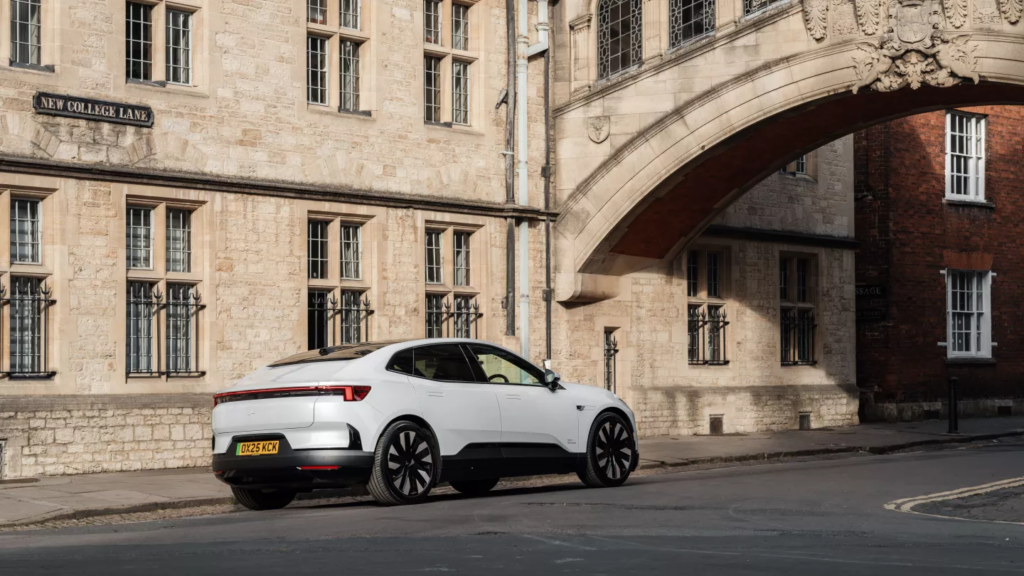
Do you like driving? Maybe not stuck in an urban jam, dodging potholes or crawling amid draconian speed limits – but out there on the open road, taking sunny corners in a nice car? The roar of the engine as it changes gear, the pleasure of getting the line and the revs right through a corner? Surely even the most dour of modern motorists derive at least some joy from driving’s highlights. But what exactly is that pleasure? And what is the trigger for it? Oxford University scientists have begun a study of the thrill and pleasure of driving to answer those questions. The relevance: can the thrill of driving an old-school noisy polluting gas engine transfer to driving a silent and smooth electric car, especially one built for performance-oriented driving. That’s why the experiments are sponsored by Swedish electric performance car brand Polestar. Despite the scenic photoshoot, Polestar’s testing will take place hundreds of miles from Oxford in Gotland, SwedenPolestar The car company is working with the SDG Impact Lab at Oxford to explore if ‘driving thrill’ can be defined and measured through scientific research. The study is all part of how the EV market is changing, from an early emphasis on ‘being good’ to a point where it can offer at least as much, if not more, driving excitement. Polestar is keen to position itself as a distinctive performance EV brand so one of the aims is to establish a measurable framework for driving thrill to inform its future car development. The Oxford pilot study involves surprisingly complex psychological and physiological research questions. The team combines expertise from engineering science, philosophy and experimental psychology, supported by the University of Oxford senior academics combining academic rigor with Polestar’s automotive expertise. “This project demonstrates how academic research can create real-world impact beyond the university,” says Prof Alexander Betts, Pro-Vice Chancellor and Co-Founder of the Oxford University SDG Impact Lab. “Working with Polestar allows us to translate scientific insight into knowledge that can help shape future innovation.” Oxford’s medieval streets and alleys are probably not what the brand has in mind when talking about driving thrillsPolestar The study will record physiological, cognitive and behavioral responses of participants as they drive a high-performance Polestar. By analyzing brain activity alongside biometric and behavioral data (a combination including EEG, eye-tracking, heart rate, skin conductance, facial expression and emotive self-assessment), the researchers aim to determine whether the sensations associated with driving excitement can be observed, analyzed, quantified and compared. Each driver performs a series of pre-defined driving sessions, ranging from relaxed driving to dynamic and performance driving using a Polestar 4. Future plans are to apply the methodology on other Polestar models. The researchers suspect traditional performance benchmarks are becoming less relevant in an increasingly electric world. Some manufacturers are trying to mimic the ICE car experience, such as retro-fitting old school motoring noises and gear simulations to entertain understimulated EV drivers. Rather than simply playing a recording of old Ferrari engines every time you press the accelerator, Polestar and the SDG Impact Lab at the University of Oxford are taking a more long-term approach to how EV drivers might get their thrills. The researchers actually claim to be challenging the assumptions that driving excitement depends on engine sounds. A Polestar 4 poses amid the dreaming spires of Oxford to demonstrate the new link with the university scientistsPolestar Polestar began in 1996 as a Swedish racing team and became Volvo’s official performance partner, similar to Mercedes-AMG. By 2017, Polestar was spun off as a standalone electric vehicle manufacturer owned by Volvo and Geely. The Chinese multinational now manages Polestar, although it still shares engineering platforms and service centers with Volvo. Christian Samson, Head of Product Attributes at Polestar, says the brand is committed to “challenging conventions around straight-line acceleration being the default measure of driving excitement. The scientific approach of this research promises real-world benefits for our customers, as the data can be used by our engineering team as an added layer for fine tuning our cars’ vehicle dynamics and performance attributes.” Running until the end of July this year, the study will include vehicle testing at the Gotland Ring test track in Sweden. Results are planned to be presented later in the year at a dedicated event at Oxford University. Polestar has recently launched its most performance-focused product yet – the Polestar 5. This four-door Grand Tourer uses bonded aluminum to reduce weight and provide precise responses. Sophisticated traction control, suspension systems, brake setups and bespoke tires support the performance feel. With a 0-60-mph time of around three seconds it’s offering exactly the sort of sensations the researchers are hoping to study. Source: Polestar source

What makes driving fun? Scientists study the thrill of motoring Read More »

Stock Market Today: Dow Ekes Out A Gain As Nasdaq Drops; Nvidia Hits A High (Live Coverage)

The Dow Jones Industrial Average and other major stock indexes ended Tuesday’s session mixed, as crude oil prices climbed above $102 a barrel and artificial intelligence names were rattled by South Korea’s call for AI profit-sharing. Despite sluggish returns on the stock market today, Dow component Nvidia (NVDA) managed to hit a new high. AI-exposed stocks fell, including Sandisk (SNDK),… Copyright ©2026 Investor’s Business Daily, LLC. All rights reserved. 87990cbe856818d5eddac44c7b1cdeb8 source

Stock Market Today: Dow Ekes Out A Gain As Nasdaq Drops; Nvidia Hits A High (Live Coverage) Read More »

Tea raves and new rules: How Fuze Tea is reaching Gen Z

Fuze Tea is repositioning itself beyond the ready-to-drink tea category with the launch of “Don’t compromise” in Singapore, a new brand platform aimed at Gen Z consumers navigating increasingly fluid identities, lifestyles and consumption moments. The move comes as competition in the ready-to-drink tea category intensifies, with functional refreshment and flavour innovation becoming increasingly insufficient as standalone differentiators. Instead, brands are now expected to deliver cultural relevance, identity alignment and experience-led engagement to remain meaningful, particularly among younger consumers. At the centre of Fuze Tea’s repositioning is a behavioural shift among Gen Z consumers, who are increasingly rejecting “either-or” decision-making in how they live, consume and socialise, instead combining multiple priorities within the same day and often within the same experience. This shift creates space for Fuze Tea to evolve its positioning beyond product-led refreshment.  “At its core, Fuze Tea has always been about bringing high quality ingredients to create refreshing combinations. ‘Don’t compromise’ builds on that foundation and extends that idea into a wider brand philosophy. It reflects a belief that people shouldn’t have to choose between different versions of themselves or the moments they value,” said Chrystian A. Lim, director for Singapore, Malaysia and Myanmar at The Coca-Cola Company.  He added that the brand ambition is to move Fuze Tea beyond a functional beverage into something that fits naturally into different moments, moods and lifestyles. Don’t miss: How CHAGEE is making tea worth reading The repositioning also reflects a broader shift in how the category is evolving. Rather than relying on refreshment-led messaging alone, Fuze Tea is leaning into “fusion” as a lifestyle mindset that reflects how younger consumers are combining identities, interests and experiences rather than separating them. “Fusion sits at the heart of the platform because it reflects how today’s Gen Z consumers are navigating life on their own terms,” Lim said. Designing for visibility, not just packaging As part of the rollout, Fuze Tea has introduced a refreshed brand identity in Singapore, with updated packaging and visual systems designed to modernise shelf presence and improve flavour navigation. The update introduces clearer colour cues across variants, stronger visibility of tea ingredients and flavour profiles, and a more vibrant design language intended to reinforce freshness, natural goodness and ease of choice across the range. Beyond the visual refresh, the “Don’t compromise” platform will be activated across a full-funnel ecosystem spanning social media, creator-led storytelling, out-of-home placements, retail activations and experiential formats. The campaign begins with social content positioning “Don’t compromise” as a behavioural mindset, with creators highlighting how Gen Z consumers navigate competing priorities across work, social life and personal identity. This is followed by out-of-home placements across MRT stations, commuter routes and bus shelters, extending visibility in high-frequency environments, while retail activations bring the refreshed identity closer to purchase moments. Where tea meets the dancefloor A key expression of the platform is “Fusion Pulse”, a one-day experiential activation held on 23 May at Behind the Green Door in partnership with The Smart Local Media Group and SoulSet, powered by Culture. Positioned as an alcohol-free “tea rave”, Fusion Pulse is designed around a growing behavioural shift among younger consumers, who are increasingly moving fluidly between nightlife, wellness, creative and culture-led experiences depending on context and mood. Rather than replicating a conventional nightlife format, the activation was built to reflect that fluidity. “The tea rave format allowed us to respond in a way that felt natural to the brand. Instead of relying on a conventional nightlife setting, we wanted to create space for music, flavour, and self-expression to coexist,” said Lim. That idea translates into a space where guests can move between R&B DJ sets and a series of interactive touchpoints anchored on the concept of “Your life, your mix”. These include personalised fragrance blending, customisable charm-making stations, immersive photo moments and a Fusion mocktail and tasting bar featuring Fuze Tea-inspired blends. The experience is designed as a participatory environment rather than a traditional branded event, reflecting how younger audiences are already engaging socially. Authenticity was central to shaping the activation, with Fuze Tea working with The Smart Local Media Group and SoulSet to ground the experience in youth culture and music-led communities. Lim said younger consumers are increasingly selective about brand experiences, favouring culturally native and community-driven formats over traditional activations. The collaboration helped shape Fusion Pulse into a socially driven experience rather than a conventional marketing activation. Building cultural participation Beyond launch, Fuze Tea is positioning “Don’t compromise” as an evolving platform built on creator collaborations, experiential extensions and product innovation. Lim said success is no longer defined by awareness alone, but by cultural participation and relevance in everyday consumer behaviour. “Ultimately, we want Fuze Tea to show up not just as a product, but as a brand that naturally fits into how younger consumers live, connect and express themselves today,” he said. “Fusion Pulse is only the start. Moving forward, the platform will continue evolving through creator collaborations, immersive experiences, social storytelling and product innovation designed around changing lifestyles and behaviours,” he added.  Early signals of future extensions have already been teased through “Fuze Island”, previewed by creators including Rayyan and Dewy Choo. The brand will also roll out consumer promotions offering winners a travel experience to Jeju Island, South Korea. Beyond experiences, Fuze Tea will continue expanding its product portfolio with new flavours designed for shifting consumer preferences and everyday occasions. The move reflects a broader shift across the beverage landscape in Southeast Asia, where brands are increasingly turning to culture-led experiences to stay relevant with younger consumers. Sprite, for instance, has been leaning into this approach through its “It’s that fresh” platform, rolling out regional activations across ASEAN and the South Pacific anchored in everyday youth culture touchpoints such as spicy food, basketball and music. The shift marks a move away from a purely unified global identity towards more localised executions, with experiences designed around how Gen Z consumers actually gather, eat and express themselves in-market. A similar playbook is emerging in coffee, where

Tea raves and new rules: How Fuze Tea is reaching Gen Z Read More »

What will it take for Standard Chartered to fix its 'lower-value human' crisis?

As a former Standard Chartered Malaysia employee, reading former Singapore President Halimah Yacob’s condemnation of CEO Bill Winters’ “lower-value human capital” remark hit hard. Her words—calling the phrase disturbing and demeaning—were not just criticism from outside. They were a mirror held up to a crisis that Standard Chartered itself created. I understand the communications playbook. I’ve lived it. And right now, Standard Chartered is making nearly every mistake in the book.The core problem: Language that betrays decades of values Let me be clear: this is not about the 7,000 job cuts. Restructuring happens in every major bank. The problem is the dehumanising language that turned a business decision into a moral reckoning. When CEO Bill Winters wrote in an internal memo that the bank would replace “lower-value human capital” with AI, he did not just describe a transformation strategy. He told the world that Standard Chartered sees its people as spreadsheet line items. This directly contradicts the bank’s global brand promise: “Now’s your time for wealth,” which leans on human stories, family legacies, and personal milestones. The phrase “lower-value human capital” says the opposite: that people are disposable assets. Meanwhile, here’s why Halimah Yacob’s critique matters. Halimah Yacob is not just any critic. She is a former Singapore President, a former NTUC Deputy Secretary General, and a lifelong advocate for workers’ dignity. When she says the remarks are not helpful for retrenched workers finding new jobs, and that remaining staff now question whether their employer really cares about how they feel, she is articulating what thousands of employees across Asia are feeling. Her voice carries particular weight because she speaks from the perspective of someone who has championed labour rights for decades. She is not defending jobs. She is defending human dignity. A softened tone, but trust remains broken Standard Chartered’s latest internal memo from Bill Winters softens the tone but does not fix the trust. Winters acknowledged that media coverage around automation, AI, and workforce changes may have unsettled employees, and that the remarks were “reduced to simple headlines or a quote out of context”. He explained that the bank’s future depends on “talent, judgement, relationships and commitment,” and reiterated continued investment in technology and automation. This is necessary damage control, but it is not trust repair. The memo addresses perception, but not accountability or clarity around transition. Employees are looking for specifics rather than reassurance. They want to know about training, timelines, and support. Most importantly, employees should not have to understand their future through headlines. Communications professionals across Malaysia are saying the same thing. Once language starts assigning different levels of human value, even unintentionally, people stop hearing the broader point the CEO may be trying to make. The fact that “lower-value human capital” became the headline tells you everything you need to know about how it landed emotionally with people. Recovery requires visible action, not just softened messaging. Any recovery must extend beyond communication into tangible support such as retraining and transition planning.Urgent steps the bank must take Standard Chartered would have had just a narrow window—48 to 72 hours—to contain this crisis. Here is what authentic, reputation-saving action looks like. First, the CEO must acknowledge the mistake without qualifiers. Bill Winters must issue a personal, unscripted video message, not a polished press release. He must directly acknowledge the phrasing was wrong and hurtful. He must apologise sincerely without using language like “if anyone was offended.” He must state clearly that no human being is lower-value, that certain tasks can be automated but people are irreplaceable. He must connect to the bank’s core values and recount personal stories of employees who have served the bank. Going beyond “out of context” explanations is essential. Second, the bank must reframe the narrative with precise language. Immediately replace the toxic framing with this message architecture across all communications. Stop saying “replacing lower-value human capital” and start saying “automating repetitive tasks so people can do higher-value, more meaningful work.” Stop saying “7,000 job cuts by 2030” and start saying “15 percent of corporate roles will transform; we are investing in retraining and redeployment.” Stop saying “not cost-cutting” and start saying “structural rebalancing for long-term sustainability while protecting our people.” Third, the bank must announce verifiable action, not just words. The antidote to a bad phrase is funded, measurable action. Standard Chartered must launch a retraining and redeployment programme with concrete funding. It must commit to redeploying at least 40 to 50 percent of affected staff into higher-value roles. It must publish quarterly transparency reports on the number of people retrained, the number redeployed, and the new roles created via AI transformation. It must partner with skills development agencies in Singapore, Hong Kong, India, and Malaysia to show public commitment. Fourth, internal communications must come before external communications. Hold town halls in all key markets—Singapore, Hong Kong, London, Malaysia, India—with leadership Q&A. Create anonymous feedback channels for staff concerns. Train managers to have empathetic one-on-one conversations about the transition. Over-communicate what will not change: job security for remaining staff, career development priorities, and cultural values. Employees should not have to understand their future through headlines. Fifth, external stakeholder engagement must happen immediately. Brief regulators, investors, and key clients directly on the remediation plan. Engage employee advocacy groups and labour unions in dialogue. Place op-eds by senior leaders, not just the CEO, on AI with humanity in Asian business media. Monitor sentiment daily and respond authentically to public criticism, not defensively.The differing cultural stakes in Asia In Asia, face and respect are not abstract concepts. They are the currency of trust. Standard Chartered earns a large share of its profits in Singapore, Hong Kong, India, and Malaysia. These are markets where calling workers “lower-value” is not just insensitive. It is culturally catastrophic. When a bank is seen as elite, cold, and detached from reality, it confirms the worst stereotype about global finance. That is what is happening now. The phrase has become the story instead of the transformation strategy. What happens

What will it take for Standard Chartered to fix its 'lower-value human' crisis? Read More »

Pokémon Center Singapore powers up with a local twist

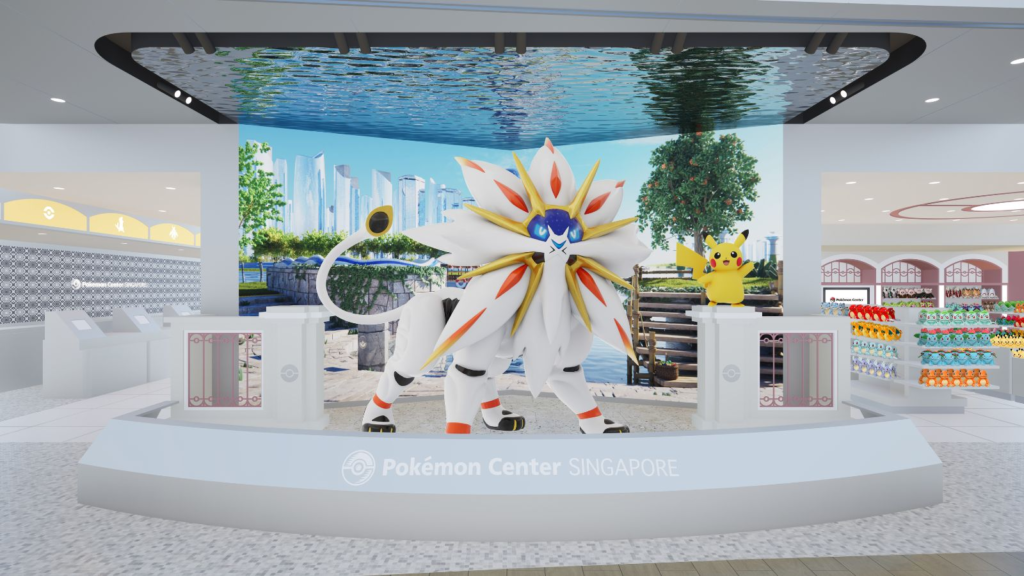
Pokémon Singapore is revamping its retail experience with the reopening of Pokémon Center SINGAPORE at Jewel Changi Airport on 1 July, marking the first full-scale renovation of a Pokémon Center store outside Japan. The refreshed store will feature a redesigned interior inspired by Singapore’s cultural heritage, alongside new locally themed merchandise and a dedicated event space aimed at growing the local Pokémon community. Leading the revamp is legendary Pokémon Solgaleo, which will become the new symbol of Pokémon Center SINGAPORE. Solgaleo will appear on the store’s updated logo and façade, greeting visitors alongside Pikachu in a display inspired by Singapore’s skyline. Don’t miss: Why UNIQLO’s Pokémon tees are more than just cute collectibles According to Pokémon Singapore, the redesigned interior incorporates local cultural elements to create a more familiar and immersive experience for Singapore-based fans, while also offering overseas visitors a uniquely localised Pokémon destination. The updated store will also include a dedicated event space located at the rear of the outlet. Equipped with a large-format monitor, the area is designed to host activities centred on Pokémon video games, trading card games and app-based gaming. Located within Jewel Changi Airport, the company said the space is intended to serve both local fans and international visitors, offering opportunities for fans to battle, trade and connect. To mark the reopening, Pokémon Center SINGAPORE will launch a line of commemorative merchandise featuring artwork inspired by Singapore’s cityscape and culture. The collection includes plush toys of Solgaleo and Pikachu, alongside merchandise inspired by the traditional kopi (coffee) cup. In total, 20 exclusive products have been created for the store, with the first 12 items launching during the reopening. A second wave of merchandise, including a Pikachu and kopi cup bag charm, will be released in August. “We are truly humbled by the continued enthusiasm from our fans in Singapore and beyond. In order to live up to those expectations, we hope to inspire even greater love for Pokémon, and encourage fans to visit Pokémon Center SINGAPORE to fully immerse themselves in the experience with this renewed store,” Shunsuke Sasaki, managing director of Pokémon Singapore. Sasaki noted that Solgaleo was selected as the store’s new symbol due to its sun-like mane and its alignment with the company’s vision of creating a Pokémon Center more deeply rooted in Singapore. He added, “This marks a new chapter for us in Singapore. This is not just a grand reopening, but a commitment to elevate the store experience by transforming Pokémon Center SINGAPORE into a place where people from all walks of life can come to love Pokémon, and where fans can connect globally.” The reopening follows Pokémon Singapore’s temporary closure of the Jewel Changi Airport outlet in April this year for a comprehensive renewal project. At the time, the company described the revamp as the first major Pokémon Center renovation outside Japan and an “important milestone” globally. Pokémon Singapore had also said the refreshed concept would feature localised design elements inspired by Singapore’s heritage and everyday culture, alongside expanded merchandise offerings and new experiential features. During the closure, the brand operated pop-up stores at Jewel Changi Airport and Plaza Singapura. Related articles:   Cable cars get day-to-night makeover in Mount Faber Leisure Group’s latest Pokémon adventureYou can now hunt for Pokémon on Google’s mobile browser LEGO and Pokémon finally build the dream collab fans have been waiting for       source

Pokémon Center Singapore powers up with a local twist Read More »

Electronic stickers turn forests into living fire alarms

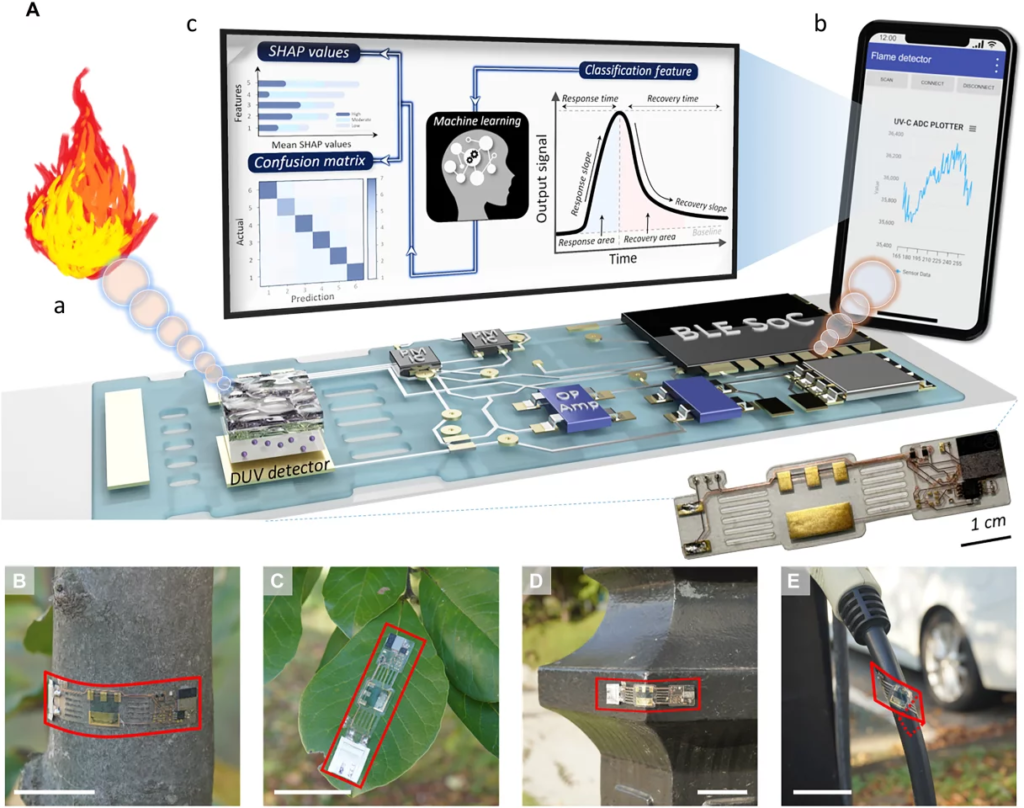
No matter what we throw at fire detection, from drones to advanced prediction models and watch towers, predicting when and where blazes will start remains challenging. And not all fires are created equal. Scientists from South Korea’s Hanyang University have taken a new approach, creating an electronic sticker that attaches to a variety of surfaces including tree bark to transmit continuous data via Bluetooth. It doesn’t just detect the point of ignition but can identify the different kinds of fires, helping first responders tackle fires faster and smarter. This flexible sensor targets the deep-ultraviolet (DUV) light emitted by fire, and it can be safely attached to tree trunks and leaves – as well as power cables or industrial equipment, making it useful beyond wildfire detection. Researchers demonstrate how this “sticker” works to sound the alarm Taehyun Park et al., Science Advances (2026) Its power is in the sensor that focuses on the spectrum known as “solar-blind” DUV. While sunlight obviously contains UV radiation, wavelengths between 200 and 280 nanometers are almost entirely absorbed by Earth’s atmosphere before they reach the ground. Essentially, this means that if DUV radiation is detected at ground level, it’s likely the result of combustion. Basically, the sensor ignores sunlight and most background light “noise” but get triggered almost instantly when it detects DUV, or the hallmarks of fire. The sensor won’t harm vegetation and can adhere to delicate surfaces like leavesHo-Chun Yu/Hanyang University The sticker contains a zinc tin oxide nanocomposite photodetector, which creates and transmits an electrical-signal alarm when DUV light is present. It’s also self-powering and durable, able to bend and flex on leaves or stay on tree trunks for months. In testing, it was still 96.7% effective after 180 days. However, the researchers wanted it to do more than just sound an alarm but detect different kinds of fires – critical for how we respond to blazes. The team tested the device using a blowtorch, solid-fuel flame and gas stove, discovering that each type produced its own DUV light “footprint”. Using machine learning, the sensor could then identify not just the type of flame it’s detected but determine how far away the fire was. Because wildfires, once alight, provide challenging variables – including wind and fuel source (the flammability of trees varies greatly) – this distance detection could better inform those charged with putting the blaze out as to the direction of the burning in real-time. The sensor is flexible, can hold to a range of surfaces and detect different types of blazesHo-Chun Yu/Hanyang University The unpredictability of wildfires once they’ve started traditionally puts first responders in a defensive position, making these destructive events hard to contain. It’s still early days, but as the prevalence of wildfires continues to grow, a forest full of plant-safe sensors has the potential to detect trouble before smoke, cameras or other early alarm systems identify emerging blazes. “This integrated approach provides a practical route to reliable fire monitoring, relevant to early-stage fire monitoring concepts for wildfire and industrial safety applications,” the team, led by Ho-Chun Yu, a professor in the Department of Electronic Engineering at Hanyang University, notes. The research was published in Science Advances. Source: Hanyang University via Scimex source

Electronic stickers turn forests into living fire alarms Read More »