ZUS Coffee serves up a reality check for tired working adults

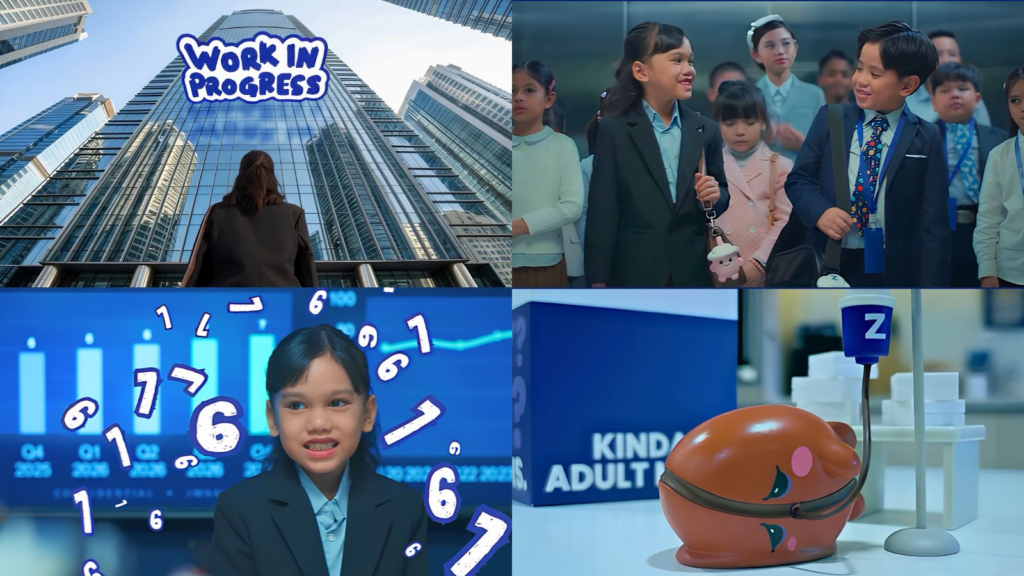
Southeast Asian coffee chain ZUS Coffee is leaning into the emotional weight of adulthood in its latest regional campaign, reminding consumers that progress is still progress, even if life does not always feel that way. Central to the campaign is a short film titled “Work in progress”, which follows two children, Adam and Amelia, navigating the realities of corporate life. Set in an office environment, the pair are thrown into familiar adult situations that reflect burnout, pressure and quiet frustration. Amelia is seen presenting a report at a board meeting to colleagues who dismiss her findings, before later staying back past 6pm to meet a midnight deadline set by her boss. Meanwhile, Adam works under the watchful eye of an overbearing colleague determined to ensure he stays productive. While co-workers discuss KPIs in the pantry, Adam quietly sips a ZUS Coffee while counting down the minutes until he can leave the office. Don’t miss: Why ZUS Coffee is opening its universe to Butterbear, after a year of ZUS Buddy  The film ends with both Amelia and Adam returning home after a long day at work. When their boss calls again, the pair choose to ignore it. The final scenes then reveal the characters in their adult forms, enjoying a cup of ZUS Coffee while pursuing passions outside of work. Throughout the film, the brand’s mascots, known as “ZUS Buddies”, appear as visual representations of the characters’ emotions. In one scene, Porta Pal is seen looking burnt out on Amelia’s desk as she attends back-to-back meetings. Elsewhere, when Adam becomes distracted at work and starts tossing paper balls into a waste basket, Frappe Fren appears visibly bored and melting. The campaign also introduces the brand’s new “Kinda Adult Meal” box. Ahead of the launch, ZUS Coffee teased the campaign on social media through a series of short clips featuring the ZUS Buddies in workplace scenarios. One video showed Blue Buddy tripping and spilling coffee while Frappe Fren frowned at a laptop and Pinky Boo dozed off at work. Another teaser saw Blue Buddy falling asleep in the pantry before being transformed into a “Kinda Adult Meal” box. The campaign is set to run across Malaysia, Singapore, Brunei, Thailand and the Philippines. A+M has reached out for more information. The campaign follows ZUS Coffee’s continued regional expansion, with the brand recently entering Indonesia through a partnership with Kapal Api Group. The Malaysia-founded chain opened its first Indonesian outlet at Puri Indah Mall in May, as competition heats up across Southeast Asia’s growing coffee market. Founded in 2019, ZUS Coffee has rapidly expanded across markets including Malaysia, Singapore, the Philippines, Brunei and Thailand, surpassing 1,000 stores globally in 2025. As part of its localisation strategy, the company has rolled out market-specific beverages such as the Gula Melaka Latte in Malaysia, Ube Latte in the Philippines, Kopitiam Double Espresso in Singapore and Thai milk tea-inspired drinks in Thailand. Related articles:   Are you Jason? ZUS pulls off bold April Fool’s “internal email” prank  ZUS Coffee turns up the beats with its first-ever Singapore coffee rave  How ZUS Coffee leaned into music and physical experiences with ‘Drip & Drop’  source

ZUS Coffee serves up a reality check for tired working adults Read More »
Mamee Double-Decker’s CMO on why the brand did everything a snack brand shouldn’t do

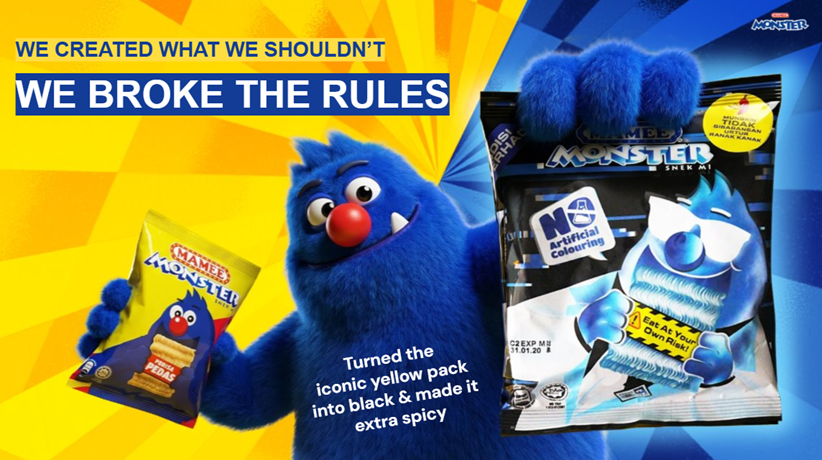
For a while, Mamee Double-Decker felt like it was doing everything right. The company was launching campaigns, rolling out SKUs and pushing limited-edition products. Yet despite staying visible, something was missing. “Our problem was not really the attention or media – but meaning,” said How Yuan Yi during a recent case study presentation at the Content360 Malaysia conference. Reflecting on the brand’s evolution, How said the turning point came when she revisited her own childhood memories of rushing out after school to buy a packet of Mamee Monster. The challenge, however, was that younger consumers today never had those same formative experiences with the brand. Don’t miss: Content360: Tealive’s Bryan Loo on why instinct still beats data in marketing  “The question then became: How do we make people feel something they have never experienced before?” she said. According to How, the answer was not to recreate the past, but to make nostalgia feel culturally relevant in the present. “The reason why the younger generation are still engaging with Mamee, is because they are not searching for the past, but for something that feels real in today’s fast-moving environment,” she explained. Breaking the playbookThat shift in thinking led the brand to abandon conventional marketing approaches. “We stopped following the playbook,” said How, adding that the team intentionally moved away from asking what new products to launch, and instead focused on how the brand can become something that “belonged” to the people. The strategy initially felt risky. The company launched products that intentionally broke category conventions, including turning the iconic yellow Mamee packaging black. In October 2025, in a colorful collision of fashion and nostalgia, Mamee Monster teamed up with Christy Ng for a new line of bags celebrating childhood memories and local culture. The collection spotlighted the beloved “Monster” mascot and transforms it into trendy, functional accessories that are as playful as they are wearable. “We did almost everything a snack brand shouldn’t do at that point in time,” she said. “However, those moments were exactly when people started talking about us, and we realised that when we broke the rules, our brand came alive.” Monster, the influencer Central to that transformation was repositioning the beloved Monster character, from a static mascot, into what How described as a personality that reacts to culture. “We turned Monster into an influencer, not a mascot, but someone that has a personality, and someone that reacts to trends, and someone that joins conversation,” she said. The character began responding to real-world moments and internet culture, from Covid-era jokes about overgrown hair to playful commentary on trends and pop culture moments. More recently, in April, the iconic blue furry Monster appeared as a music video star alongside Iman Alyssa (@imantroye) in the brand’s latest “Crunchy” track, created to promote Mamee Monster’s new limited-edition onion flavour. For How, the goal was never perfection. “Belonging is not true perfection, because we realised that people do not talk about something that is better, but people talk about something that is different enough to be questioned,” she explained. Beyond products, the brand also expanded into collaborations, customised merchandise and creator-led content. The broader aim, said How, was to stop treating the brand as something owned solely by marketers. “Participation is when people stop looking at you as just a brand, and start owning the brand to make it their own,” she said. Ultimately, How believes nostalgia marketing today is less about reliving history and more about emotional connection. “Nostalgia today is not about memory, it is really about belonging,” she added. Related articles:  Christy Ng brings Mamee Monster to life in playful bag collaborationSneaker-LAH and ASICS partner up for MAMEE Monster-inspired shoes Festive fatigue? Mamee bets on micro-dramas to win Malaysia’s mixed season source

Mamee Double-Decker’s CMO on why the brand did everything a snack brand shouldn’t do Read More »

Portable projector brings Roku TV streaming straight out of the box

Portable projectors nothing new, but as the tech has steadily improved in recent years, they’ve become great tools for comfy viewing in TV-unfriendly places. Lately, we’ve seen a push toward smarter, more self-contained designs, including Yaber’s portable projector with built-in Google TV and Aurzen’s own tri-fold Zip pico projector, both of which try to cut down on the fiddly setup that usually comes with projector ownership. Aurzen’s latest model, the EAZZE D1R air, takes that streaming-first idea further by becoming what the company describes as the world’s first truly portable projector with Roku TV baked directly into the hardware. It builds on the brand’s recent D1R Cube, which brought Roku to a home-leaning smart projector last year, and reshapes the concept around mobility, outdoor use, and quick setups. Six optimized picture modes – Roku, Standard, Vivid, Movie, Sports, and Eco – adapt the image for different types of content and lighting conditions, while dual 5-W speakers with Dolby Audio support deliver clear sound that carries in both indoor and open-air settingsAurzen The headline feature is the integrated Roku TV interface, which means you get the familiar tiled home screen and streaming channels without plugging in a stick or juggling separate remotes. It’s the same approach Roku has been pushing on smart TVs for over a decade, applied here to a device small enough to carry in a bag. On the optics side, the D1R air projects a native 1080p image at up to 300 ANSI lumens, with brightness independently verified by SGS – which is going to restrict comfortable viewing to shaded spots or after dark environments. Six picture modes tune the output for different content and ambient light, while ToF autofocus and automatic keystone correction handle alignment within a few seconds of pointing it at a surface. A 180° gimbal lets you aim at walls, ceilings, or whatever flat-ish surface you can find outdoors. A 180° gimbal lets the D1R air throw an image onto walls, ceilings, or improvised outdoor surfaces with minimal fussAurzen Power is where the D1R air leans hardest into portability. It runs over USB-C with support for 65-W fast-charging power banks, and the input sits on the bottom of the chassis so cables don’t drag against the gimbal as you rotate it. Aurzen also sells a Universal Stand with a 25,000-mAh battery built in for longer outdoor sessions. Audio comes from dual 5-W speakers with Dolby Audio support, which is modest on paper but reasonable for a device this size. The EAZZE D1R air is launching exclusively on Amazon US from May 27, with a list price of US$239.99 and an introductory offer of $149.99. That slots it well below most smart projectors with comparable brightness, and roughly in line with where the D1R Cube landed at launch, but with a more travel-friendly body and the addition of true battery-bank operation. USB-C power input sits on the underside so cables stay out of the way as the gimbal rotatesAurzen Aurzen has been on a bit of a tear in this space, having picked up an iF Design Award, Red Dot, G-Mark, and IDEA Award for previous products including the tri-fold Zip. The D1R air doesn’t exactly reinvent the smart projector, but by bundling a recognizable streaming platform, a sensible power setup, and a flexible gimbal into a sub-$250 package, it does feel like a tidy answer to the question of why portable projectors still tend to be more complicated than they need to be. If the projector’s portability, ease of use and streaming chops are as good in practice as the company claims, the D1R air could nudge the portable projector category a little closer to behaving like the TV most people already know how to operate. Source: Aurzen source

Portable projector brings Roku TV streaming straight out of the box Read More »

The activation imperative: Turning fragmented data into measurable ROI

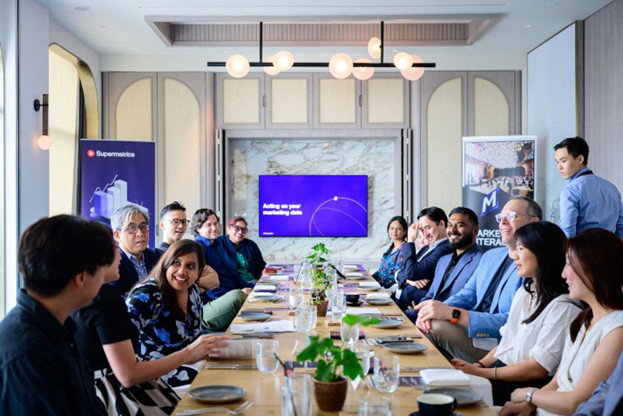
In Singapore’s highly mature digital economy, brands are rarely short on customer data. The true challenge lies in tech stack bloat, where a complex web of legacy systems, customer relationship management apps, and new software-as-a-service tools trap valuable insights in disconnected silos. At a recent MARKETING-INTERACTIVE roundtable in Singapore, held in partnership with Supermetrics, senior marketing leaders across retail, hospitality, finance, and technology gathered to discuss how organisations can navigate these hurdles to build an agile and connected data ecosystem. The foundational data challenge Before brands can orchestrate real-time, omnichannel journeys, they must ensure their data foundation is reliable. FairPrice Group has operated for more than 50 years, accumulating vast amounts of data from point-of-sale systems, loyalty programmes, and net promoter scores. Alvin Neo, FairPrice’s chief customer and marketing officer, noted the organisation has intentionally prioritised investing the time and effort to get its data foundation sorted out first to enable hyper-personalisation to work safely and well at scale. “As they say, if you automate a mess, you just get a faster mess,” he said. Similarly, many organisations in highly regulated industries face stringent requirements regarding data reliability and privacy. A senior digital transformation leader at one such organisation emphasised that maintaining the sanity of a single customer view is critical, as sending the wrong highly sensitive document to a client would create severe trust issues. To navigate this, it breaks its digital transformations down into bite-sized projects, focusing on proving value and securing small wins before scaling up and embarking on complex integrations. Moving from push to pull marketing The discussion highlighted a necessary mindset shift from sales-driven push marketing to a more authentic and human-led pull approach. Singtel has traditionally possessed a wealth of customer data and connectivity signals. Lynette Poh, head of brand, engagement and loyalty at Singtel, pointed out the industry often fails to look at the human insights behind the data. “The real understanding of your customer, what they want, what they need, predicting that and making them a personalised journey, because it feels so seamless… I think that is the biggest challenge to solve,” Poh said. Neo added that brands should anchor engagement around customers’ real-life aspirations – whether that is eating healthier, saving more or living better. “The future of marketing is not about targeting people more aggressively. It’s about helping people achieve goals they care about,” he said. “When customers give you permission to help them improve their lives, marketing stops feeling intrusive and starts becoming genuinely valuable.” However, Jan Willem van Walsum, data activation lead APJ at Supermetrics, observed that executing a pull mechanism is difficult in reality due to fractured internal ownership and dependencies across different teams. “By the time you’ve figured out how to respond to the pull, the pull has disappeared,” van Walsum said, noting the customer has often already moved on to something else. The need for centralised decisioning To overcome these execution barriers, organisations need to move away from siloed decision-making. Even with a beautiful single customer view, having external media agencies, social agencies and email teams all making different decisions on that data at the same time creates conflicting customer journeys. Van Walsum advocated for implementing a decisioning layer that acts like an air traffic controller across different platforms. This enables centralised decisions that tell various channels what to do and when to do it, without necessarily having to replace existing systems. This prevents frustrating consumer experiences such as retargeting a user with ads for a hotel booking they have already completed. In the financial sector, where customer journeys are highly unique and sensitive, understanding intent is paramount. Endowus is focused on unifying its client view to activate data quickly across various scenarios, such as when clients deepen their engagement on specific topics through owned channels. Jason Huan, chief marketing officer at Endowus, said the firm takes defensive and offensive stances based on market volatility, leveraging data to know when to elevate performance marketing and when to pull back and focus on allaying investing fears. Orchestrating complex omnichannel experiences The complexity of the customer journey is especially pronounced for brands managing multiple touchpoints and partners. The Kallang Group manages one of Singapore’s most dynamic precincts, serving vastly different customer profiles – from active community members to concert-goers. Michelle Yip, group head of brand marketing and communications at The Kallang Group, highlighted the need to consolidate user profiles and leverage first-party data to deliver a seamless, connected experience, that caters to diverse audiences across sports, entertainment, lifestyle, and community offerings. Starting small to prove return on investment With so many competing priorities, proving the value of personalisation to stakeholders remains a universal hurdle. Byron Munson, vice president, APJ at Supermetrics, advised marketers not to try and solve everything at once. Instead, brands should start with a single use case that has a strong return on investment metric attached to it. By enriching customer relationship management data with real-time behavioural signals – such as preferred media channels or time of day – brands can begin driving genuine bottom-line revenue. “The challenge is, it’s the action, what do I do, and then how I stitch the KPIs to validate the investment I’m making to get it going,” Munson said. By securing a hard return on investment early on, marketing teams can influence internal stakeholders, secure further investments, and gradually expand their hyper-personalisation efforts. Acknowledgements This roundtable and article were made possible by our partner, Supermetrics. Supermetrics is a marketing intelligence platform that helps organisations move from understanding past performance to driving future action. Trusted by more than 200,000 companies in 120 countries, Supermetrics unifies the marketing intelligence workflow from data connectivity to insight to activation, enabling confident, revenue-focused decisions. Processing 15% of global advertising spend, Supermetrics helps brands and agencies navigate marketing with confidence in today’s evolving data landscape. To learn more about Supermetrics Data Activation please visit:

The activation imperative: Turning fragmented data into measurable ROI Read More »

In conversation: Managing crises beyond the courtroom

In a crisis, most organisations still follow a predictable sequence: call the lawyers, manage the fallout, then bring in communications. That order, according to APRW managing director Cho Pei Lin, is exactly where things go wrong. Speaking on Marketing Connected’s “In Conversation” podcast, Cho, who helped pioneer litigation and disputes PR in Singapore, said crises are often mishandled because communications is treated as an afterthought. “Organisations will often say, find a lawyer first to give us legal advice, and then the matter gets thrown into the public space,” she said. “When it reaches the public space, they try to control the narrative and only then bring in PR. By then, the news is already everywhere.”Don’t miss: In Conversation: IKEA Singapore on why awareness must be earned, consistently  Catch the full interview here:  She argued that litigation PR, or more broadly crisis communications, should be embedded from the start alongside legal and operational response. “What is most important is to bring in the firefighters, the legal team, and the comms team at the beginning, or as early as possible,” she said. “It needs to be a holistic approach, not sequential.” However, she noted that most organisations default to sequence under pressure. “It’s human nature. There’s a fire, so you put out the fire first. Then you deal with the rest later,” she said. Cho also emphasised that litigation PR is often misunderstood as something that only applies when disputes escalate. In reality, she said, it is part of broader crisis management. “Not everything ends up in litigation,” she said. “It’s really about crisis communications as an umbrella. The earlier you think about how legal, operational and communications work together, the better your outcomes will be.” For Cho, the real value of litigation PR lies in alignment, not reaction. When legal, business and communications teams work in parallel, organisations are better positioned to protect both outcomes and reputation before a crisis spirals out of control. Also tune in to the full conversation on Spotify: Tune into the rest of this conversation on your favourite podcast platforms, by searching up Marketing Connected. For all the visual people out there, we’ve got your back as well, with our vodcasts on YouTube. Related articles: In conversation: Singapore’s arts scene wants your attention In conversation: How Airwallex channels sports energy into B2B impact In Conversation: Are we forgetting what makes marketing work? source

In conversation: Managing crises beyond the courtroom Read More »

Tiny EDC flashlight puts pro-grade LEDs on your keychain

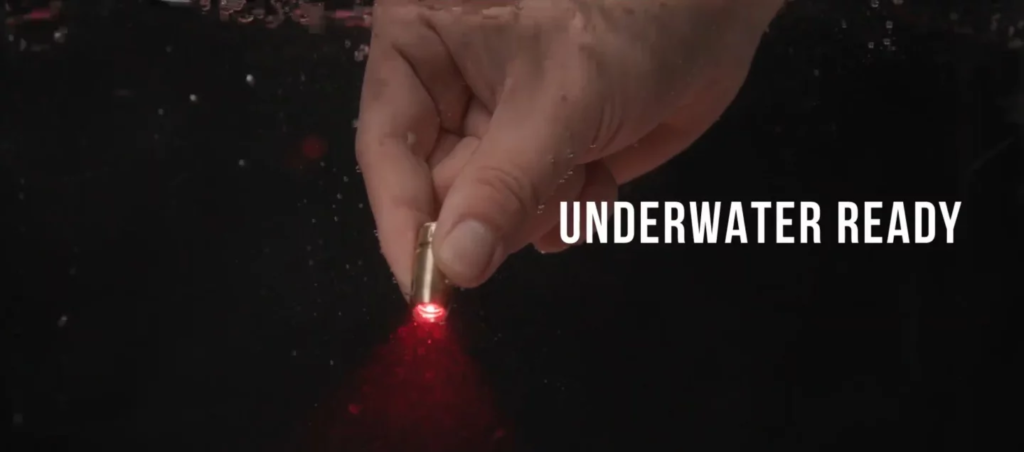
Early in 2025, YSmart embarked on a Kickstarter campaign for a versatile micro-flashlight called the Bullet2. Now the company is back with an updated version that’s even more compact, and comes with pro-grade LEDs, IPX8 waterproofing, replaceable batteries, and three beam options for everyday carry. We usually think of keychain lights as emergency backup tools: useful in a pinch, but often underpowered, cheaply built, or easy to forget. Like it predecessor, the Bullet3, now on Kickstarter, is trying to change that with a micro-flashlight built to feel like a serious everyday-carry tool. The device packs a 3-cm (1.18-in) body (compared to the Bullet2’s 4 cm), weighs from just 5g (0.17 oz), and uses either CREE or Luminus LEDs depending on the version you opt for. It also boasts an IPX8 waterproof rating, meaning that short of scuba diving or hot showers, it can withstand pretty much any water-related scenario you throw at it. An IPX8 waterproof rating means the Bullet3 is built to keep working through rain, splashes, and wet outdoor conditionsYSmart Instead of a built-in charging port, the Bullet3 powers its ultra-compact frame using replaceable button-cell batteries, allowing the chassis to remain incredibly streamlined, while still providing enough light when it’s needed. The micro-flashlight comes in three lighting versions rather than just one standard beam. The 6500K cool white model is aimed at clearer outdoor visibility, while the 4000K warm white version is designed for reading, camping, and close-up tasks. A 660-nm red-light option is available for more discreet use after dark, whether checking camera gear, preserving night vision, or fishing. Each version offers two output levels: high for quick visibility, and low for longer use or less glare. The form factor will inevitably limit the device’s output, but the lighting variants and dual output levels make it more practical. The body is optimized entirely around pocket-carryability. The Bullet3 comes in aluminum, brass, and titanium versions, giving you a choice between ultralight, classic, or premium builds that attach to a keyring without adding any noticeable bulk. The metallic construction ensures the Bullet3 is well protected against the elements, easily surviving the friction of pocket carry and rough daily use, as well as most water exposure it encounters. The button-cell design also feels deliberate: no cables, no charging downtime, just replace the cell and you’re good to go. The micro flashlight is designed for everyday carry, small enough to slip into a pocket or stay attached to keys without adding much bulkYSmart The Bullet3 is currently live on Kickstarter, with early pledges starting at £29 (around US$39) for the aluminum version, £36 (US$48) for brass, and £44 (US$59) for titanium. There are also several multi-pack options if you’d like to keep several units handy in different places. Crowdfunding campaigns always carry an element of risk. For what it’s worth, YSmart has been making compact everyday-carry tools since 2018, and says it has completed 18 previous campaigns, delivering more than 100,000 units to over 28,000 backers. According to the campaign timeline, if all goes to plan, production is due to begin in July, with worldwide shipping planned for September. The Bullet3 isn’t trying to be an all-in-one gadget. It’s simply aiming to be an everyday keychain flashlight that can also handle small outdoor jobs and unexpected dark moments. If YSmart delivers the rugged build quality and crisp LED performance it promises, the Bullet3 could be a highly functional, permanent fixture for your keyring, ensuring that a reliable beam is always within arm’s reach. BULLET3: A 3cm Micro Flashlight with Pro-Grade LED Source: YSmart Note: New Atlas may earn commission from purchases made via links source

Tiny EDC flashlight puts pro-grade LEDs on your keychain Read More »

Nexxen brings Smart TV home screen advertising to APAC

Nexxen is rolling out Nexxen TV Home Screen across Asia Pacific, enabling advertisers to programmatically activate native Smart TV home screen inventory through its demand-side platform, Nexxen DSP. The capability is now live in initial APAC markets including Australia, Singapore, Malaysia and the Philippines. According to Nexxen, the offering gives advertisers access to Smart TV home screen units on VIDAA-powered Smart TVs across APAC and selected global markets. VIDAA OS, developed by V, currently powers more than 50 million Smart TVs from leading brands in over 180 markets globally. Don’t miss: YouTube overtakes traditional TV in Filipino homes, says Google  The launch is aimed at helping advertisers reach audiences at the point of discovery, before content playback begins. By combining premium Smart TV home screen placements with Nexxen’s data and advanced TV capabilities, the company said advertisers will be able to plan, activate and measure campaigns within a single platform. “The TV experience doesn’t start with playback — it starts on the home screen. In today’s world, that is TV. It’s where discovery happens, where decisions are made, and where attention is at its highest,” said Guy Edri, chief executive officer, V. “For partners and advertisers, it’s not just an entry point — it’s the most valuable moment to connect with audiences at scale,” he added. Meanwhile, Josif Zanich, managing director, JAPAC, Nexxen, said the Smart TV home screen presents a strong opportunity for brands to engage viewers in a premium environment. “The Smart TV home screen creates a prime opportunity for brands to get in front of leaned-in audiences,” said Zanich. “By pairing this premium inventory from V, one of the leading and most widely adopted platforms in the Australian market, with Nexxen’s unique data and advanced TV capabilities, advertisers can plan, activate and measure campaigns within a single platform, unlocking smarter audience engagement and ultimately driving full-funnel performance.” Nexxen added that the OEM inventory available through Nexxen TV Home Screen is expected to expand in the coming months. The launch comes as Connected TV adoption continues to accelerate across Asia Pacific, reshaping how consumers watch content and how advertisers plan campaigns. According to Omnicom Media Group Asia Pacific’s “Connecting connected TV” study, which surveyed 11,200 streaming users across 14 APAC markets, viewing behaviour in the region varies between solo weekday streaming and more communal weekend viewing. While smartphones dominate solo streaming, the living room regains importance on weekends, with 55% of viewers preferring CTVs when watching with others. For advertisers, this points to a growing need to consider not just screen time, but viewing context. The study found that viewers in family settings are more likely to remember and respond to advertising, with 65% of large-family viewers expressing receptiveness to ads, compared with 53% of solo streamers. Ad-driven purchase intent was also higher among family groups, while co-viewing reduced multitasking, suggesting that CTV environments can offer more attentive and contextual engagement opportunities Related articles:   StarHub launches Singapore’s first real-time ad replacement for live TV  Study: 75% of Filipinos eye new streaming subscriptions as ad-supported viewing rises  Samsung expands TV Plus team as FAST viewership surges across APAC  source

Nexxen brings Smart TV home screen advertising to APAC Read More »

Singapore bets SG$40m on design as creative economy race heats up

Singapore is investing more than SG$40 million into its design sector over the next three years as it looks to sharpen its position as a global creative and cultural hub amid rising competition across the region. Launched by the DesignSingapore Council, the “Design 2035” masterplan lays out a 10-year roadmap focused on strengthening Singapore’s design economy, growing international recognition for local creatives, and embedding design more deeply across business, technology and public life. A key highlight of the roadmap is the launch of Singapore’s inaugural Design Biennale in May 2027, which will replace the annual Singapore Design Week. Running over six weeks, the biennale aims to scale up Singapore’s international cultural footprint through larger commissions, expanded district activations, and cross-border collaborations. Don’t miss: How safe are creative ideas in Singapore’s pitch culture?  The move comes as countries across Asia increasingly use design, culture and creativity as economic drivers and soft power tools to attract tourism, talent and investment. According to the council, Singapore’s design sector contributed SG$2.7 billion in real value added to GDP in 2024, while a separate economic footprint study estimated the sector generated SG$13.8 billion across the wider economy. The roadmap was developed following consultations with more than 6,000 members of the design community and public over the past year. Under the plan, Singapore will focus on five key areas over the next decade: purposeful innovation, responsible resource use, caring communities, a culturally distinct city, and a vibrant design industry. Artificial intelligence, climate change and Singapore’s rapidly ageing population were also identified as major areas where design can play a more strategic role. “With national plans such as Singapore’s National AI Strategy and Smart Nation Singapore in place, local designers could be increasingly central in ensuring Singapore remains a trustworthy technology hub,” the council said in a release. Among the new initiatives announced is the ‘Good design research and development’ programme, which aims to strengthen collaboration between businesses and designers through co-funded innovation projects. Another initiative, the ‘Good design placement’ programme, will support mid-career designers entering strategic design roles within organisations in key growth sectors. The council is also doubling down on internationalisation efforts through a new International Design Awards scheme aimed at helping Singapore designers gain global recognition and commercial opportunities. Dawn Lim, executive director of DesignSingapore Council, said the roadmap was intended to strengthen Singapore design’s “relevance and global impact”. “The future of Singapore design will ultimately be shaped by the choices we make as a community,” said Lim. Separately, the council said it will launch a public activation titled “New everyday life by design” across 17 MRT stations from HarbourFront to Punggol Coast later this year to showcase the role of design in everyday life. The roadmap builds on DesignSingapore Council’s broader push to position design as a national growth driver. Last year, the council launched “Nation by design”, a campaign developed with Kinetic Singapore that framed design not simply as aesthetics, but as a mindset shaping Singapore’s infrastructure, systems and future-readiness as the nation marked SG60. The campaign also served as a lead-up to the “Design 2035” masterplan, while introducing initiatives such as “60 on 60”, featuring perspectives from Singaporeans across industries including Tan Su Shan, Professor Chua Beng Huat and Rebecca Ting. Separately, DesignSingapore Council also inked a three-year partnership with SBS Transit to explore more human-centric commuting experiences through multi-station activations and service design projects across Singapore’s rail network. Related articles:    When Claude makes anyone a ‘designer’, what happens to creative craft? SG clamps down on foreign freelancers, but industry voices say nuance is needed SG companies barred from engaging foreign freelancers for creative services   source

Singapore bets SG$40m on design as creative economy race heats up Read More »

CNN reportedly sues Perplexity over alleged AI copyright infringement

CNN has reportedly filed a lawsuit against AI search engine company Perplexity, accusing the firm of unlawfully copying and distributing its copyrighted content. Filed on Thursday in the United States District Court for the Southern District of New York, the lawsuit reportedly marks CNN’s first copyright action against an AI company and is believed to be the first such case brought by a television network. According to Reuters, CNN alleged that Perplexity copied “thousands” of its stories, videos and images to power its AI products, while distributing “identical or substantially similar” competing content. Don’t miss: News Corp launches corporate copyright licence as AI raises compliance risk A CNN spokesperson reportedly said the lawsuit reflects its position that Perplexity, despite its multibillion-dollar valuation, should compensate publishers whose original journalism it allegedly uses to power its AI products. CNN also reportedly argued in its complaint that Perplexity’s alleged actions undermine the economics of original journalism by exploiting reporting that is expensive and resource-intensive to produce. Perplexity has reportedly denied the allegations. “You can’t copyright facts,” spokesperson Jesse Dwyer said in a statement quoted by media reports. According to CNN, the media company had previously attempted to negotiate a licensing agreement with Perplexity last year, but both parties failed to reach terms. The network said it remains open to “sensible licensing arrangements” and noted that it has existing AI-related commercial partnerships and ongoing discussions with other technology players. One such deal, with Meta, was publicly reported in December last year, CNN added. CNN is reportedly seeking unspecified monetary damages and a court order to prevent Perplexity from further violating its intellectual property rights. The case is the latest legal challenge facing Perplexity. The AI startup has also reportedly been sued by publishers including The New York Times, Dow Jones and Reddit over allegations tied to copyright infringement and data scraping. At the same time, several publishers have pursued licensing partnerships with AI companies instead of litigation. Media reports stated that firms such as Gannett, TIME, Le Monde and Der Spiegel have signed agreements with Perplexity in recent years. The dispute comes amid mounting legal scrutiny surrounding how AI companies use and retain user and publisher data. Last year, OpenAI pushed back against a US court order requiring it to hand over 20 million anonymised ChatGPT conversations to The New York Times and other publishers as part of an ongoing copyright infringement lawsuit. At the time, OpenAI argued that the vast majority of the transcripts were unrelated to the claims in the case and warned that complying with the order could expose confidential user conversations from the past three years. Related articles: Getty Images suffers partial defeat in UK copyright lawsuit against Stability AI   WFA finds copyright and IP issues are stalling GenAI in marketing   Johnny Cash estate sues Coca-Cola, claiming ad “stole” singer’s voice  source

CNN reportedly sues Perplexity over alleged AI copyright infringement Read More »

Third time's the charm? Titanium wrenching multitool is back in 3rd-Gen form

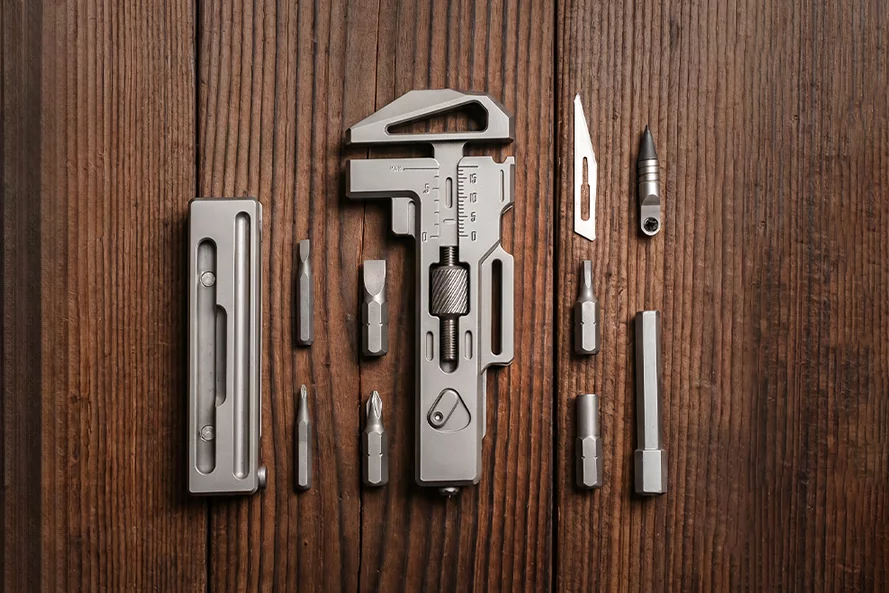
Over the past few years, the team at tool company IF has successfully launched two wrench-based multitools on Kickstarter. Their latest release, the OmniPro Wrench 3.0, combines elements from both earlier versions and also has a few added features. One of the common issues with EDC (everyday carry) tools is that they are either too small to function effectively as real tools, or too bulky to be carried comfortably for “just in case” situations. The OmniPro wrench sits right between those two extremes and seems to balance compact size and functionality pretty well. The first generation model focused mostly on compactness, while the second one added more functions. For the third generation, the creators considered all the feedback from earlier backers and attempted to implement some of the most requested additions. Those included a better grip, an extension rod, protective blade groove, and a fully integrated magnetic system. The various components of the OmniPro 3.0IF In total, the 3.0 combines 15 functions into a compact body measuring 104.5 x 46 mm (4.11 x 1.81 in) and weighing 174 g (6.14 oz). Features include a magnetic eternal pen, ruler, #11 scalpel blade, bottle opener, ceramic-bead glass breaker, bit driver, caliper, and adjustable wrench with a 0-18 mm capacity. The shape of the tool is one of its most interesting characteristics. It almost feels like a tiny Lego set, where every part is moving, rotating, twisting, extending, and transforming into different tools. The OmniPro Wrench 3.0 also includes modular storage for six bits of different sizes and eight tritium slots. Both the extension rod and modular bit storage use a magnetic snap-and-lock system. A few accessories also rely on magnetic attachments as well, including the pen, bit drivers, bit storage, and ratchet holder. The 3.0 is made from CNC-machined titaniumIF Its ratchet can operate in both directions, and can also be positioned at three different angles. In earlier versions, users had to remove the ratchet head to reverse direction, but the new version features a quick-switch mechanism instead. Another update requested by backers was the addition of the extension rod, which improves access to tighter spaces. The bottle opener has also been moved away from the wrench jaws to the rear for better grip and stability. The side-mounted #11 scalpel blade includes a finger groove designed to make it safer to deploy and use. Backers can choose between Sandblasted Titanium and Black PVD finishesIF The tool is made from Grade 5 titanium and is also CNC machined, meaning there are no sharp edges or rough spots on the tool. It can be carried in a pocket or attached to a belt with a leather carrying case sold separately. The wrench is available in Sandblasted Titanium and Black PVD finishes. The full package, which also includes four 4-mm (1/6-in) and six 6-mm (1/4-in) bits, will cost US$309 for early Kickstarter backers, with a planned retail price of $518. Shipping is currently planned for September, assuming the campaign is successful. OmniPro Wrench 3.0 — Titanium Multi-Tool Wrench System Source: Kickstarter Note: New Atlas may earn commission from purchases made via links. source

Third time's the charm? Titanium wrenching multitool is back in 3rd-Gen form Read More »